
Gwynplaine and the Court
The Man Who LaughsThe court’s attempt to incorporate a rescued heir exposes the clash between public justice, hereditary privilege, and private humanity.
increasing Bearing strength in each event
 decreasing
Bearing strength in each eventdecreasingThe First Warning
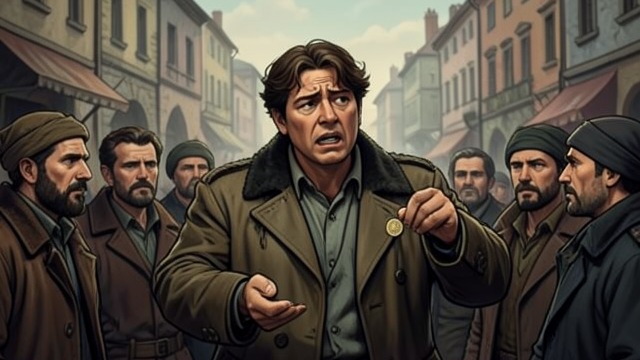
The First Warning
Speech draws attention
Gwynplaine comments on poverty and the value of a farthing.
Ursus warns him that a poor man survives by silence.
Their exchange foreshadows conflict with political authority.
A tolerated spectacle
The local authorities initially leave the Green Box alone.
Public success gives the troupe limited protection.
That protection depends on convenience, not secure rights.
The Silent Arrest
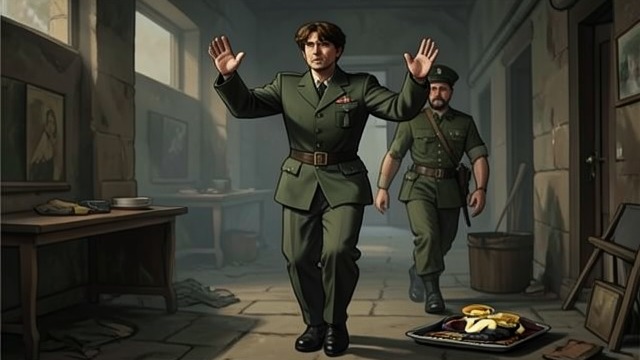
The Silent Arrest
An order without explanation
A wapentake touches Gwynplaine with the iron staff and orders him to follow.
The officer offers no charge or reason.
The force of law turns ordinary breakfast into a public seizure.
Fear in the household
Ursus recognizes the danger and tells Gwynplaine not to speak.
The arrest separates him from Dea without warning.
Silence operates as both legal command and desperate protection.
The Prison’s Ritual
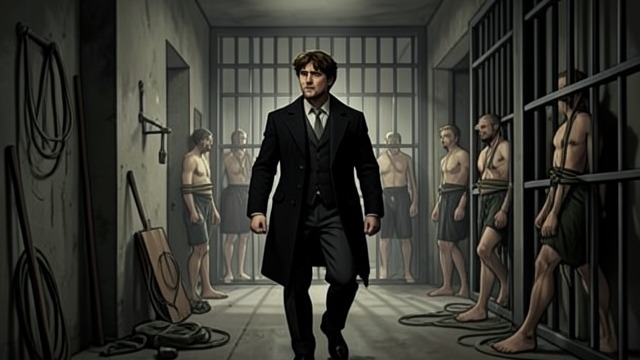
The Prison’s Ritual
A descent into coercion
Gwynplaine is led through dark corridors into the torture chamber.
He sees Hardquanonne bound beneath stones and iron.
The prison makes legal procedure look like a descent into a tomb.
Identity demanded
The authorities use the prisoner to confront Gwynplaine with his own past.
Hardquanonne recognizes him, changing the case from mystery to proof.
The law seeks certainty through an ordeal that kills its witness.
A Peer Made by Law
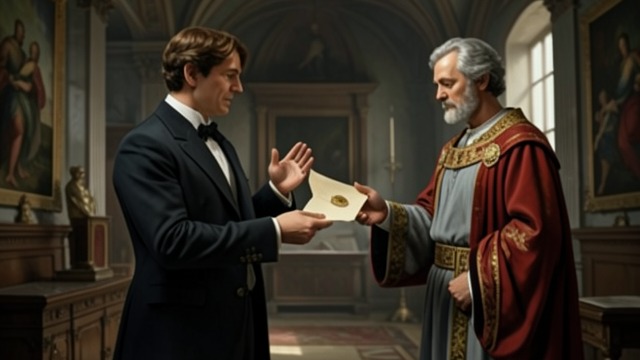
A Peer Made by Law
The name imposed
The sheriff declares Gwynplaine the legitimate Lord Clancharlie.
Officials replace his working clothes with an aristocratic identity.
Recognition changes his legal status in a single hearing.
Coercion continues
Barkilphedro tells him that his movements and choices are controlled.
A royal command offers marriage, wealth, and parliamentary office.
Freedom remains uncertain even as the law restores his rights.
The Court Rejects Its Witness

The Court Rejects Its Witness
A voice attempts reform
Gwynplaine describes hunger, disease, and harsh punishment to the peers.
He asks the powerful to recognize the people beneath them.
His new rank gives him a hearing but not their sympathy.
Laughter defeats procedure
The peers mock his face and interrupt his argument.
His status cannot overcome their refusal to see him as an equal.
The institution restores the heir but rejects the testimony of the poor.
During Gwynplaine’s rise as a London performer
During breakfast at the Green Box in 1705
Later that day, inside Southwark Jail
Immediately after Hardquanonne’s recognition
During the Lords debate that evening
