
The Meaning of the Laugh
The Man Who LaughsThe novel turns Gwynplaine’s involuntary grin from entertainment into a sign of suffering, coercion, and social complicity.
increasing Bearing strength in each event
 decreasing
Bearing strength in each eventdecreasingA Smile Imposed
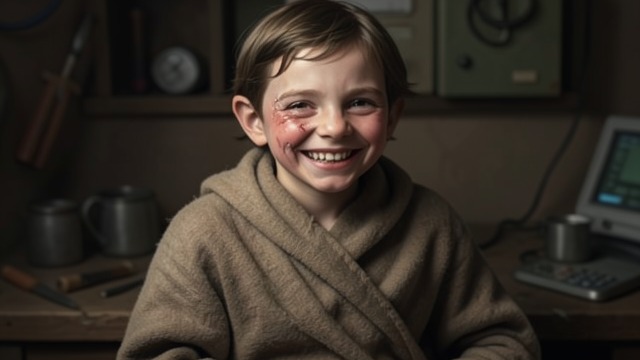
A Smile Imposed
A body altered by power
Hardquanonne cuts and reshapes the child’s face.
The operation produces a permanent expression of laughter.
The smile is not chosen by the person forced to wear it.
Joy made false
Gwynplaine’s face appears cheerful while his inner life remains his own.
Physical appearance becomes a public lie imposed by authority.
The forced smile anticipates the suffering hidden beneath social gaiety.
A Crowd’s Entertainment
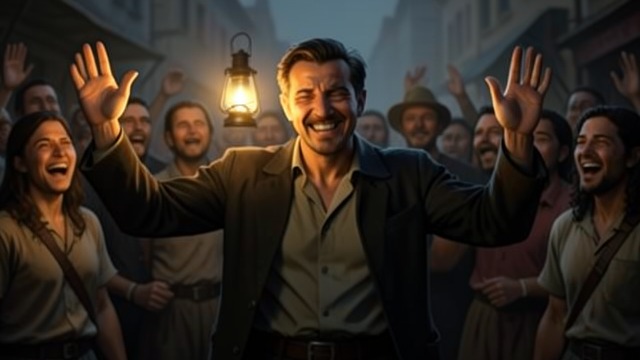
A Crowd’s Entertainment
Laughter purchased
Audiences pay to see Gwynplaine’s face and laugh at its effect.
The performance helps the troupe escape extreme poverty.
His usefulness depends on strangers mistaking his pain for comedy.
Spectacle without recognition
The crowd responds to an image rather than a person.
Dea alone sees the goodness behind the grin.
Public affection and public understanding remain sharply different.
The Face in the Lords
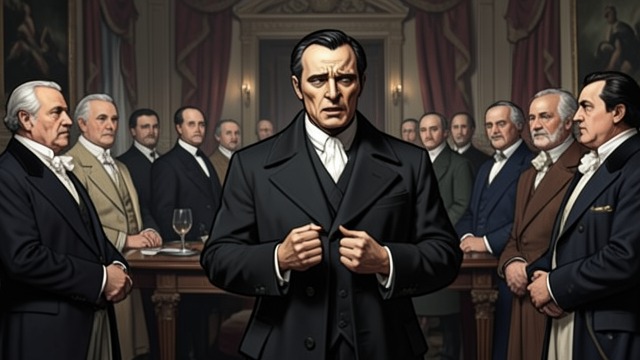
The Face in the Lords
Thought beneath the mask
Gwynplaine argues that the poor suffer beneath aristocratic privilege.
His speech is an effort to make silenced experience audible.
He tries to control his expression through intense concentration.
The body interrupts
Emotion restores his involuntary laughter before the peers.
They treat his testimony as an entertaining performance.
His face becomes a barrier between speech and comprehension.
The Mask as Allegory
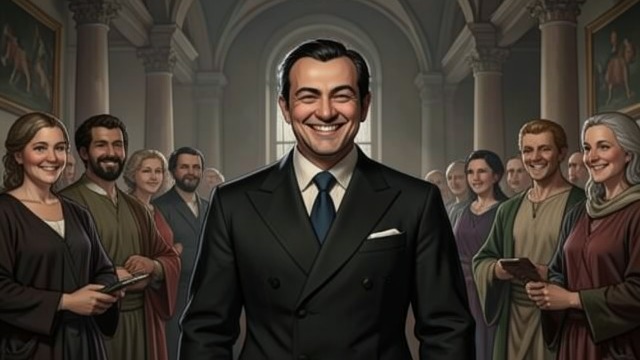
The Mask as Allegory
A social symbol recognized
Gwynplaine understands his face as an image of enforced public happiness.
The people’s visible cheer may conceal hunger and despair.
His individual injury takes on collective meaning.
A failed translation
The peers hear laughter where Gwynplaine intends accusation.
His experience cannot cross the distance between classes.
The mask exposes the society that prefers amusement to truth.
The Laugh Outlives Speech
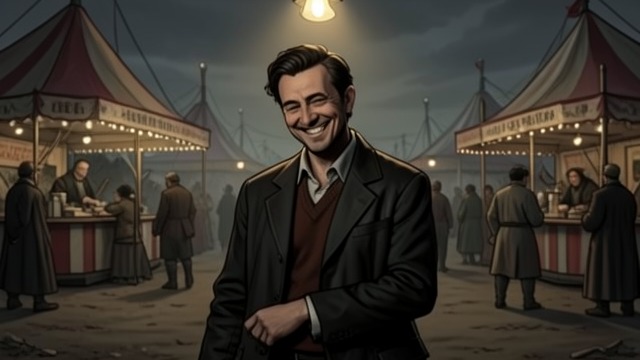
The Laugh Outlives Speech
Isolation returns
Gwynplaine finds the troupe gone and the fairground empty.
The public spectacle that sustained him has disappeared.
His face remains, but its audience and purpose are gone.
The final contradiction
The man who represented suffering cannot escape its physical sign.
His inner grief remains invisible even to those he tried to persuade.
The laugh becomes a lasting emblem of pain mistaken for joy.
Around 1682, when Hardquanonne operates on Gwynplaine
During the Green Box performances in London
During Gwynplaine’s speech to the peers
After the House adjourns, on the walk toward Southwark
Late that night, after the Green Box is removed
