English Restoration
The Man Who LaughsThe English Restoration is the return of monarchy after the republic and the political settlement that divides the nation’s public celebration from Linnæus, Lord Clancharlie’s refusal to recant. The novel presents it as both a dramatic change of government and a test of political fidelity: while England welcomes Charles II, Lord Clancharlie chooses exile rather than resume his place among the peers.
The return of the monarchy
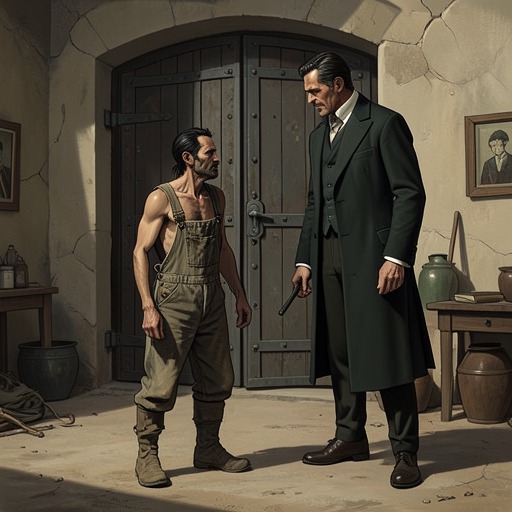
Linnæus, Lord Clancharlie, a peer in the age of Oliver Cromwell, had accepted the republic while it held power. His decisive difference from other former supporters came after the parliamentary government fell. Although it would have been possible for him to return to the reconstituted upper house by renewing his allegiance, he remained faithful to the republic and turned away from the public rejoicing at the monarchy’s restoration. He preferred outlawry and voluntary exile to reclaiming his peerage through recantation.
The Restoration is described as a national reconciliation. Charles II’s Declaration of Breda granted oblivion for the period of republican rule, and the public welcomed the returning king with acclaim. Yet the settlement’s language of forgiveness exists alongside the execution of regicides: the narrator observes that the gibbets added to the public’s satisfaction. The return of the monarchy thus appears not as an uncomplicated erasure of conflict but as a new order that manages the memory of the old one selectively.
Public consensus and dissent
The narration gives the Restoration’s supporters a chorus of arguments against popular political participation. In this newly approved common sense, the people are expected to pay taxes and provide military service, while governing is assigned to the king. Republican ideals such as rights, liberty, and progress are treated as absurdities, and the populace is represented as happier when it does not reason or aspire to rule. These claims expose the bargain beneath the language of national harmony: political obedience is praised as peace, while the people’s material obligations remain in force.
Against that consensus, Lord Clancharlie’s persistence is recast by the surrounding society as folly. His refusal to swear allegiance is linked to the declaration Parliament drew up in 1650, promising fidelity to a republic without king, sovereign, or lord. Even people who had once been his friends had expected that his republican allegiance was merely a disguise for eventual royalist loyalty. When he does not return to the king, they withdraw their favorable interpretation and condemn him as an idiot. The episode shows how the Restoration changes not only the government but also the standard by which an individual’s earlier conduct is judged.
Exile and the novel’s historical frame
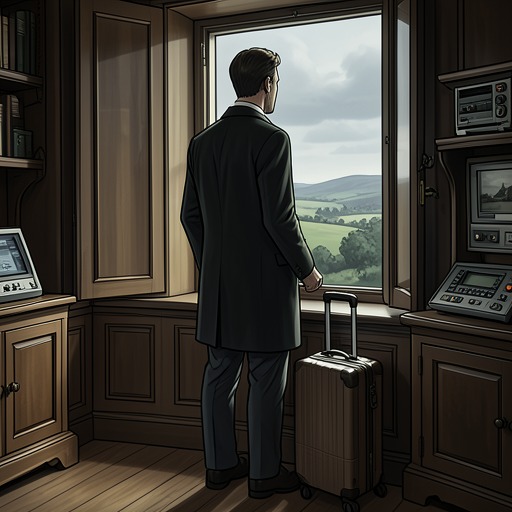
Lord Clancharlie withdraws to Switzerland and lives in a remote dwelling beside Lake Geneva, amid the mountains and away from the country whose political joy he rejects. His isolation gives the Restoration a personal consequence: the national settlement that others experience as reconciliation leaves him separated from his homeland, his peers, and his century. His exile makes his loyalty to a defeated political cause visible precisely because the restored order has made that loyalty socially unintelligible.
The novel also places this historical reversal within a longer story of authority, records, and inherited status. Much later, a message from a shipwreck reaches the Admiralty in a sealed gourd, where officials open and authenticate its contents under established procedures. The declaration, written aboard the Matutina, is on the reverse of a royal order bearing the words Jussu regis and the signature Jeffreys; a red inscription on the gourd identifies Hardquanonne. Barkilphedro reports the formal handling of the evidence to the queen, and the resulting confrontation discloses Gwynplaine’s inheritance. This later episode is not presented as an immediate consequence of the Restoration, but it echoes the novel’s larger concern with how monarchy and its institutions make political authority operative in private lives. The Restoration supplies the historical backdrop for that concern: a change of regime can redefine allegiance, while royal commands and official records can still determine a person’s status long afterward.