Fate’s trap and reversal of fortune
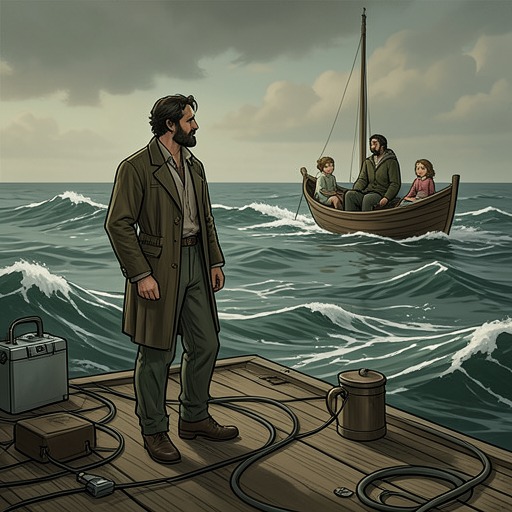
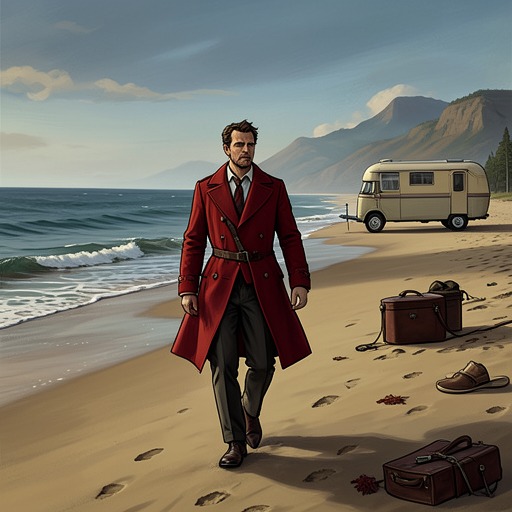
The Man Who LaughsFate’s trap and reversal of fortune names the paradox at the center of Gwynplaine’s transformation: the return of his birthright appears to raise him into privilege, yet separates him from the people and ordinary life he values. The reversal is not simply a fall from wealth into poverty. It turns prosperity into the route by which he loses his former happiness, while leaving him to examine how much of that loss came from forces acting upon him and how much from a choice he made.
The trap of ascent
The trap takes shape around Gwynplaine’s sudden elevation from itinerant performer to heir and peer. He has endured hardship before, but the new danger arrives in the form of opportunity. Barkilphedro places a decision before him, and Gwynplaine gives his assent to the path that leads toward his inheritance and the House of Lords. In retrospect, he sees that the decision had a decisive alternative: he could have refused. The later catastrophe therefore cannot be understood as fate acting without any opening for choice; the opening was present, but he accepted what it offered.
That acceptance is not presented as fully unconstrained. Gwynplaine has been carried away and detained, and he experiences himself as captive to circumstances. The narration distinguishes between being taken from his former life and yielding to the attractions of his new one: the first is not his fault, while the second exposes a weakness. The trap works through this mixture of pressure and consent. It does not erase his agency, but makes his agency difficult to exercise clearly at the moment when the consequences are still hidden.
Prosperity as a reversal
Gwynplaine’s later self-examination measures the cost of his assent against the scale of what he acquired. His inheritance promises an income of £80,000 a year, seven or eight titles, ten or twelve palaces, and the standing of an English peer. Against this inventory he sets the hut of Ursus and the smile of Dea. The contrast makes the reversal concrete: what looks like a vast gain in property, rank, and power is experienced as an exchange that has stripped away the intimate happiness he already possessed.
The imagery of ascent and descent condenses the contradiction. Gwynplaine’s rise in social rank becomes a descent in personal fortune; the apparent apotheosis begins the catastrophe. This is also why his fate is contrasted with the familiar pattern in which adversity gives way to prosperity. For him, prosperity itself delivers adversity. The change does not prove that his former life was free of hardship; rather, it reveals that hardship and happiness had coexisted there, while the new advantages cannot replace the bonds and security he has lost.
Responsibility and competing duties
The concept remains morally unsettled because Gwynplaine’s decision can be viewed as both self-interested acceptance and a response to what he understands as a legitimate claim. He asks whether it was wrong to take possession of his right, patrimony, house, and inherited rank. From that perspective, receiving his inheritance is restitution, not merely a pursuit of luxury. His new position also brings responsibilities, and the narration presents his uncertainty as a conflict between duties rather than a simple choice between virtue and vanity.
That conflict helps explain why the trap is more than a mistake made in a moment of ambition. Gwynplaine must consider obligations to those nearest to him alongside responsibilities that seem to accompany his place in society. As he rises, the pressure on his judgment increases; the routes offered by conscience appear to lead in different directions. His participation in the journey from Corleone Lodge to the House of Lords becomes part of that bewilderment. The narrative leaves the conflict intact: his acceptance has consequences, but the circumstances make it difficult to identify a course that would have satisfied every duty.
What the reversal destroys
The consequences emerge through the relations and institutions surrounding Gwynplaine. He believes that his absence has helped bring catastrophe upon the people in the troupe’s cabin. The fair-ground has been searched, beginning with Nicless and Govicum, to prevent him from finding a clue through them; he concludes that Dea is lost to him and that he will not see the others again. His new public greatness is set against their dispersal and vulnerability. The reversal thus carries a social cost: the movement that elevates one person also breaks the small household to which he belonged.
The same pattern appears in the three gifts society seems to offer him: marriage, family, and caste. Each promise is contradicted by the experience that follows. Marriage is shadowed by the prospect of a loveless or degrading arrangement; family brings conflict with his brother; caste receives him only to subject him to ridicule and rejection. The apparent welcome into society opens new dangers rather than providing a secure home. His inheritance does not simply fail to protect him; it places him in situations where the relationships attached to his former life are harder to reach.
The meaning of fate’s trap
The recurring maxim that a door opened by destiny is accompanied by another door closing gives the reversal its governing shape. In Gwynplaine’s case, the opening is entry into wealth and rank; the closing is his separation from Dea, Ursus, and the life formed through poverty and shared labor. The idea is not that every gain must mechanically produce an equal loss. Instead, the narrative shows how one apparent opportunity can reorganize a person’s world so thoroughly that the old sources of happiness become inaccessible.
Gwynplaine’s final judgment is divided between blame and bewilderment. He condemns his assent as a foolish exchange, yet recognizes that he had been pressured, confused by competing duties, and unable to see the consequences in advance. This division makes the reversal tragic without reducing it to either pure accident or deserved punishment. Fortune arrives disguised as elevation, and only afterward does he understand what the ascent has cost. The trap lies in that delayed recognition: the choice that seems to restore his place in the world becomes the choice through which he loses the life that had made the world bearable.