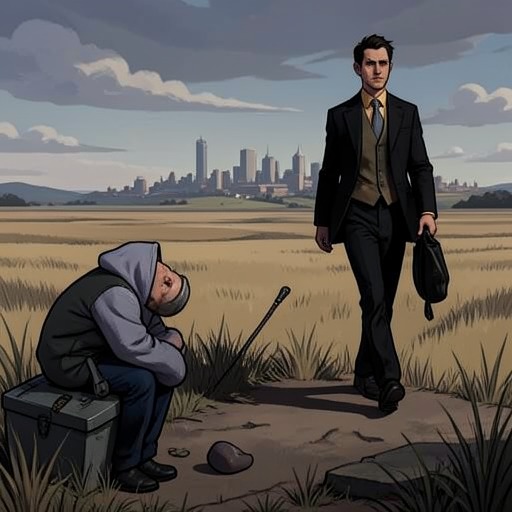
Portland coast
The Man Who LaughsThe Portland coast is the place where Gwynplaine, then ten years old, was left to die by the group that had bought and raised him. His abandonment there followed a chain of actions ordered by King James II: Gwynplaine had been sold as a child, disfigured, and kept out of the way because he was the legitimate heir of Linnæus, Lord Clancharlie. The coast thus marks the transition from a secret crime against an heir to the exposed, precarious life of the child left behind.
Setting and Abandonment
The declaration later made by the group describes the coast as a deserted place where they left Gwynplaine at nightfall, intending that hunger, cold, and solitude should kill him. He had been sold at the age of two and kept for eight years for their purposes; at ten, he was abandoned as they fled England. Their fear of parliamentary indictments and prohibitions was part of the immediate circumstances of the decision. The coast was not the place where Gwynplaine’s disfigurement was carried out, but it became the setting for the final act of concealment: leaving the child beyond the reach of ordinary care and protection.
The Confession and the Secret It Reveals
A declaration dated January 29, 1690, records the child’s identity and the reason he had been targeted. Gwynplaine was the only legitimate son of Linnæus, Lord Clancharlie, and the heir to his father’s estates and titles. His rank made him a threat to the arrangement that had led to his sale and concealment. The declaration also states that the group had kept him for eight years and that Hardquanonne knew the secret, while the signatories were about to perish at sea. Their confession distinguishes fear of human punishment from fear of divine judgment: having sworn secrecy to the king, they claimed no such oath bound them before God. In this way, the coast is linked not only to abandonment but to the eventual disclosure of the identity that the abandonment was meant to suppress.
From Exposed Child to Public Symbol
The adult Gwynplaine’s face carries the visible consequence of the earlier violence: his features produce an apparently permanent laugh, though his thoughts and feelings do not match it. Crowds respond first with laughter and then with aversion; the face that gives him a living as a performer also makes him intolerable to many who see him. The coast’s importance therefore extends beyond the site of his abandonment. It belongs to the hidden history behind the public spectacle, where an heir was turned into an outcast and made to bear a sign that others mistook for his own expression.
When Gwynplaine later addresses the peers, he presents his imposed smile as both personal torment and a figure for the suffering of the people. He argues that the violence done to his face stands for the deformation of rights, justice, and truth under power. That speech does not take place on the Portland coast, but it gives the abandonment there a wider meaning: the child whom authorities tried to remove from sight becomes, in adulthood, a public emblem of the harm their power can inflict. The coast is the geographical beginning of that reversal, joining a concealed attack on inheritance to Gwynplaine’s eventual denunciation of oppression.