Silence as a survival strategy
The Man Who LaughsSilence as a survival strategy is a principle of self-preservation taught by Ursus and tested by the story’s unequal legal and political order. For the poor, speaking freely can be dangerous: a remark about the Crown may circulate beyond its speaker, curiosity about the powerful may invite retaliation, and even silence under arrest can be turned against the accused. The principle is therefore more than personal caution. It describes how people with little power try to limit their exposure to institutions that control both speech and its consequences.
Silence and the poor
Ursus frames silence as the counterpart to the rules governing the powerful. In his view, the great can act with impunity, while the small must restrain themselves; the poor man’s safest response to authority is assent rather than argument. He urges Gwynplaine to keep quiet, run at the first sign of danger, and avoid political temerity. His counsel is not an abstract preference for reserve: it is a response to punishments that he presents as severe and readily imposed, from public penalties for minor offences to harsh consequences for speech deemed disloyal.
The admonition follows a specific indiscretion. While counting the troupe’s receipts, Gwynplaine picks up a farthing and contrasts it with the coin bearing Queen Anne’s image: in his comparison, the small denomination stands for the people’s misery and the royal image for the throne’s magnificence. The remark is repeated by Master Nicless and passes through Fibi and Vinos until it reaches Ursus. Its circulation matters as much as its content. A comment made in an inn does not remain private, and Ursus fears that it may be construed as sedition or lèse-majesté. He reprimands Gwynplaine sharply, but the weeks pass without an apparent consequence. The absence of immediate reprisal does not reassure Ursus; it only leaves his caution in place.
Discretion as practice
Ursus’s advice governs more than political speech. When Tom-Jim-Jack fails to return after leaving in a carriage with a duchess, Ursus is curious about the apparent mismatch between the sailor and the fashionable world. He nevertheless chooses not to investigate. He treats the movements and transformations of people in high life as both difficult for the poor to interpret and dangerous to probe. In this instance silence means refusing to ask questions, watch closely, or convert an unexplained sight into gossip. Ursus presents withdrawal as a kind of practical intelligence: remaining unnoticed may protect those who cannot safely challenge what they see.
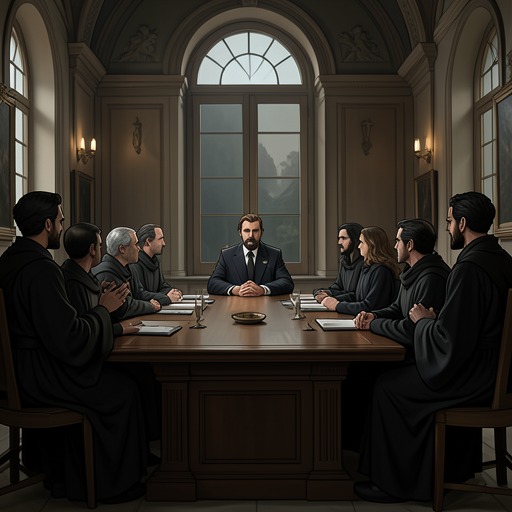
The rule applies to Ursus himself when he is summoned before three delegated doctors serving as public overseers. The citation concerns his exposure to censorship over public speech, and he obeys without disclosing it to the others because it has been delivered into his own hands. The man who has insisted that Gwynplaine keep silent now experiences the anxiety of being suspected of rashness. His obedience shows that the principle is not merely a lesson he imposes on someone younger; he follows it when the machinery of authority turns its attention toward him. Silence can conceal a summons from companions, just as discretion can keep curiosity from becoming an offence.
Arrest and the law’s reversal
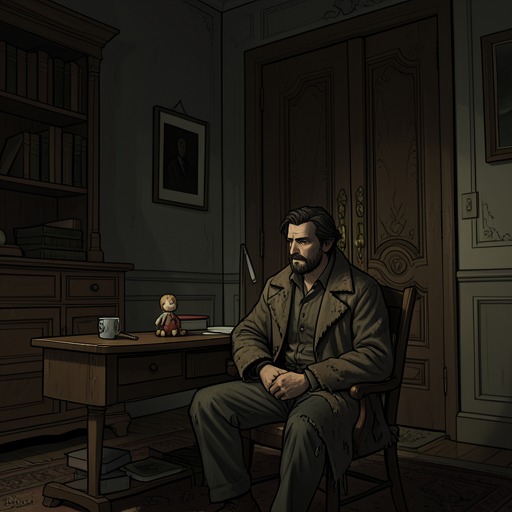
When a wapentake comes for Gwynplaine, Ursus again makes silence an immediate instruction, whispering that he must not speak until questioned. Gwynplaine prepares quietly, covers himself with his cloak, and leaves the Green Box under escort. Ursus watches him go and reassures the wolf that he will return. The departure turns a general maxim into conduct under pressure: Gwynplaine does not resist or make a public protest, while the people around him are distressed by his removal.
Inside the jail, the circumstances alter the meaning of silence. The entrance is dark, and Gwynplaine cannot see where he has been taken. Remembering Ursus’s warning, he tries not to irritate those holding him. But uncertainty finally leads him to ask where they are taking him. The authorities do not answer. Here silence is not a protection offered to the prisoner; it is part of the procedure imposed on him. Gwynplaine is brought into the system without an explanation, and his attempt to obtain one receives none.
The reversal becomes explicit when the sheriff later informs Gwynplaine that the law has treated his continued silence as a refusal to answer despite his supposed understanding of the proceedings. He has consequently been subjected to Peine forte et dure, a coercive legal punishment for remaining silent. The scene does not show that Ursus’s advice was foolish: Gwynplaine had good reason to fear speaking without knowing the danger. Instead, it exposes the limit of silence as a survival tactic. A person may withhold speech to avoid provoking authority, yet a court can interpret that same restraint as defiance and punish it.
Meaning and limits
Across these episodes, silence changes function without ceasing to be connected to power. For Ursus, it is a defensive habit: avoid dangerous remarks, conceal what need not be shared, and do not investigate the affairs of those able to retaliate. Gwynplaine’s arrest reveals a harsher institutional version, in which authorities control the conditions of speech and then attach consequences to the prisoner’s response. The law’s silence toward his question and its punishment of his silence form a pointed contrast.
The concept thus links everyday caution to formal coercion. Ursus speaks as someone who has learned that the poor may be harmed for challenging rulers, but the plot shows that self-restraint cannot guarantee safety when legal power defines what counts as obedience. Silence can be chosen, practiced, and temporarily protective; under arrest, it can also be taken out of the speaker’s control and converted into an offence. The movement from Gwynplaine’s remark about a farthing to his treatment in the jail makes the stakes concrete: speech travels, discretion narrows the risk, and neither speaking nor keeping silent ensures that the powerful will leave the poor unharmed.