Social indifference
The Man Who LaughsSocial indifference in The Man Who Laughs is not merely a lack of kindness: it is a pattern of refusing contact with the vulnerable, then treating their suffering as entertainment or as someone else’s concern. The novel makes that pattern concrete in the silence of a town at night and, later, in the laughter that follows Gwynplaine wherever he appears. In both scenes, people respond to a visible need or a human being’s pain without recognizing the person behind it.
A town that will not answer
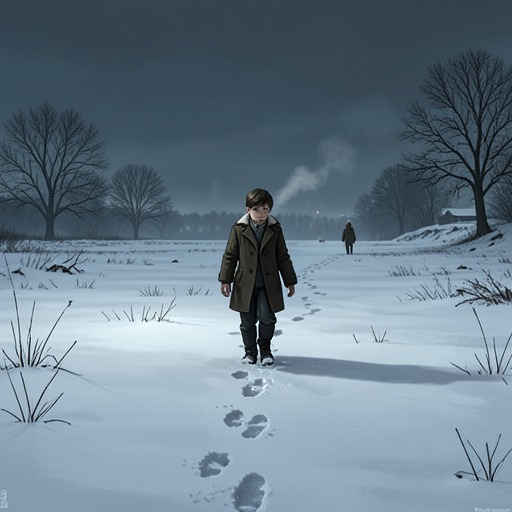
The boy enters a settlement carrying an infant and searches for signs of life in its houses. At the first street, he finds two sharply contrasting homes: a low, poor hovel with mud walls and a thatched roof, and, opposite it, a large stone house with a slate roof, identified as the rich man’s home. Neither offers light or welcome. The boy approaches the mansion’s heavy, nail-studded oak door and knocks with hands so numbed by cold that they are barely useful. No one answers. He knocks again, but there is still no voice, footstep, or light from within.
The paired houses make the refusal more than a single household’s failure. Poverty and wealth face each other across the street, yet both remain closed to the child. The hovel’s inhabited pigsty indicates that people live there, while the mansion’s size and solid door signal resources and security; neither circumstance produces help. The narrator compresses the two refusals into a common condition: both houses are deaf to the wretched. Social distance here crosses class boundaries. The poor are not shown as automatically compassionate, and wealth does not translate into responsibility.
Fear in the streets
The child continues through three streets, repeatedly raising his eyes toward dark windows and knocking at doors. Nobody responds. The infant, awakened by the movement, sucks his cheek; she does not cry, believing him to be her mother. Her dependence makes the scene more urgent, while the town’s silence keeps that need private and unanswered. The boy had been alone in open country, but the town intensifies his distress: he has entered the midst of human life and remains alone among its inhabitants.
The narrative supplies a historical explanation for the closed windows. In January 1790, London had recently suffered a severe outbreak of plague, and fear of taking in sick vagabonds had reduced hospitality. People were unwilling even to open their windows, lest they breathe infected air. This context helps explain the conduct without making its consequence disappear. The inhabitants’ fear turns a stranger asking for shelter into a possible danger; from the boy’s position, the distinction between caution and abandonment is immaterial. He experiences the coldness of people as more terrible than the cold of the night, and the stroke of three o’clock from St. Nicholas’s belfry marks another interval in which no help arrives.
From need to spectacle
The same social failure takes a different form in the treatment of Gwynplaine. His face has been made to carry an unalterable expression of laughter, while his thoughts and feelings do not share it. The public sees the expression first and responds almost automatically: spectators laugh, then turn away. Women in particular shrink from him once the novelty of the laughter has passed. His tall, well-proportioned, agile body does not change that response; the face governs how others receive him.
Gwynplaine’s appearance brings him renown as a performer at fairs and crossroads, and people find his effect powerful enough to relieve their own gloom. But public amusement does not amount to recognition or care. The crowd consumes the laugh as a spectacle while leaving the person who bears it outside ordinary sympathy. His face makes suffering easy to misread: distress can intensify the appearance of hilarity, so that the more serious his inward feeling, the more readily onlookers may take him for a source of amusement. The disparity between what his face communicates to spectators and what he experiences exposes a form of indifference built into looking itself.
The meaning of the forced laugh
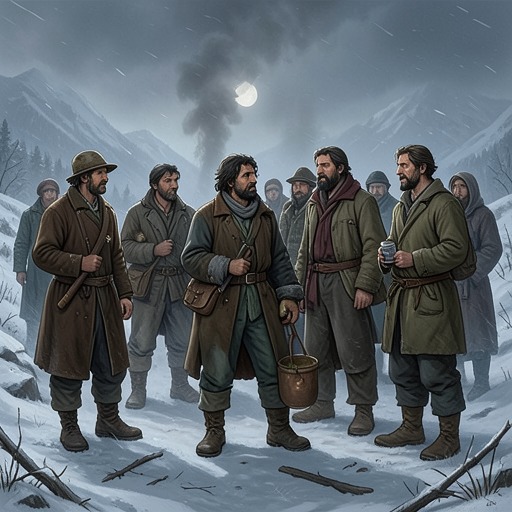
When Gwynplaine addresses the peers, he turns that misreading into an accusation. He presents the laugh on his face as an imposed sign and interprets it as an image of the pain and enforced silence inflicted on ordinary people. In his account, his own visible difference stands for a broader social condition: a population whose suffering is covered by an appearance of cheerfulness. The face that has made him an object of laughter becomes his means of speaking about people whom power also keeps unheard.
The response in the chamber sustains the tension between speech and reception. Gwynplaine pauses as the noise diminishes, then continues; the laughter persists, though more quietly. His effort to explain the meaning of his face does not immediately dissolve the spectacle through which the audience has defined him. The scene connects private humiliation to political exclusion: the people he invokes are treated as distant and abstract, just as he himself has been reduced to an appearance. Across the dark street and the public chamber, indifference works by keeping suffering at a distance. The town does not open its doors to the child, and the crowd does not readily look past Gwynplaine’s laugh to the person within it.