Social stigma attached to actors
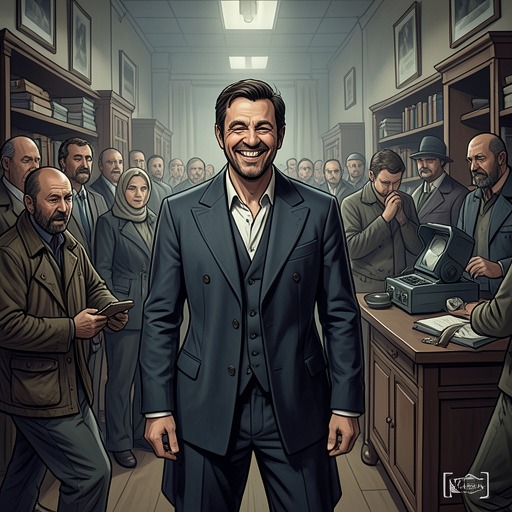
The Man Who LaughsSocial stigma attached to actors is presented as a social bargain in which an audience takes pleasure from a performer while denying him equal regard. Gwynplaine’s career makes the bargain especially visible: his face draws laughter and earns him a living, but the laughter does not become acceptance. Applauded as an entertainer and held apart as a person, he reveals how public amusement can function both as recognition and as exclusion.
The performer as useful outsider
The novel begins its account of Gwynplaine’s public identity with the contrast between his face and his inward self. His features produce the appearance of laughter, but the face does not express his thoughts or feelings. The expression is fixed and involuntary: surprise, anger, pity, and suffering only intensify the impression that he is laughing. The crowd sees a comic figure regardless of what he experiences. His outward appearance thus dictates the role others assign him before he speaks.
That role becomes a means of earning a living. Gwynplaine performs as a mountebank, and his appearance provokes such immediate laughter that even people who came in sorrow or mourning cannot sustain their solemnity. The effect makes him widely known at fairs and crossroads as a remarkable comic attraction. Yet the audience’s response is not a reliable reading of the performer. Gwynplaine does not share the laughter that his face elicits, and the pleasure he supplies depends on an expression he cannot simply take off.
The narrative distinguishes his bodily appearance from the rest of his person. Gwynplaine is tall, well made, and agile; the account says that his face alone is deformed. It suggests that his features were probably altered when he was very young, while presenting the details and agency of that process as inference rather than something he remembers. This contrast matters to the stigma attached to him: spectators reduce a whole person to the face that makes him useful as an amusement.
Applause and social distance
The novel describes contempt for comedians as a kind of retaliation. People enjoy what the performer gives them, then answer that pleasure by humiliating or disdaining him. Applause can therefore conceal rather than cancel contempt: it is a way of keeping the actor apart while publicly rewarding his service. Gwynplaine is applauded and isolated at once, the two sides of a success that does not grant him the standing associated with it.
The division also appears across social rank. The crowd is depicted as less contemptuous than the people who claim superiority over performers; even a low-ranking ship worker may consider himself above an actor, just as a lord considers himself above that worker. The comparison maps a ladder of status in which each group can look down on someone else. The comedian occupies a low position in that imagined order, despite having gathered an audience and achieved success.
Gwynplaine accepts both applause and isolation, but this acceptance should not be mistaken for social inclusion. His modest earnings provide food, clothing, warmth, and enough independence to give a penny to a beggar. The account calls this wealth in his low estate: it meets practical needs without changing the contempt attached to his occupation. Nor is his life defined only by deprivation. He has the love of Dea, and the narrator presents that bond as a source of inward richness. The distinction between material sufficiency, affection, and public rank prevents the stigma from becoming a complete description of his life.
Performance, spectators, and recognition
Ursus writes a special interlude for Gwynplaine, Chaos Vanquished, in which Gwynplaine plays a man struggling against the forces represented by Ursus as a bear and Homo as a wolf. The performance first presents the figures in darkness; Gwynplaine’s face is revealed only at the ending. The crowd’s laughter erupts at that sudden exposure, then carries beyond the immediate spectators: people in the street laugh on hearing the audience. The scene makes the comic response collective and contagious, while its staged reveal shows how strongly the crowd’s reaction depends on looking at Gwynplaine.
The audience’s understanding remains divided. Dea, who is blind, experiences the crowd only as a murmur and feels isolated amid it until she finds support by touching Gwynplaine. Her trust and love are directed toward the person whom spectators treat as a comic spectacle. The public reads their relation as though Dea were the one who saves him; from within her experience, she finds safety in him. The contrast makes visible two different forms of recognition: a crowd that responds to a face, and an intimate bond that is not governed by sight or public amusement.
When laughter becomes exclusion
The social consequences of Gwynplaine’s comic identity recur when he enters the House of Lords. Standing before the assembled peers, he briefly suppresses his habitual grin through a concentrated effort, so that the features lit by the candles appear stark against the chamber’s darkness. The effort is temporary. As he speaks about poverty and the suffering of people beneath the powerful, emotion brings on uncontrollable laughter. His appeal and the expression others read on his face point in opposite directions.
The Lords respond with amusement and mockery rather than attending to the distress in his speech. The episode repeats the structure of the fairground performance, but changes its stakes: in the theatre, laughter establishes Gwynplaine’s earning power; in the chamber, it helps discredit his political speech. He describes himself as both the newly recognized Lord Clancharlie and the Gwynplaine who belongs with the poor. His case against inequality is therefore spoken by someone whose status has changed but whose public image remains bound to the role assigned him by spectators.
Gwynplaine turns that role into an accusation. He presents the laugh on his face as a mark imposed by a king and as a sign of suffering concealed beneath apparent merriment. In his speech, his individual condition becomes a figure for people whose pain is obscured by appearances that allow the powerful to ignore them. The claim does not erase the difference between his experience and theirs; it makes the crowd’s habit of treating visible laughter as proof of happiness part of the indictment.
Significance
Across the fairground, the interlude, and the Lords’ chamber, applause and laughter shift in meaning without ceasing to regulate how Gwynplaine is seen. They can give him work, draw a crowd, and expose a divided response to suffering; they can also isolate him and turn an appeal into an occasion for ridicule. The recurring mismatch between what his face communicates to spectators and what he feels or says prevents laughter from serving as straightforward evidence of joy.
The stigma attached to the comedian is thus not simply the result of an unusual appearance. It depends on an audience that accepts entertainment while withholding respect, and on a social order in which one group secures its superiority by placing another beneath it. Gwynplaine’s public career makes that contradiction legible: the performer is welcomed as long as his assigned comic function is useful, but the laughter that wins him recognition can also prevent listeners from recognizing his words or his person.