The Waif Knows Its Own Course
The Man Who LaughsThe Waif Knows Its Own Course is the chapter heading for the discovery of Hardquanonne’s flask and the narrative’s meditation on what its long voyage means. The phrase treats the bottle’s passage as more than aimless drifting: the sea preserves evidence that can restore Gwynplaine’s inheritance, though the same recovery becomes an instrument of Barkilphedro’s malice.
The bottle’s course
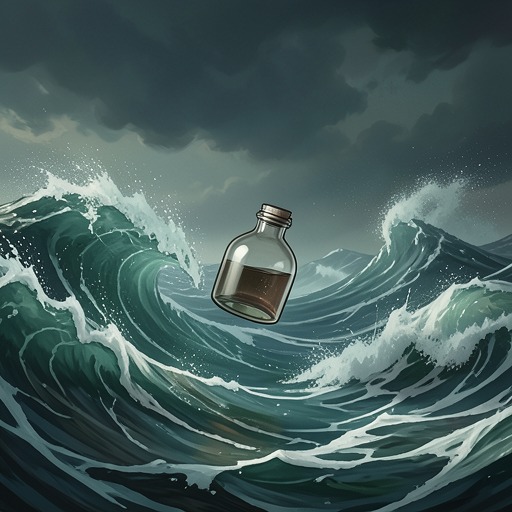
The chapter traces the flask from the shore to the authorities. At low water, one of the four gunners at Castle Calshor finds it on the sand. Covered with wicker and mould, and stopped with a tarred bung, it has been cast up by the tide. The soldier takes it to the castle’s colonel, who sends it to the High Admiral; the matter then reaches Barkilphedro, through whom such sea-cast waifs are handled.
When Barkilphedro opens the flask with two witnesses from the Admiralty, he finds a parchment inside. The discovery arrives at a precise point in his private campaign: he had nearly concluded that he could find no vulnerable point in Duchess Josiana’s life, and his frustration had brought him close to abandoning the effort. The bottle’s arrival gives him new leverage. Its course thus intersects not only with the recovery of Gwynplaine’s past, but with Barkilphedro’s search for a way to hurt Josiana.
Chance and providence
The narration stresses how improbable the flask’s survival seems. For fifteen years, waves pass it along; rocks do not break its glass, the cork stays in place, the wicker is not ruined by seaweed, and water does not destroy the parchment’s writing. The bottle is fragile, but the elements appear to have carried it carefully through dangers that could have erased its message.
The chapter refuses, however, to make Barkilphedro the purpose of that journey. He imagines himself its object and instrument, as if the sea had laboured to fulfil his intentions. The narrator counters this vanity by recasting the ocean’s work as protection for the orphan whose fate is recorded in the flask: the sea that once swallowed the ship and the sailors’ pleas has now preserved a fragile vessel of reparation. Its journey belongs, in this account, to Gwynplaine’s restoration, even though Barkilphedro is the one who discovers and exploits it.
Justice entangled with malice
The bottle’s arrival produces a deliberate moral contradiction. Recovering the message helps repair the crime committed against Gwynplaine by King James II and makes possible the return of his inheritance. Yet that same restoration threatens Duchess Josiana, whom Barkilphedro wants to wound. Justice reaches its destination, but it does not arrive free of human spite: the disclosure that can right one wrong also gives a malicious courtier an opportunity to bring suffering to another.
The title therefore holds together two meanings of course. The waif seems to follow a providential path toward the lost child’s restoration, while its actual delivery places the evidence in Barkilphedro’s hands and entangles justice with his designs. The sea’s long preservation of the flask is neither simply a servant of chance nor a straightforward guarantee of human happiness; it brings the truth to light, while leaving its consequences exposed to the uses people make of it.