Abwehr
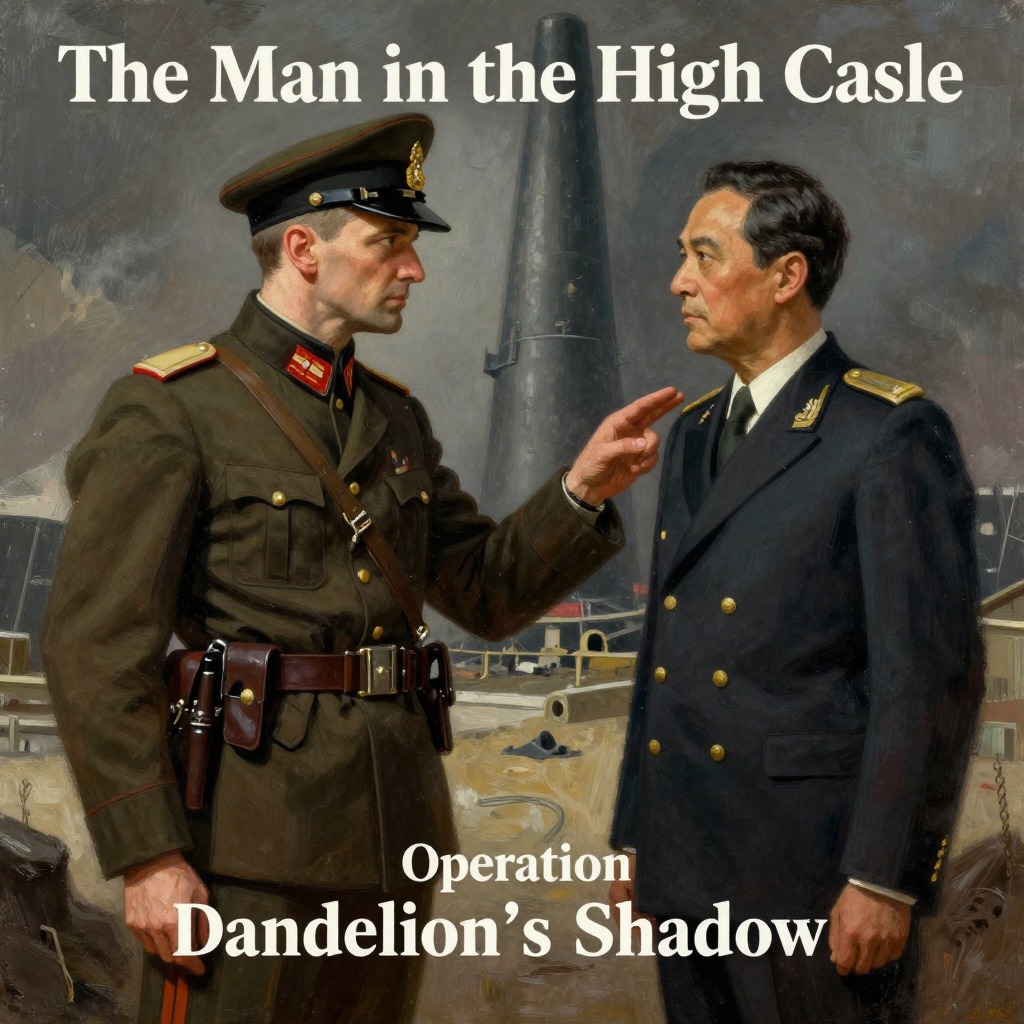
The Man in the High CastleThe Abwehr, the German military intelligence service, is a shadowy and embattled institution in the novel's alternate-history world, where the Axis powers have won World War II. It operates as a counterweight to the Nazi Party's security apparatus, particularly the SD and the SS, and its agents are engaged in a high-stakes struggle to influence the course of German policy. The Abwehr's most significant action in the novel is the mission of its agent Rudolf Wegener, who travels to San Francisco under the cover name Baynes to expose a planned nuclear attack on Japan and to forge a desperate alliance between anti-Nazi factions and the Japanese government.
Nature and Structure
The Abwehr is depicted as a military intelligence organization that is distinct from, and often at odds with, the Nazi Party's police and security forces. It is described as a target of the SD, which has been trying for twenty years to get Party approval for liquidating the Abwehr in toto. The organization is portrayed as a haven for old monarchist families from East Prussia, such as Wegener, who are viewed with suspicion by the SD. The Abwehr's agents operate under deep cover, using false identities and elaborate cover stories, as exemplified by Wegener's alias as a Swedish industrialist named Baynes. The organization's methods are cautious and indirect, relying on intermediaries and coded communications to achieve its goals.
Aims and Methods
The Abwehr's primary aim in the novel is to prevent the destruction of Japan by a faction within the German government that advocates Operation Dandelion, a nuclear attack on the Home Islands. Wegener's mission is to inform the Japanese of this plan and to persuade them to intervene in German internal politics by supporting the SD, which opposes the attack. The Abwehr's methods are characterized by secrecy and deception. Wegener poses as a Swedish businessman to gain access to Japanese officials, and he uses a silver cigarette case containing microfilm to deliver evidence of the German plans. The organization also maintains a network of agents, such as the contact at the Fuga Department Store, who facilitate communication between Wegener and his superiors in Berlin.
Key Members and Opponents
Rudolf Wegener is the Abwehr's central figure in the novel, a captain in the Reichs Naval Counter-Intelligence who is willing to risk his life to expose Operation Dandelion. He is described as an aristocratic-looking man of about forty, from an old monarchist family. His opponents include the SD chief in the Pacific States, Bruno Kreuz vom Meere, who is tasked with capturing him, and the Reichs Consul in San Francisco, Hugo Reiss, who is pressured to cooperate with the SD. Wegener's allies include the Japanese official Nobusuke Tagomi and General Tedeki, a former Imperial Chief of Staff, who receive his information and provide him with a measure of protection.
Major Actions and Development
The Abwehr's major action is Wegener's mission to San Francisco, which unfolds over several weeks. He arrives on a Lufthansa rocket, meets with Tagomi, and waits for the arrival of General Tedeki, who is traveling under the cover name Yatabe. During this time, Wegener makes contact with an Abwehr agent at the Fuga Department Store to seek instructions. When Tedeki finally arrives, Wegener reveals his true identity and delivers the news of Operation Dandelion. The meeting is interrupted by an SD raid, during which Tagomi shoots and kills two SD men. Wegener escapes and returns to Germany, where he is met by Waffen-SS officers who take him to see SS General Heydrich, indicating that the SD faction may be gaining power.
Significance
The Abwehr's role in the novel highlights the internal divisions within the Nazi regime and the moral complexity of resistance. Wegener's mission represents a desperate attempt to prevent a catastrophic war, but it is fraught with ambiguity, as it requires the Japanese to support the SD, a force that is itself described as evil. The Abwehr's struggle against the SD reflects the broader theme of a world where all alternatives are morally compromised. The organization's fate is left uncertain, as Wegener is taken to meet Heydrich, suggesting that the Abwehr may be co-opted or destroyed by the very forces it opposes. The Abwehr's actions, however, underscore the possibility of individual agency and resistance within a totalitarian system, even when the outcome is far from certain.