Canon City
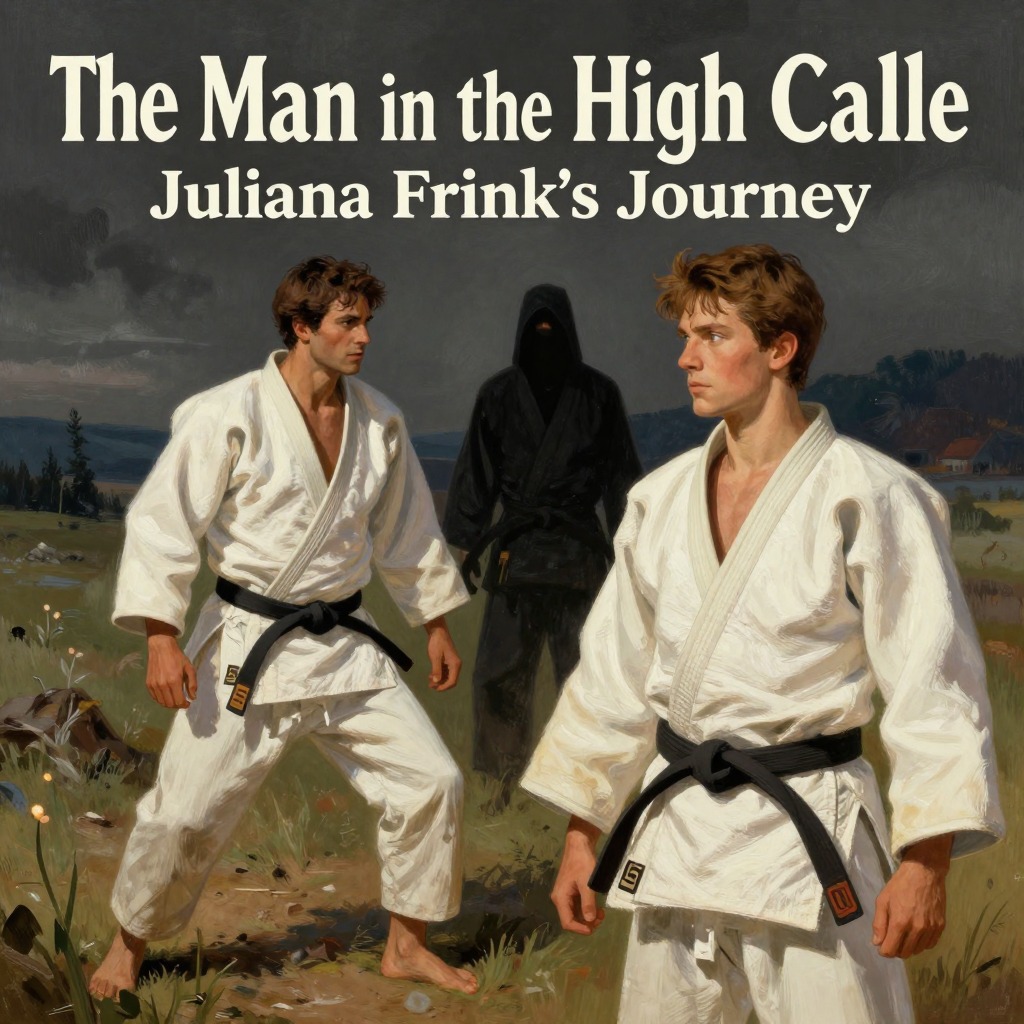
The Man in the High CastleCanon City, Colorado, is the small Rocky Mountain town where Juliana Frink has settled after her divorce from Frank Frink, working as a judo instructor at Ray's Gym. It is a place she describes as "Protestant land," far from the Japanese-dominated Pacific Coast where she once lived, and where she feels a measure of safety, watching Nazi rocket ships pass overhead without stopping. The town's isolation and apparent insignificance—it has "no value" in the eyes of the great powers—provide her with a temporary refuge, but also a setting for the encounter that will shatter her complacency.
Life in Canon City
Juliana's daily life in Canon City revolves around her work at the gym and her evenings at Tasty Charley's Broiled Hamburgers, a local diner. She is a skilled judo instructor, having learned the art from a Japanese teacher named Minoru Ichoyasu in Seattle, and her training has given her unusual muscle tone and a confident bearing. The town's atmosphere is quiet and provincial; she notes that "nothing has happened here since before the war," and that the population consists largely of "retired old people, farmers, the stupid, slow, poor." Despite her own roots in the region, she feels a restless dissatisfaction, a sense that she is merely passing through.
The Encounter with Joe Cinnadella
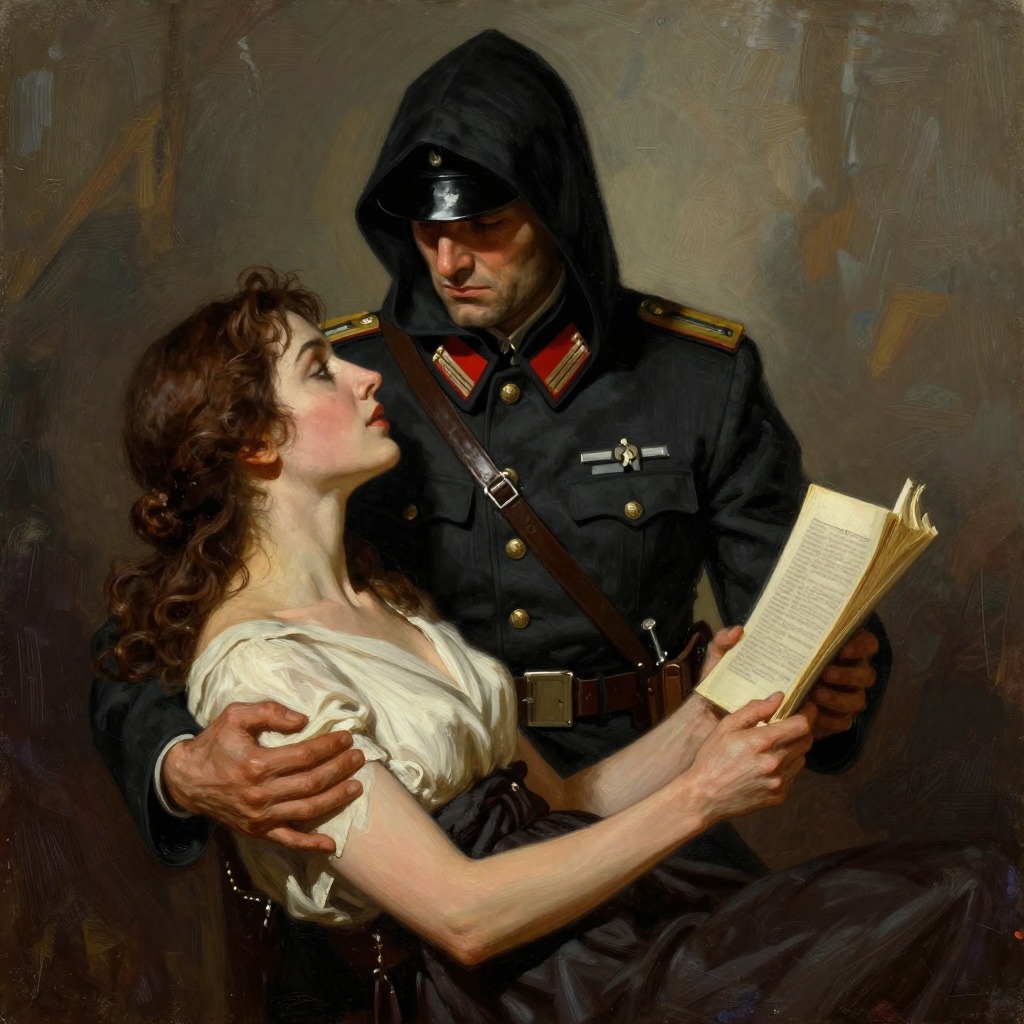
It is at Tasty Charley's that Juliana meets Joe Cinnadella, a truck driver from the East Coast who is passing through Canon City. Their conversation quickly turns to politics and the war, revealing deep ideological divisions. Joe, an Italian veteran of the North African campaign, carries a copy of Hawthorne Abendsen's banned novel The Grasshopper Lies Heavy, which imagines a world where the Axis lost the war. Juliana is drawn to him despite his bitterness and his disturbing intensity, and she allows him to stay at her apartment. Their relationship is marked by a growing tension, as Joe's true purpose—to assassinate Abendsen—gradually becomes clear.
Departure and Violence
Joe convinces Juliana to accompany him on a trip to Denver, where they buy expensive new clothes and plan to continue on to Cheyenne to visit Abendsen. In their hotel room at the President Garner Hotel, Joe reveals his SD identity and his intention to use Juliana as a lure. When she refuses to cooperate, he threatens to kill her. In the ensuing struggle, Juliana slashes his throat with a razor blade, then flees the hotel. The Denver newspapers later report the incident as a "fatal slashing" resulting from a "marital quarrel," misidentifying Juliana as "Mrs. Cinnadella."
Journey to Cheyenne
After the killing, Juliana drives north toward Cheyenne, consulting the I Ching for guidance. The oracle instructs her to "undertake something" and to "cross the great water," confirming her decision to warn Abendsen. She stops overnight in Greeley, Colorado, and telephones the Abendsen residence, speaking to Caroline Abendsen and reading the oracle's lines to her. The next day, she reaches Cheyenne, checks into a motel, and finishes reading The Grasshopper Lies Heavy before dressing in her new blue Italian dress and taking a taxi to the Abendsen home.
The Revelation at the High Castle
At the Abendsen house, Juliana confronts Hawthorne Abendsen with her conviction that the I Ching wrote his novel. After initial evasion, Abendsen admits that he used the oracle to make every choice—historical period, subject, characters, plot—over the course of years. Juliana then throws the coins herself, asking why the oracle wrote the book. The resulting hexagram is Chung Fu, Inner Truth, and she declares that the book is true: Germany and Japan lost the war. Abendsen, shaken, cannot fully accept this revelation, but Juliana leaves the house with a sense of clarity and purpose, having fulfilled her mission.
Significance
Canon City functions as the starting point of Juliana's transformative journey, a place of apparent safety that proves to be only a temporary shelter. It is from this unremarkable town that she moves into a world of violence, moral ambiguity, and metaphysical discovery, ultimately confronting the author of the book that has shaped her understanding of reality. The town's ordinariness underscores the extraordinary nature of her experiences, and its isolation from the great events of the world makes her eventual encounter with the truth all the more striking.