Frank Frink
The Man in the High CastleFrank Frink is a Jewish metalworker living in Japanese-occupied San Francisco, a man whose personal history and professional fate are bound up with the brutal realities of the Axis victory in World War II. Born Frank Fink in New York, he was drafted into the U.S. Army in 1941 after the collapse of Russia, and after the Japanese took Hawaii he was sent to the West Coast. When the war ended, he found himself on the Japanese side of the settlement line, and fifteen years later he remains there, a skilled artisan whose life has been shaped by the Co-Prosperity Pacific Alliance and the ever-present threat of the Reich. His story is one of survival, creativity, and the fragile hope that even in a world of forgeries and persecution, something authentic can be made by hand.
Identity and Background
Frank Frink's identity is defined by his Jewishness and his skill as a metalworker. He changed his name from Frank Fink, a name that marked him as a Jew, and he lives in constant fear of being exposed and sent to the Reich, where he would face extermination. He was born on the East Coast, in New York, and in 1941 he was drafted into the Army of the United States of America, right after the collapse of Russia. After the Japs had taken Hawaii he had been sent to the West Coast, and when the war ended, there he was, on the Japanese side of the settlement line. His original name was Frank Fink, and he had been born on the East Coast, in New York. In 1947, on Capitulation Day, he had more or less gone berserk, hating the Japs and vowing revenge, burying his Service weapons ten feet underground for the day he and his buddies would arise. However, time was the great healer, and the desire to do violence to any or all of them had simply never materialized after the first few months. He is a man who has learned to live with the occupation, and his Jewishness is a constant source of danger, as evidenced by the police officer who later calls him a kike and a refugee from Europe.
Life and Plot Trajectory
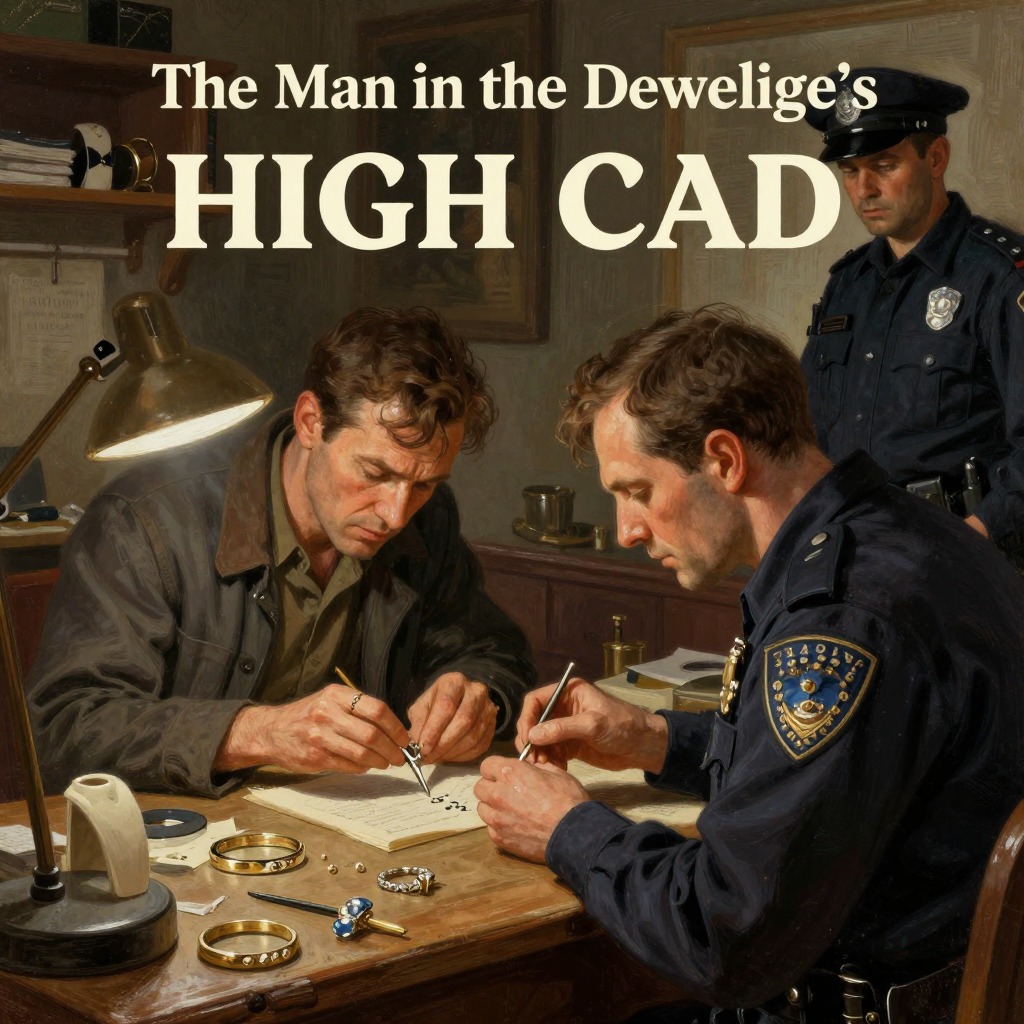
Frank Frink's life takes a dramatic turn when he is fired from his job at W-M Corporation, where he had been forging fake American artifacts, including a Colt .44 revolver of the Frontier period. He had spouted the wrong kind of talk to Wyndam-Matson, the factory owner, and now faces the prospect of being blacklisted and having to appear before the Laborers' Justification Commission. In his despair, he consults the I Ching, which gives him the hexagram Ch'ien, Modesty, a good omen, but also a moving line that warns of doom: "The wall falls back into the moat." Despite this ominous line, he decides to follow the advice of Ed McCarthy, the shop foreman, and go into business for himself, making contemporary jewelry. Together they found Edfrank Custom Jewelry, and after two weeks of nearly constant work, they produce their first finished batch. The business is a gamble, and Frink is haunted by the fear that it will fail, but he is also driven by the hope of winning back his ex-wife, Juliana.
Key Actions and Objectives
Frink's key actions are driven by his desire to survive and to create something authentic. After being fired, he seeks to get his job back, but when that fails, he embraces the idea of starting his own jewelry business. He and McCarthy invest their money in tools and materials, and they produce a line of abstract, handwrought pieces that are unlike anything else on the market. Frink's objective is not just to make a living, but to prove that a Jew can create, not just imitate and sell. He is also motivated by the hope of reuniting with Juliana, and he plans to send her some of his jewelry to show her what he is doing. However, his plans are interrupted when he is arrested for bunco, accused of being involved in the fake admiral incident that had embarrassed Robert Childan. The arrest reveals his Jewish identity to the police, and he is held for the German consul, facing extradition to the Reich.
Relationships and Conflict
Frink's relationships are marked by conflict and loss. His marriage to Juliana ended in divorce a year ago, and he still loves her, but he cannot find her. He thinks of her constantly, remembering her screwball expression and her dilapidated clothes, and he hopes that his new business will make him worthy of her. His relationship with Ed McCarthy is one of partnership and mutual respect, but it is also strained by the pressures of the failing business. His relationship with Wyndam-Matson is one of employer and employee, but it is poisoned by the fact that Wyndam-Matson is a forger and a man who would betray Frink to the Germans if it suited him. The conflict with Wyndam-Matson comes to a head when Frink and McCarthy try to get money from him to start their business, and Wyndam-Matson gives them a certified check for two thousand dollars, but Frink is uneasy about taking it, feeling that they have entered the world of compromise and corruption.
Change and Ending
Frank Frink's story ends with a kind of rebirth. After being arrested and held for the German consul, he is unexpectedly released, thanks to the intervention of Nobusuke Tagomi, who scribbles "Release" on the Form 20-50 and signs it. Frink is stunned by his good fortune, and he walks out of the police station into the evening air, feeling like a man reborn. He returns to the basement workshop where Ed McCarthy is eating his dinner, and he picks up where he left off, making jewelry. The experience has changed him; he is no longer the same man who was fired from W-M Corporation. He has faced the abyss of his own mortality and has been given a second chance. He knows he will never fully understand why he was released, but he is determined to keep moving, to keep working, and to create something of value in a world that is full of fakes and lies.
Narrative Role and Evaluation
Frank Frink serves as a counterpoint to the other characters in the novel, particularly Robert Childan, who is obsessed with the authenticity of historical artifacts. Frink's journey from forger to creator is a moral and artistic awakening, and his handmade jewelry, with its lack of historicity, becomes a symbol of the possibility of a new American culture. His story also highlights the precariousness of Jewish identity in the Axis-dominated world, and his narrow escape from deportation underscores the constant threat of violence and persecution. Through Frink, the novel explores themes of authenticity, creativity, and the struggle to maintain one's humanity in the face of overwhelming power. His final act of returning to the workshop is a testament to the resilience of the human spirit, and his silver triangle, which later captivates Mr. Tagomi, becomes a vessel for the Tao, a small but potent sign of hope in a dark world.