German Reich
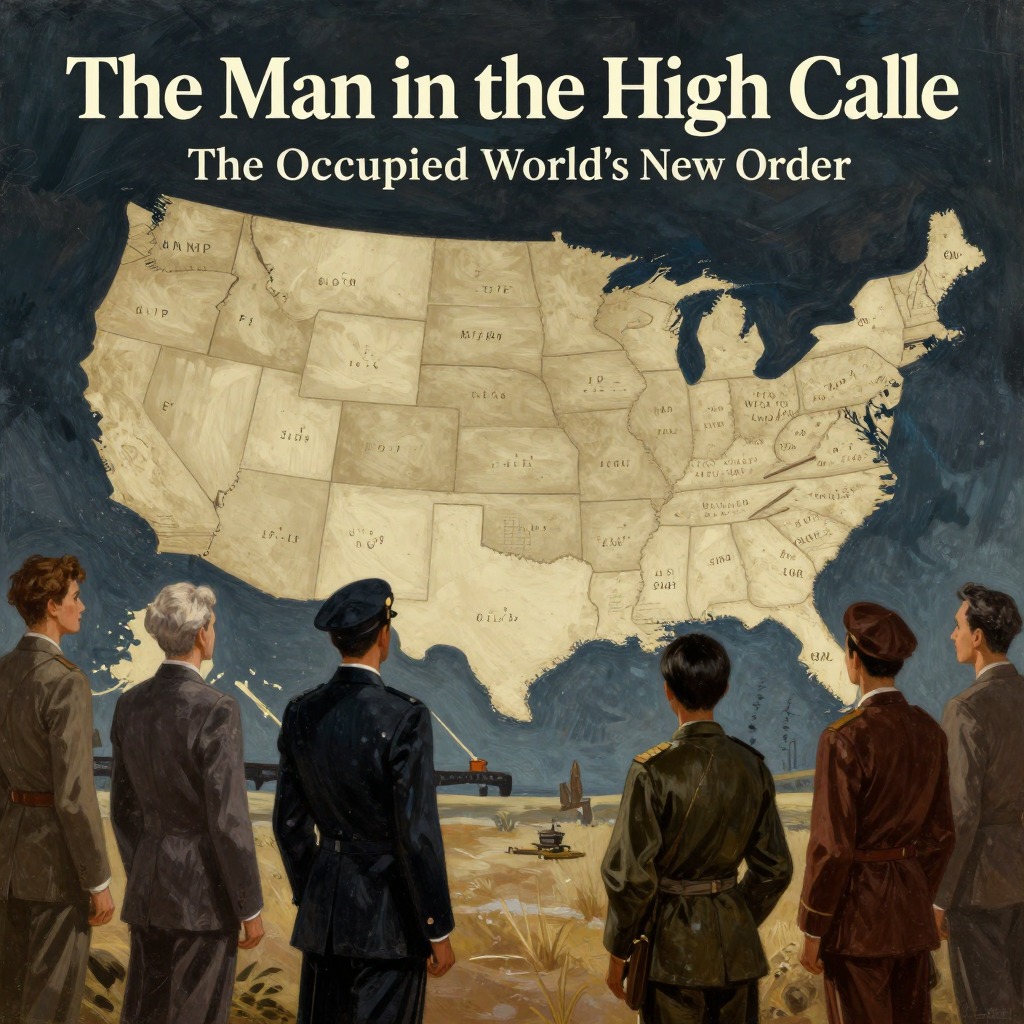
The Man in the High CastleThe German Reich, often referred to as the Reich or Nazi Germany, is the dominant totalitarian power in the alternate history of The Man in the High Castle. Having won World War II alongside Japan, it has partitioned the former United States, with the East Coast under its direct control, and exerts immense influence over global affairs through its technological superiority, genocidal policies, and ruthless internal power struggles. The Reich is a constant, menacing presence that shapes the lives of every character, from the subjugated whites in the Pacific States to the Japanese officials who must navigate its dangerous politics.
Nature and Structure
The German Reich is a totalitarian state built on the Nazi ideology of racial purity and world domination. Its power is maintained through a combination of advanced technology, a pervasive police state, and a culture of fanatical obedience. The Reich has achieved spectacular technological feats, including interplanetary rockets that travel to Mars and Venus, and the development of heat-resistant plastics and synthetic materials that give it a decisive economic edge over Japan. The Reich's internal structure is a complex web of competing factions: the Nazi Party, the Wehrmacht (armed forces), the SS (Schutzstaffel), the SD (Sicherheitsdienst, the intelligence service), and the Abwehr (military intelligence). This rivalry is deliberately fostered by the leadership to prevent any single faction from becoming too powerful. The Reich's legal system is arbitrary and brutal, exemplified by the Nuremberg Laws, which are used to persecute Jews and other "undesirables," and the concept of "Protective Custody," a euphemism for imprisonment and murder.
Atrocities and Colonial Policy
The Reich's genocidal policies are a central horror of the novel. The most extreme example is the "Final Solution of the African Problem," a campaign of mass extermination that has left the continent a "huge empty ruin." This project, driven by ideologues like Alfred Rosenberg and Arthur Seyss-Inquart, aimed to wipe out the native population and create a new Aryan homeland. The Reich has also implemented a system of racial hierarchy in its conquered territories, including the United States, where Jews, Slavs, and other non-Aryans are subject to persecution, forced labor, and extermination. The novel references the use of gas chambers and the Zyklon B poison, and characters like Frank Frink, a Jew, live in constant fear of being discovered and sent to a camp. The Reich's colonial administration is notoriously brutal, with figures like Seyss-Inquart being described as "possibly the most hated man in Reich territory."
Internal Power Struggle and Operation Dandelion
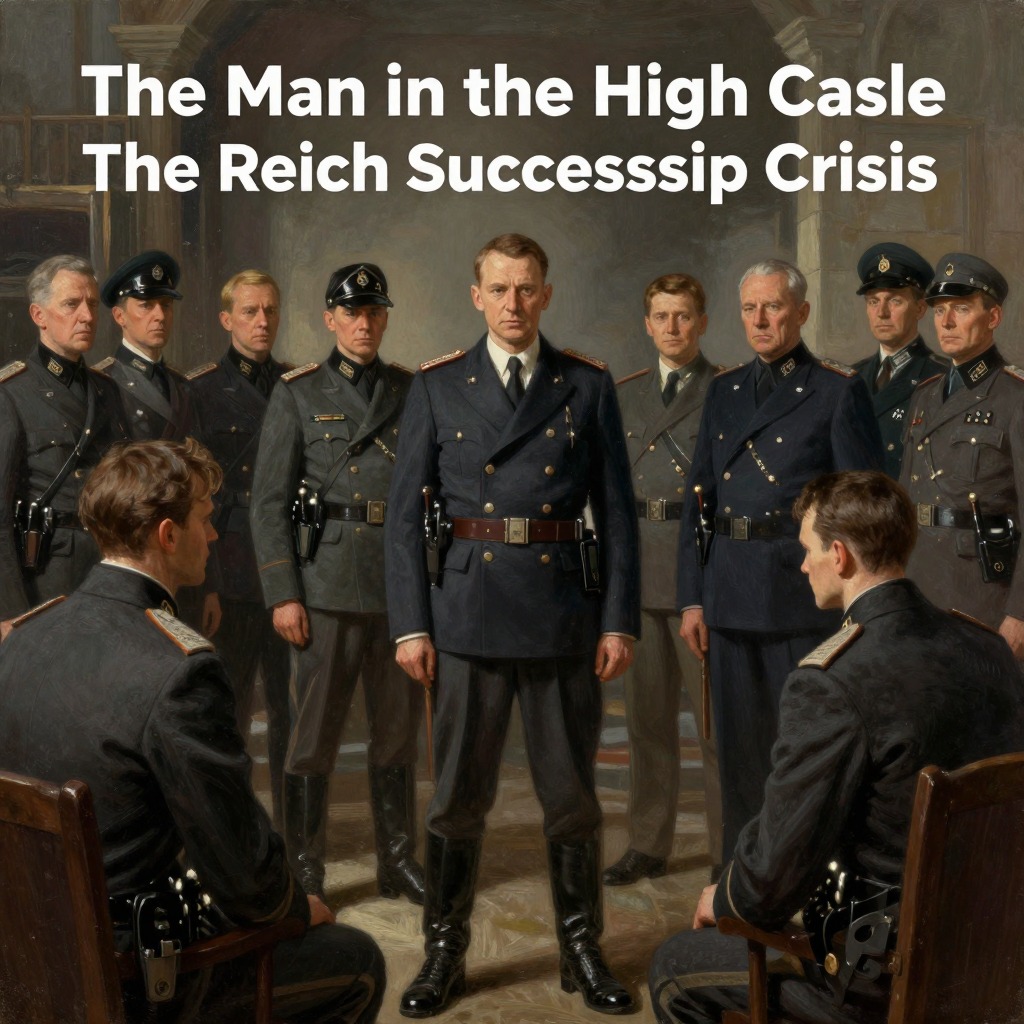
The death of Chancellor Martin Bormann triggers a fierce power struggle among the Nazi elite. The main contenders include Hermann Göring, Joseph Goebbels, Reinhard Heydrich, Baldur von Schirach, and Arthur Seyss-Inquart. The novel's central plot revolves around Operation Dandelion, a plan for a massive nuclear attack on the Japanese Home Islands, which is advocated by the Goebbels faction. Rudolf Wegener, an Abwehr agent, travels to San Francisco to warn the Japanese, hoping to persuade them to support the SD faction led by Heydrich, which opposes the attack. The power struggle is depicted as a chaotic and amoral contest, with each faction willing to use any means to gain the upper hand. The SD's attempt to kidnap or kill Wegener in the Nippon Times Building, which results in a shootout, is a direct manifestation of this internal conflict spilling over into the Pacific States.
Cultural and Ideological Influence
The Reich's ideology permeates the world of the novel, even in Japanese-controlled territory. Characters like Robert Childan, a white American, express admiration for the Nazis' "nobility" and technological prowess, while simultaneously fearing their brutality. The novel The Grasshopper Lies Heavy, which depicts an Allied victory, is banned in the Reich, and its author, Hawthorne Abendsen, lives in fear of assassination. The Reich's cultural influence is also evident in the widespread use of German products, such as the Messerschmitt rocket and I.G. Farben's synthetic materials, and in the presence of German officials and tourists in San Francisco. The novel's characters are constantly aware of the Reich's power, and their lives are shaped by the threat of its violence and the allure of its technology.
Significance
The German Reich in The Man in the High Castle is not merely a backdrop but a central, active force that drives the plot and defines the moral landscape. It represents the ultimate triumph of a nihilistic, technocratic, and racist ideology, and its internal contradictions and brutal policies serve as a warning about the dangers of unchecked power. The novel's exploration of the Reich's internal power struggle and its genocidal ambitions provides a chillingly plausible vision of a world where the Axis won, and the struggle of characters like Wegener and Tagomi to resist its plans highlights the difficult choices faced by individuals in a world of overwhelming evil.