Tokkoka
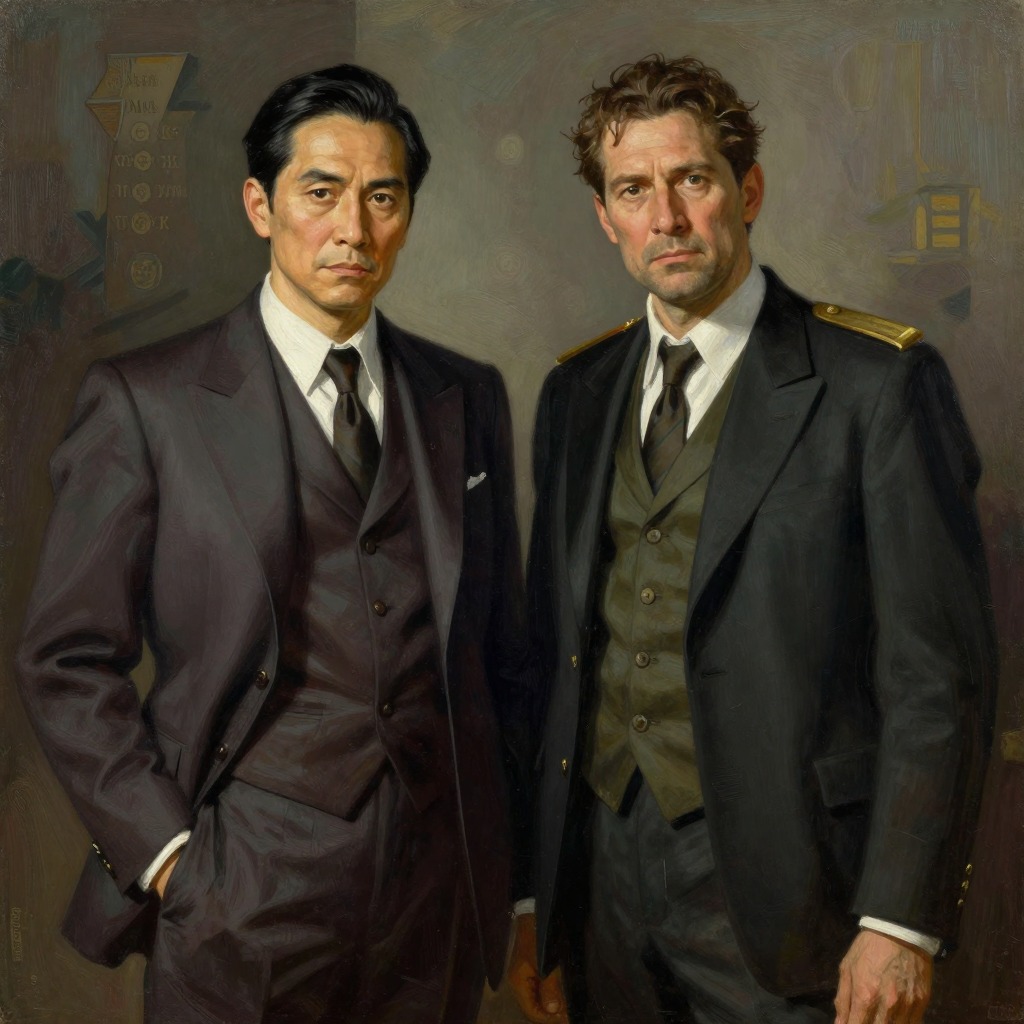
The Man in the High CastleThe Tokkoka, the Japanese secret police operating within the Pacific States of America, is a shadowy but pervasive institution that underpins the occupation's authority through surveillance, intimidation, and the enforcement of racial and political hierarchies. Though its agents rarely appear directly in the narrative, its influence is felt in the lives of both the colonized and the colonizers, shaping the fates of characters like Frank Frink and Robert Childan, and even providing a protective shield during the SD raid on the Nippon Times Building. The Tokkoka represents the unseen machinery of the Japanese imperial state, a force that operates in the background, yet its presence is decisive in maintaining the social order of the Pacific States.
Nature and Structure
The Tokkoka is the Japanese secret police, a counterpart to the German SD and Gestapo, tasked with monitoring and suppressing dissent within the Pacific States of America. Its agents are often white Americans, known as pinocs, who serve the Japanese occupation authorities. The organization operates with a degree of autonomy, but it is ultimately answerable to the Japanese Trade Missions and the imperial government in Tokyo. The Tokkoka's methods are characterized by surveillance, infiltration, and the use of informants, as seen when a Kempeitai officer, a pinoc, visits Robert Childan to investigate the fake admiral incident. The officer presents a photo of Frank Frink, revealing that the Tokkoka has been tracking Frink's activities, and secures Childan's signature on a legal form, demonstrating the bureaucratic efficiency with which the police operate.
Aims and Methods
The Tokkoka's primary aim is to maintain the stability of the Japanese occupation by rooting out threats to the established order. This includes monitoring political dissidents, racial minorities, and even potential spies. The organization employs a combination of legal formalities and covert operations. In the case of Frank Frink, the Tokkoka's investigation leads to his arrest on charges of bunco, a pretext that masks the deeper racial and political motivations. The police officer who arrests Frink reveals his knowledge of Frink's Jewish identity, stating, "You're a kike. Refugee from Europe," and threatens to hand him over to the German consul for trial under German law. This incident illustrates how the Tokkoka collaborates with the German authorities to enforce racial laws, even within Japanese-controlled territory.
Key Operations and Incidents
The Tokkoka's most significant operation in the novel is its response to the SD raid on the Nippon Times Building. When a group of SD men attempts to seize the building, Mr. Ramsey, an employee of the Trade Mission, reports that "Army MPs are on the way, plus San Francisco Kempeitai." The Tokkoka, along with the military police, is called in to counter the German incursion, demonstrating its role in protecting Japanese interests against foreign interference. The raid is ultimately thwarted, and the Tokkoka's presence helps to restore order, though the incident leaves Mr. Tagomi deeply shaken.
Another key incident is the arrest of Frank Frink. The Tokkoka, acting on information from Robert Childan, identifies Frink as the man who posed as an admiral's gentleman and attempted to swindle Childan. The arrest is carried out by the San Francisco Police Department, but the Tokkoka's involvement is evident in the swift and coordinated response. Frink is held at the Kearny Street Police Station, where he is subjected to racial taunts and threats of extradition to Germany. His release, however, comes unexpectedly, thanks to the intervention of Mr. Tagomi, who signs a release order citing Military Protocol 1947, overriding the German consul's request for Frink's remand.
Relationships and Conflicts
The Tokkoka's relationship with other institutions is complex. It operates alongside the Kempeitai, the Japanese military police, and the San Francisco Police Department, but its jurisdiction often overlaps with that of the German SD. The SD raid on the Nippon Times Building highlights the tension between the Japanese and German secret police, as the Tokkoka is called in to defend against the SD's aggressive actions. The Tokkoka also interacts with the Trade Missions, as seen when Mr. Tagomi, a high-ranking official, is able to override the German consul's request for Frink's extradition, demonstrating the Tokkoka's subordination to the Trade Mission's authority.
Development and Significance
The Tokkoka's role in the novel underscores the pervasive nature of surveillance and control in the Pacific States. It is a force that operates in the shadows, but its influence is felt in the daily lives of the characters. The arrest of Frank Frink and the protection of the Nippon Times Building are just two examples of how the Tokkoka shapes the narrative. The organization's methods reflect the broader themes of the novel, including the exercise of power, the enforcement of racial hierarchies, and the fragility of individual freedom under totalitarian rule. The Tokkoka's presence serves as a reminder that the Japanese occupation, like the German Reich, relies on a network of secret police to maintain its grip on power, and that the lives of ordinary people are subject to the whims of these unseen authorities.