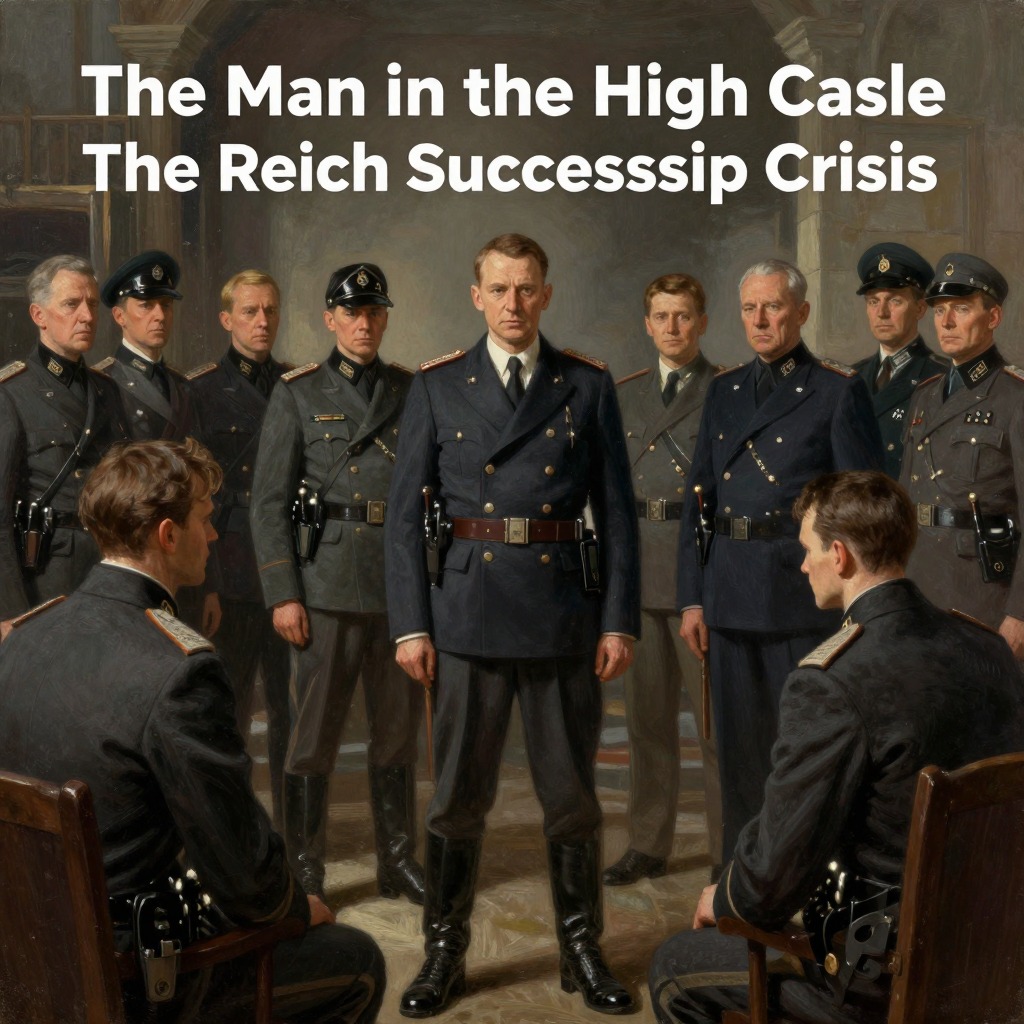
Waffen-SS
The Man in the High CastleThe Waffen-SS is the armed elite branch of the Nazi Party's SS, depicted in the novel as a fanatical, ideologically driven force whose members are feared even by other Nazis. In the story, Waffen-SS men appear as the enforcers of the Reich's will, from guarding its leaders to carrying out assassinations, embodying the regime's brutal and uncompromising nature.
Nature and Structure
The Waffen-SS is presented as the military arm of the SS, distinct from the general SS and the SD. Its members are characterized by their unwavering loyalty to the Nazi cause and their willingness to use extreme violence. In the novel, Waffen-SS personnel are shown as disciplined, cold, and efficient, often operating in small, coordinated units. They are distinguished by their black uniforms and the death's head insignia, symbols of their feared reputation. The organization is portrayed as a parallel military force to the regular Wehrmacht, with its own hierarchy and command structure, and it is deeply intertwined with the highest levels of Nazi power, including figures like SS General Heydrich.
Key Members and Their Roles
The novel features several Waffen-SS members who play crucial roles in the plot. One of the most prominent is a flat-faced, unwinking blond fellow who, upon Captain Rudolf Wegener's return to Berlin, steps forward to identify him and take him into custody. This individual, along with two other Waffen-SS men armed with submachine guns under their greatcoats, effectively arrests Wegener, demonstrating the organization's reach and authority. These men are instructed to take Wegener directly to SS General Heydrich, who is with Sepp Dietrich at the OKW of the Leibstandarte Division, highlighting the Waffen-SS's role as a personal guard and enforcer for top Nazi leaders. The Waffen-SS is also mentioned in the context of the broader SS apparatus, which includes figures like Reinhard Heydrich, described as a younger individual who helped the original Revolution in 1932 and is feared by many Party people.
Major Actions and Operations
The Waffen-SS is involved in several key actions throughout the narrative. Most notably, they are the ones who apprehend Captain Wegener upon his return to Germany, acting on orders to prevent him from being approached by Wehrmacht or Party persons. This operation is carried out with precision and speed, as the Waffen-SS men move to surround Wegener and escort him to a waiting SS Daimler staff sedan. The organization is also implicated in the broader schemes of the Nazi regime, such as Operation Dandelion, a planned nuclear attack on Japan. While the Waffen-SS is not the primary executor of this plan, its members are part of the military apparatus that would carry out such orders. Additionally, the Waffen-SS is referenced in discussions about the power struggle within the Reich, with figures like Heydrich using the organization to strengthen his position against the Goebbels government.
Development and Significance
The Waffen-SS's role in the novel reflects the historical reality of the organization as a fanatical and ruthless military force. Its members are portrayed as the embodiment of Nazi ideology, willing to commit atrocities without hesitation. The organization's significance lies in its representation of the extreme violence and totalitarian control that characterize the German Reich in the alternate history. The Waffen-SS serves as a reminder of the regime's brutality, and its actions drive key plot points, such as the arrest of Wegener and the threat of assassination against Hawthorne Abendsen. Through the Waffen-SS, the novel explores themes of power, loyalty, and the moral compromises inherent in a totalitarian society.