
Death, Nature, and the Living Ground
The Master Butchers Singing ClubThe novel’s recurring encounters with burial, decomposition, and growth make death part of a material cycle without making loss painless.
increasing Bearing strength in each event
 decreasing
Bearing strength in each eventdecreasingThe Cellar’s Living Rot

Death Beneath the House
The bodies are discovered
Delphine and Cyprian find the Chavers family in Roy’s cellar, where decomposition has become an overwhelming physical presence.
The dead remain active in memory
The discovery changes Roy and burdens Delphine. Death is not remote or clean; it inhabits homes and keeps demanding explanation.
Bones in the Garden
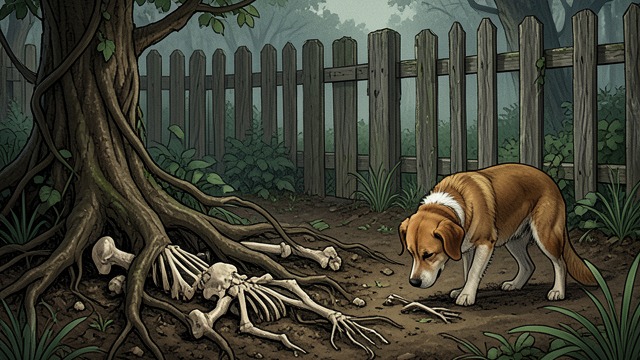
The Garden’s Buried Remains
Growth feeds on what dies
Eva’s garden grows from waste and rich soil, while the dog brings bones to the surface. Life and death occupy the same ground.
A difficult consolation
Delphine sees the garden as evidence that nothing is simply discarded. This does not undo death, but offers a physical language for persistence.
Markus Under the Earth
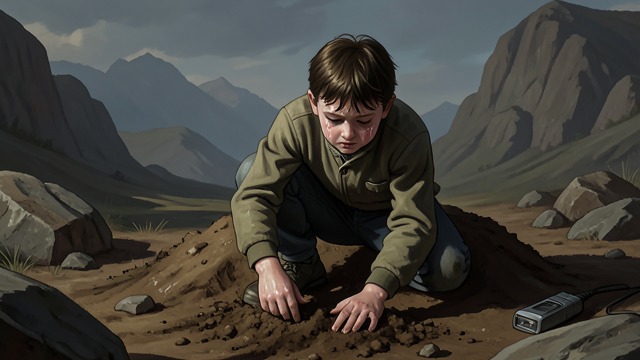
Earth as Shelter and Threat
A boy enters the mound
Markus digs an underground room that comforts him in grief. The earth feels like protection until its weight nearly kills him.
Birthlike recovery
After his rescue, Delphine imagines that Markus must grow back into life. The same earth that buries him also becomes the setting of a strange renewal.
The Dog’s Bones
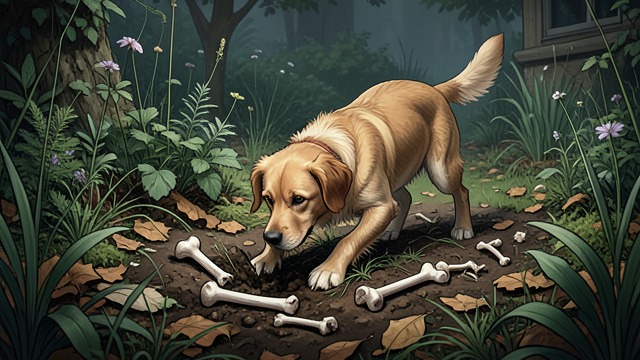
Scattered Remains
Bones emerge from hiding
Schatzie digs up bones buried by a former dog and scatters them through Eva’s overgrown garden. Delphine imagines them as parts of a future reckoning.
Nature does not tidy itself
The garden remains abundant and disorderly. Its beauty contains the evidence of death rather than concealing it completely.
A Life Fed by Other Lives
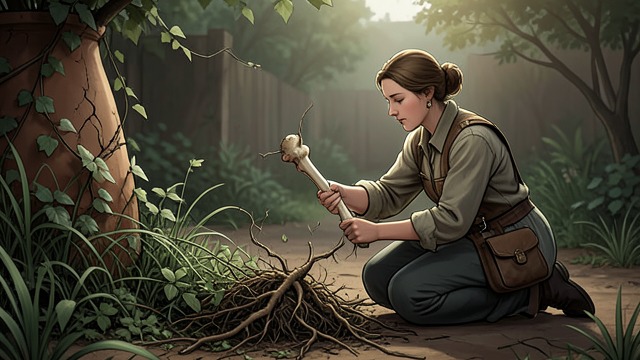
The Garden After the Headlines
Human catastrophe and ordinary life
Delphine reads about the atomic bomb, then returns to pulling weeds from the garden. The vast scale of destruction coexists with small tasks and living plants.
A continuous material pattern
She finds a bone mixed with a vigorous root and throws both into the weeds. Her gesture accepts interdependence without turning it into easy consolation.
Summer 1934
After Eva’s illness and death
November, after Eva’s death
After Eva’s death
After the news of the atomic bombing
