Argus
The Master Butchers Singing ClubArgus is a railroad-founded town in North Dakota whose significance lies in the lives made there: Fidelis Waldvogel arrives expecting to work only long enough to continue his journey, but the town becomes the setting for his livelihood, family, and lasting ties. Its practical institutions—stores, banks, churches, a school, taverns, a drugstore, and eventually a courthouse—grow out of the movement of goods across the prairie. Yet Argus is never simply a settled backdrop. Its exposed landscape, economic uncertainty, drought, and recurring departures make home feel provisional, even as work and care establish durable bonds.
Origin and Setting
Argus owes its beginning to the railroad, which crossed the river and continued into what the narrative describes as emptiness. The town formed from the traffic of the line: goods hauled into its elevators left again by train, while what remained helped create a settlement. Stores first served farmers with equipment and food; banks held their money; additional shops, houses, churches, a school, taverns, and a drugstore followed. With the courthouse, Argus became the county seat and seemed as promising as any place in North Dakota.
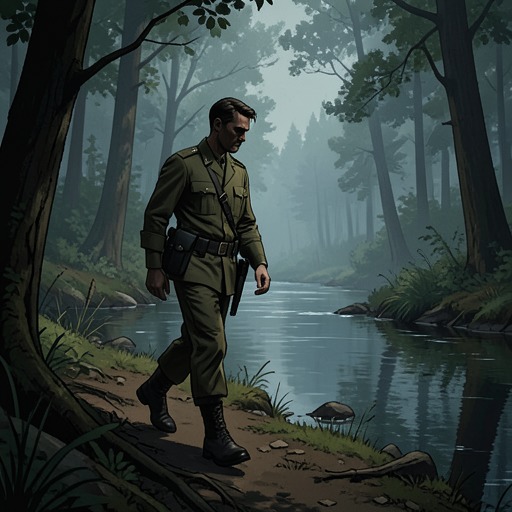
That civic growth does not erase the land’s openness. When Fidelis steps off the train, he sees squat commercial buildings, brick and limestone structures, young trees, and houses, but the surrounding plain makes the town appear defenseless. He has arrived with thirty-five cents and an empty sausage suitcase containing six knives, a sharpening steel, and graduated whetstones. The wind’s indifference feels both unbearable and comforting. He does not yet know he will never leave; he assumes he must work in Argus until he can afford to travel onward. The gap between that intention and the life he builds there establishes the town’s central role as an accidental destination that becomes home.
Work, Trade, and Household
Fidelis finds work immediately with Pete Kozka and also takes jobs in nearby towns, custom-butchering at farms when someone fetches him. His skill at sausage-making, learned from his father, increases the Kozka business. He follows the family principle of using the finest ingredients, down to fresh garlic, clean and exceptionally fresh casings, and the best local potatoes for Swedish sausage. On Thursdays, customers gather for links hot from the kettle, even before smoking. Fidelis lives sparingly—on sausage ends, bruised fruit, and other leftovers—while making beer and washing his own clothes, saving toward a larger place.
That labor eventually brings Eva Waldvogel and her young son, Franz, across the ocean to Argus. The town’s commercial life is thus also the means by which Fidelis assembles a household. Later, he becomes one of the first Argus merchants to obtain a liquor license and installs a glass refrigerator case for beer. The store’s daily business shares space with domestic life: customers come in while Eva and Delphine sit in the garden, and Franz can serve them. Commerce is not separate from care, but one of its conditions.
Delphine Watzka enters Waldvogel’s Meats in a moment of longing for her mother, wanting to see the photographs Roy keeps in her room and wishing she had once been able to see her mother’s face clearly. Her meeting with Eva makes the shop a place of personal connection as well as trade. After Eva’s death, Delphine finds that she enjoys running the business. She takes pleasure in selling carefully chosen foods and develops a sharp sense of what customers can afford. She introduces a weekly grocery drawing, bargains with farms, stocks useful household and food items, and adds a dairy case with milk, cream, butter, and eggs. In a town where many residents are often broke and some cannot afford meat, she learns to charge the wealthy while trading carefully with the poor.
Hardship, Loss, and Return
Argus’s seasons register the limits of settlement. After drought, the following summer brings an abundance of insect eggs and slugs that consume Eva’s seedlings. Eva and Delphine use beer in a pie plate to destroy the pests, and Delphine privately connects their effort to Eva’s approaching death: she thinks they can make death easy for the helpless. As Eva’s illness worsens, Fidelis slaughters more often and works around the clock to meet the doctor bills. The garden, the shop, and the household continue their routines under the pressure of impending loss.
The town’s vulnerability becomes especially visible in the winter of failed crops. Bitter, powdery snow and exposed soil make Argus seem meaner and diminished; schoolchildren walk backward in groups, taking turns as lookouts. The hardship is also economic and personal. Tante searches for work, making repeated trips to the bank and other places, but returns to her brother’s house for food, where she must present her need as a claim. Argus offers institutions and neighbors, but neither guarantees security.
Later, Delphine and Fidelis leave with Markus and the other boys, intending to return to Germany. Markus’s fever prevents him from traveling with the twins, and the family’s departure separates them. When Delphine and Fidelis take the sick boy back north, Delphine tells him they are going home to Argus. The return is both a practical reversal and an acknowledgment of attachment. The road back makes the town’s meaning explicit: it is the place to which they return when departure proves impossible, and where care can resume.
Community, Memory, and Belonging
Argus’s social life is shaped by both close attention and limited privacy. When Clarisse Strub disappears after Sheriff Hock’s death, the shock gives way to talk and speculation. Her vanishing becomes part of local history, while the town’s routines flow around the event. Delphine’s silence about what she knows helps keep the truth private; snow has hidden her tracks, and for months even Roy does not realize that Cyprian Lazarre is no longer living in the house. The episode shows how a small town can preserve an event as rumor while remaining unaware of important details.
The town also provides a stage on which people must decide how to meet public curiosity. When Cyprian and Vilhus Gast perform in the school gym, Delphine and Markus arrive early and sit in the front row. Delphine expects people to stare and whisper about Cyprian and about her, but chooses a seat that puts her back to them so she can watch the show. The gym’s creaking chairs and familiar audience turn performance into a test of belonging: she does not need to escape Argus’s scrutiny in order to claim her own place within it.
Step-and-a-Half, who once walked the North Dakota roads without a destination, eventually comes to regard Argus as an arrival. As she stays, she learns its residents from the scraps they discard rather than from the respectable fronts they show the town. Bottles, broken plates, unworn socks, books, sheet music, toys, and ordinary household goods become evidence of habits and private histories. Her way of seeing gives Argus a second social map, one made from alleys and back porches. The town’s discarded objects preserve stories that its public facades do not tell.
Argus remains present even in memory and imagined futures. In old age, Step-and-a-Half recalls Fidelis arriving with a suitcase she had mistaken for empty, Eva’s family, Delphine’s grief, and the boy rescued from the collapsed mound. She imagines Delphine and her sister growing old together amid plants in a renovated shop. The town’s people and episodes assemble into a continuing record of lives that have changed, departed, or been lost. Argus is therefore more than the place where events happen: it is the accumulated structure of work, care, gossip, hardship, and remembered attachment that makes a scattered community intelligible as home.