Big Foot
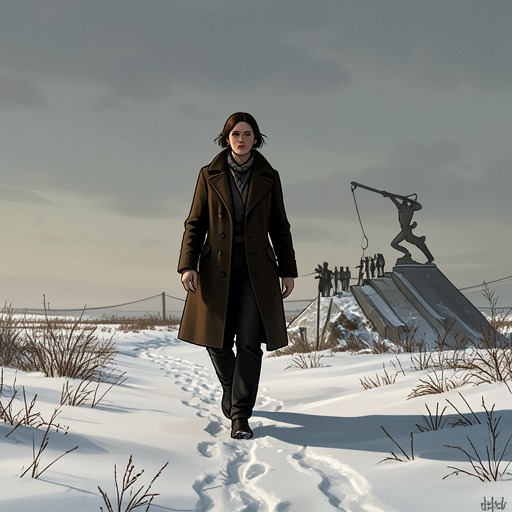
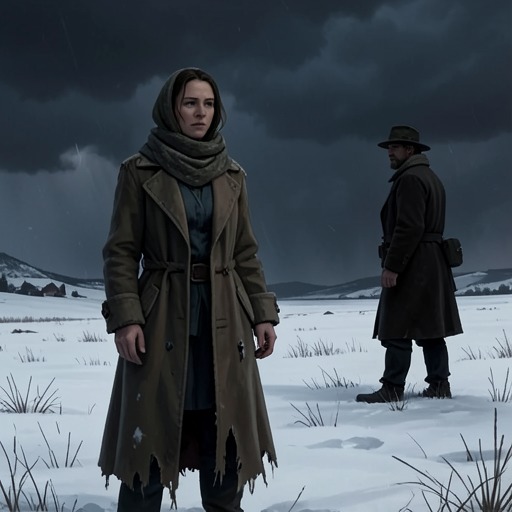
The Master Butchers Singing ClubBig Foot is the dying leader of a group of Minneconjou Lakota who arrive at Wounded Knee seeking protection. His final journey is recounted by Roy Watzka as part of the history of Minnie’s childhood: the story places Big Foot’s people among those fleeing hunger and defeat, and shows how a plea for shelter ends in massacre. Though Big Foot appears only through Roy’s account, his presence gives the episode its human stakes and exposes the distance between military assurances of safety and the violence visited on the people who seek it.
Identity and Circumstances
Roy describes Big Foot as an old chief dying of pneumonia in a wagon. His people are mostly women and children, accompanied by a few exhausted warriors, and are short of both food and shelter. They have been displaced amid the aftermath of Sitting Bull’s betrayal and the collapse of ordinary survival. Roy also recounts their hope that the Ghost Dance might bring back the dead, a hope he frames as arising from loneliness and loss.
The band’s search for refuge takes them through the Badlands. At Medicine Root Creek, they encounter Major Samuel M. Whitside of the Seventh Cavalry, who persuades them to follow a white flag of surrender to a military camp near Wounded Knee. Big Foot’s failing health and the group’s deprivation make the promise of protection urgent; the people give up their guns and camp where they are directed.
The Wounded Knee Massacre in Roy’s Account
Roy’s story focuses on the conditions of the camp before the shooting. Minnie’s father shares their last piece of bannock with a woman and her baby; the woman, in turn, divides a gingerbread figure she had received at a church service. In the morning she prepares a root tea for Minnie. A shot is fired outside the tent as Minnie begins to drink it, and the sound becomes the signal for a much wider attack.
Minnie’s father is killed as he runs from the tent. Minnie and the woman move toward the white flag, but the attack continues, including fire from Hotchkiss guns directed at the camp. The woman is killed while nursing her baby. Minnie briefly reaches her father and receives his last words before leaving the scene. Roy’s account thus connects Big Foot’s band and Minnie’s family to the same sequence of attempted surrender, military violence, and loss.
Significance and Narrative Role
Big Foot’s role is inseparable from the contradiction at the center of the episode: his people surrender their weapons and accept the route to a camp represented as a place of shelter, yet the ensuing violence reaches the camp and the white flag. Roy’s account presents the massacre not as an abstract historical reference but through the specific vulnerability of a dying leader, a starving community, and a child caught in the events.
The episode reaches Delphine through Roy’s act of storytelling. He tells her that the girl’s history explains why her mother could not be tamed by Roy, then recounts Minnie’s survival and walk through the snow to a mission. Big Foot is therefore part of the family history Roy discloses: his death and the destruction of the community around him form the historical trauma behind Minnie’s escape and the story Delphine is hearing.