Delphine Watzka and Eva Waldvogel
The Master Butchers Singing ClubDelphine Watzka and Eva Waldvogel’s friendship begins with food and becomes a source of belonging for Delphine when she is grieving, estranged from her father, and unsure whether she can return home. Eva’s attention is practical rather than ceremonial: she shares cooking knowledge, listens to Delphine’s painful account, offers companionship, and eventually gives her work at Waldvogel’s Meats. The friendship joins the shop’s craft to the care of the household, making everyday acts of food preparation a language of welcome.
First Meeting at the Shop
Delphine enters Waldvogel’s Meats while longing for a clear memory of her mother’s face. The shop’s familiar working atmosphere and the smell of its provisions frame a meeting that quickly shifts from a customer’s purchase to a personal connection. Delphine approaches the counter with confident advice about lard, explaining that it can be used for fish and that cracklings can settle before the fat is poured off. Her distinction between ordinary lard and good lard opens a conversation grounded in knowledge learned through use, not abstract instruction.
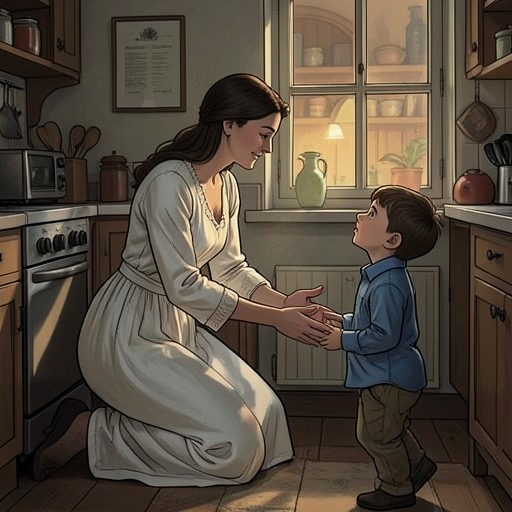
Eva recognizes Delphine and invites her behind the counter, then into the kitchen, where she offers to teach her to make mincemeat pie. Her recipe lesson centers on suet, but the invitation matters as much as the technique: Eva treats a customer as someone worth knowing. For Delphine, entering the kitchen brings an unexpected feeling of release and quiet. The scene establishes the friendship through ordinary hospitality—an invitation, a chair, and coffee made from beans Eva grinds herself—rather than through a formal declaration of closeness.
Trust, Disclosure, and Welcome
Delphine soon chooses to tell Eva what has happened in Roy Watzka’s house. She knows the story may alter how Eva sees her, and she understands that it could become town gossip; still, she decides Eva should hear it from her. Her brief explanation that Eva is the first person she has told marks the disclosure as an act of trust. Eva does not turn the account into an interrogation. She murmurs reassurance, touches Delphine’s shoulder, and brings her more coffee as Delphine cries at the table.
The response gives Delphine a form of acceptance at a time when she feels exposed and dispirited. She worries that arriving in tears has been shameful, but Eva appears accustomed to people finding relief at her table. The friendship therefore takes shape through a contrast: Delphine offers a difficult story, while Eva answers with attentive presence and ordinary care. The kitchen becomes a place where Delphine can speak without having to conceal the circumstances that brought her there.
Work, Food, and Shared Knowledge
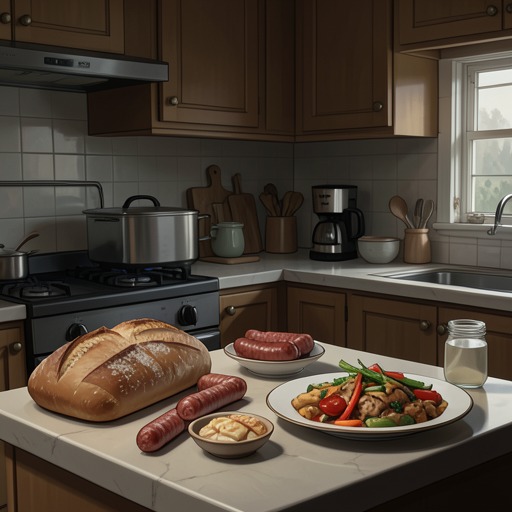
After the first meeting, Delphine leaves with lard, bacon, oranges, onions, bread, and summer sausage. The groceries give her something tangible to carry home, while Eva’s invitation gives her a reason to imagine facing her father again. Delphine is grateful, yet unsure whether Eva’s kindness will last; she suspects it may have been a one-time gesture. That uncertainty makes Eva’s continued welcome significant when Delphine returns to the shop.
On a later visit, Delphine walks roughly four miles with Cyprian Lazarre because they do not want to waste gasoline. She needs to exercise her leg muscles in case they resume their show, and the possibility of earning money for a new mattress for Roy and for cleaning supplies is part of the practical background to the visit. Eva again invites her to sit for coffee. When no product on the household shelf seems strong enough to address the cleaning problem, Eva wants to devise a mixture herself. The repeated invitation shows that their connection is no longer confined to the first encounter: Delphine can return, bring her needs, and expect to be received.
Eva’s friendship is also expressed through work. Delphine hopes she can remain close to Eva or at least hold the job she is soon offered in the shop’s waiting trade. Eva tells her the work will begin the next day. The offer gives their relationship a durable everyday setting, while Delphine’s presence links the shop to the life and responsibilities she carries beyond it. Their bond is thus both personal and practical, formed through repeated visits, shared labor, and the exchange of knowledge about food and household needs.
A Shared Sense of Value
Eva’s kitchen and shop belong to a wider world in which food is treated as skilled work. Fidelis Waldvogel’s trade rests on careful preparation and the insistence that even humble ingredients should be the finest available; that ethic is visible in a shop where quality depends on attention to ingredients and technique. Delphine’s advice about lard and Eva’s lesson in pie-making place the women within that world of practical expertise. Their friendship does not require them to share the same role: Eva teaches and offers work, while Delphine arrives with knowledge of her own.
The shop’s food also holds associations beyond commerce. Later, when Cyprian is far from Delphine, a meal of baked beans, smoked pork, and soft white bread recalls her to him through familiar tastes. In another later scene, Fidelis and a companion share fresh country bread, butter, smoked ham, and dill pickles. These moments do not describe the friendship directly, but they echo the book’s recurring use of food as memory, comfort, and connection. In that context, Eva’s first invitation to Delphine is part of a larger pattern: food carries care between people and gives remembered domestic life a material form.
Significance
The friendship matters because Eva offers Delphine recognition without demanding that she first resolve her difficulties. Delphine arrives carrying grief and a troubling recent experience; Eva responds by making room for her at the counter and in the kitchen, listening when she confides, and offering a place in the business. Delphine’s initial fear that the welcome will be temporary gives way to repeated visits and a job beginning the following day.
Their connection is built from modest, recurring acts rather than dramatic promises: explaining how to use lard, teaching a recipe, grinding coffee, offering another cup, and making a place for Delphine to work. Through those acts, Eva becomes a friend and a practical source of stability. The relationship also enlarges the meaning of the butcher shop: it is not only a place where food is sold, but a setting where skill, conversation, and welcome help form ties between people.