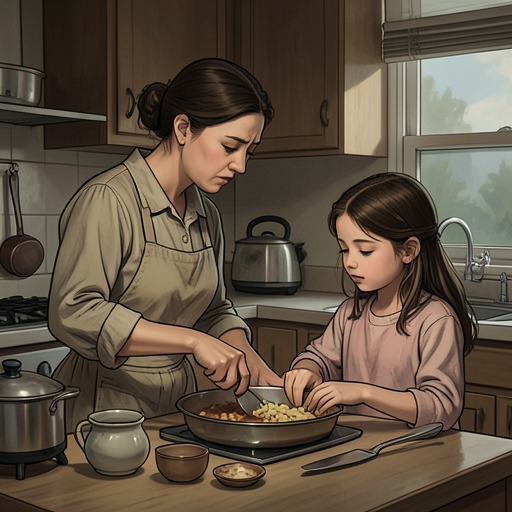
Delphine urges Mazarine to write to Franz
The Master Butchers Singing ClubAt Roy Watzka’s funeral, Delphine urges Mazarine to write to Franz, transforming the bewildering force of her father’s death into a practical appeal not to leave love unspoken. The moment joins private grief to an act of care: Delphine cannot make sense of her own feelings, but she can tell Mazarine what mortality has made impossible to ignore.
The Funeral and Its Aftermath
In the swirl of the funeral gathering, Delphine abruptly stands with Mazarine and leads her out of the church hall. The funeral has been well attended, and the hall is crowded with food and sympathy; after Roy’s burial, the care surrounding Delphine feels overwhelming. She seeks a little plot of blistered grass behind the church kitchen instead, away from the gathering.
There, Delphine pushes her hair from her face and admits that if she smoked any more, she would smoke now. Mazarine tells her she is sorry. Delphine answers that she is sorry too, but the words do not neatly name what she feels: she is tired and hopelessly angry, grieving the waste of Roy’s life and of her own affection for him.
Grief Without a Simple Name
Roy’s death brings back the desperate love Delphine had felt for him as a child, despite years in which his behavior exasperated her and she had sometimes looked forward to losing him. She tries to distinguish her reaction from grief, fear of loneliness, exhaustion, or relief, finally calling it existential. Naming the feeling gives her a moment of courage, though it does not resolve the contradictions in her attachment to her father.
Mazarine remains beside her, one hand against the brick wall, patient and humble. Delphine’s disclosure takes place not in the public ritual of the funeral but in this brief, quieter encounter. Her grief is difficult to explain even to herself; what becomes clear is the urgency it gives her to speak to someone younger.
The Appeal to Mazarine
Delphine says that she wants to tell Mazarine something, though she has not known exactly what until she begins speaking. Roy’s death, and the romantic hopes woven around it, have made one truth plain to her: everyone dies. She tells Mazarine that Franz loves her and that she loves him, then asks why she should not write to him and tell him so.
The appeal is both intimate and direct. Delphine does not offer a general consolation or claim that her own feelings have become simple; instead, she converts the knowledge of death into a concrete recommendation. Her father’s death has exposed the cost of delay, and she urges Mazarine to answer love while there is still time to do so.