Erich Waldvogel
The Master Butchers Singing ClubErich Waldvogel’s story follows a boy whose intimate family life is first shaped by loss and then remade by wartime indoctrination. Born in North Dakota and raised in the Waldvogel family, he becomes a German soldier and prisoner of war; when his father and brother finally find him in an American camp, he recognizes them but keeps walking. His refusal makes the cost of his chosen identity unmistakable: captivity has not broken his allegiance to Germany, but neither has it erased the childhood ties he is trying to deny.
Identity and Family Life
As a boy, Erich is among the sons his father, Fidelis Waldvogel, must rouse and ready for school after Eva Waldvogel dies. On one exhausted morning, Fidelis finds Erich asleep in the bathtub, dressed only in pajamas. He sends him back to dress, retrieves the clothes Erich has left in a crumpled heap, and makes sure he puts them on. The episode presents Erich as a child who still needs close supervision, while Fidelis’s sympathy for him coexists with the irritation of a parent who is short on sleep.
Erich is also part of a household organized around practical routines and care shared among adults. The boys leave with lunches Delphine has prepared, while their father manages the morning meal and the last-minute business of getting everyone out of the house. That ordinary family order stands in sharp contrast to the later military system that claims the brothers and sends them into combat. Before the war, Erich belongs to a household whose days are shaped by school, food, and the efforts of surviving adults to keep the children moving.
His childhood includes close, sometimes unspoken ties with his brothers. During an outing in the woods, he falls asleep beside Markus and Emil. Markus first pushes Emil away when the younger boy inches closer, then lets him hold the bottom of his shirt and suck his thumb. In a small, ordinary gesture, the brothers’ closeness appears alongside their grief and the absences that have altered family life. Erich’s later wartime separation from Emil is therefore not simply the loss of a fellow soldier: it breaks a sibling world formed in childhood.
Grief, Home, and the Underground Fort
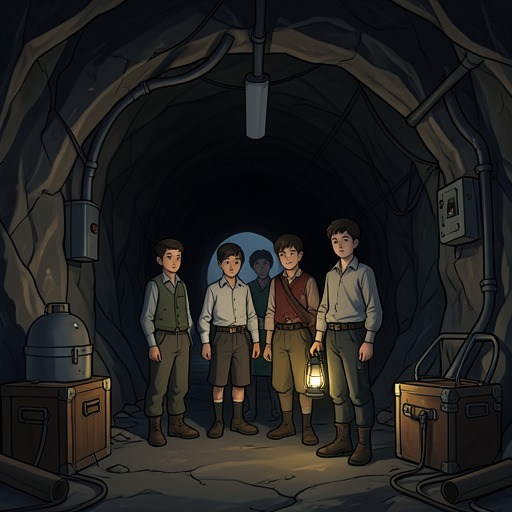
A year after Eva’s death, Markus discovers an abandoned construction site beyond the woods near the butcher shop. The uncompleted house has a dug-out basement and a mound of excavated earth, and the site becomes the basis for a secret underground fort. Markus recruits his brothers and other boys, has them swear an oath of secrecy, and leads the work of digging and reinforcing tunnels. Erich belongs to this band of children, whose undertaking grows out of play but also out of a sense of abandonment after their mother’s death.
The boys’ defiance takes on a religious dimension. They no longer attend church, and they hear secondhand that missing altar candles have provoked an angry sermon. Rather than feel chastened, they take pride in their secrecy and in their sense of being forsaken by God. They seal their oath with hot wax on their wrists and, with the other boys, lick a rusty axe head. Erich’s place in this shared rebellion shows the childhood loyalties and rituals that precede the uncompromising oath he will later live by as a soldier.
The fort becomes dangerous when the mound collapses while Markus is inside reinforcing its ceiling. Erich is among the boys outside when the hill sags; the children take several minutes to grasp that Markus remains underground. Their alarm brings Fidelis and Cyprian Lazarre running. Cyprian recognizes the danger and calls for shovels, while Fidelis kneels with Emil as the boys try to explain what has happened. The emergency exposes the vulnerability beneath the boys’ secret enterprise: what they built as a refuge can also become a place of burial. Erich’s childhood is thus marked both by imaginative belonging and by sudden peril to the brother whose leadership shaped the fort.
Wartime Formation and Capture
Erich and Emil are later drawn into Germany’s wartime system through the Adolf Hitler Schule. As the army becomes desperate for reinforcements, it takes the entire class, including its teachers and platoon leaders. Both twins receive praise at the selection camp and are identified as potential officers. They intend to serve together in the Hitler Youth division of the Waffen SS, imagining a war fought shoulder to shoulder. That plan ends early: Emil steps on a mine in a sheep pasture and dies. The brothers’ shared military future is cut short before Emil’s uniform has been worn in combat for long.
Erich continues fighting after Emil’s death, but the ideals that had organized his life do not protect him from battle. Under constant shelling he cannot control his body, his arms lock around a sandbag, and his fingers stiffen. The military oath and the comradeship he has been taught to revere offer no shelter from the violence around him. After four days and nights without sleep, he is captured. His experience complicates the image of the disciplined young soldier: he remains committed to the role, but his body registers a terror that the role cannot contain.
When an American soldier disarms him and remarks that he is only a child, Erich initially does not answer in English, despite understanding it. German prisoners in his group have been warned against collaboration, and he has learned to preserve a withdrawn silence. Later, when a soldier raises a rifle and Erich believes he may be shot, fear breaks through that performance. He pleads for his life and says that he was born in North Dakota and that his father still lives there. The disclosure briefly exposes the American childhood his later identity has suppressed. The soldiers laugh, while his remaining German classmates cannot tell whether he has shown unexpected brilliance or lost control under pressure.
The POW Camp and Refusal of Reunion
Erich’s captors transport him north with hundreds of other prisoners. The train passes through a country that contradicts the devastation German radio reports had led them to expect: the prisoners see an inhabited, apparently untouched landscape rather than ruined cities and farms. They are eventually marched through the woods to a guarded camp. There they receive work clothes, coats, shoes, socks, blankets, soap, and towels, and are assigned forestry work. The camp is enclosed by logs and wire, but its setting among the trees and the provision of food make it less forbidding than Erich might have expected. The abundance of the meal makes the war’s outcome plain to the prisoners: Germany has lost.
The routine of forestry work and camp life gives Erich new surroundings without loosening his allegiance. He works with saws, trucks, and teams of prisoners, and he begins to sing. His voice, which had emerged unexpectedly in adolescence, becomes part of the men’s nightly singing, a practice that helps shape their emotions and dreams during captivity. Yet his participation in communal life does not translate into openness with the Americans or a return to his family. He fears rumors that prisoners who become too friendly with their captors may disappear, and he continues to hide both his English and his American origins.
The deepest source of his refusal is a deliberate remaking of identity. Erich has come to regard himself as thoroughly German, having replaced his childhood with a creed of purity, belief, loyalty unto death, and contempt for weakness. In his understanding, being German is not chiefly a matter of birthplace: it is attached to a border, a song, a scrap of forest, and a street. The identity is an idea he has chosen and defended through training. That choice helps explain why the American landscape and the kindness of the guards do not persuade him to accept defeat or embrace his origins in North Dakota.
Reunion and Estrangement
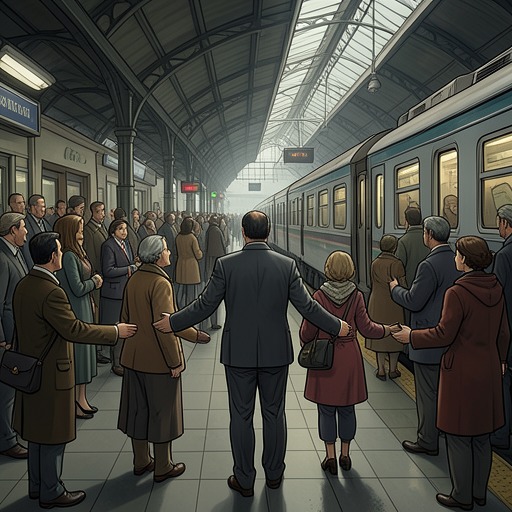
When Fidelis and Markus travel to the POW camp, they wait in their car while the prisoners are away burning slash. They recognize Erich as the work crew approaches: he is still strong and broad-chested, with the familiar coloring of his hair, dressed in POW clothing and worn garments. Erich sees them too. His eyes betray a moment of shock, but he turns his face away and keeps a rigid profile as they call out to him. When the guards prevent his family from reaching the prisoners, he pushes his hands into his pockets as they begin to shake.
Fidelis responds with anger as well as relief. He calls after Erich with an old threat from the boy’s childhood and then uses the family oath that once stopped the children in their tracks. Some prisoners recognize the exclamation and react, but Erich does not turn. The gesture carries two meanings at once: the familiar sound reaches back toward the family he has left, while his refusal to answer asserts the distance he has constructed from them.
Erich judges the father who has come to find him as old and diminished, not the commanding figure he remembers. The threats that once frightened him now seem powerless, and he measures Fidelis against the soldier he believes himself to have become. At the same time, he is furious that his family calls for Emil without knowing that his twin is dead. He thinks of Emil’s death as something his family’s country has caused, and the grief sharpens rather than softens his rejection. He walks back through the prison gates without acknowledging Fidelis or Markus. His reunion therefore ends not in restored kinship but in a divided family: the visitors have found Erich, yet he refuses their claim on him.
Narrative Significance
Erich’s arc links private childhood loss to the political manufacture of belonging. The boys’ secret fort, built after Eva’s death, gives them a small world of shared rules and brotherly allegiance; the military later replaces that improvised world with an absolute oath and a national identity that demands obedience. His experience in battle shows the limits of that formation, while his conduct in captivity shows how fiercely he continues to defend it.
The North Dakota birthplace he reveals in fear and the family he later rejects remain in tension with the German identity he has made his own. His choice is not presented as a simple return to home when the war ends: food, relative safety, and the sight of his father cannot undo years of deliberate formation. The final image of Erich continuing through the camp gates preserves the contradiction at the heart of his character. He is both the American-born son his family came to reclaim and the German soldier who believes that accepting their affection would put his chosen self at risk.