Eva Waldvogel's death and funeral
The Master Butchers Singing ClubEva Waldvogel's death and funeral mark the end of her prolonged illness and the beginning of an absence that reshapes her family. Her death is not a single passing moment: it unfolds through Delphine’s close care, Fidelis’s grief at the grave, and Markus’s determination to remember a mother whom the household otherwise seems to erase. The novel returns to the funeral through these distinct perspectives, making burial both a family ritual and an unresolved point of separation.
Illness and Death
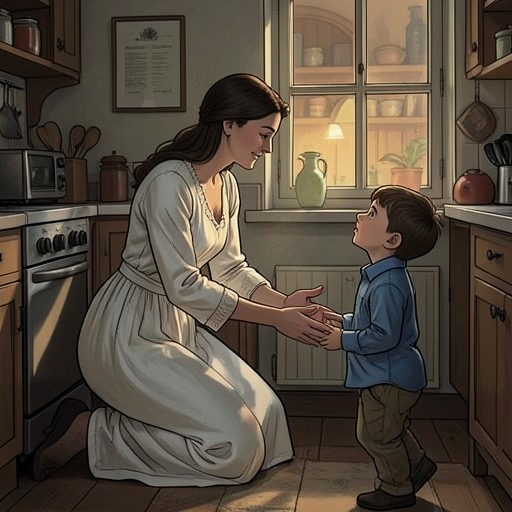
By the final week of her illness, Eva had taken only sips of lukewarm water. Delphine tried to comb her hair, but Eva’s condition continued to worsen; morphine did not alter the fact that her body appeared caught between life and death. The account suspends ordinary time: days merge, and Eva’s dying becomes the ground and air of the sickroom. Delphine, whom Eva had taught to meet her gaze directly, experiences their locked eyes as an intense connection that draws her out of herself. Caregiving is therefore also a form of witness: Delphine attends to a friend whose failing body can no longer respond as it once did.
On the night Eva dies, Delphine wakes to knocking and understands that something has changed. She finds Eva moving in bed, and tries to catch her arms. In Delphine’s perception, Eva is running again, as if straining toward an unseen finish; the image recalls her earlier running against Franz. Eva then breathes deeply, stops moving, and dies. The scene gives the event a finality that the preceding illness had withheld: after a long period in which her body would neither fully live nor die, her breath does not return.
The Funeral and Fidelis’s Grief
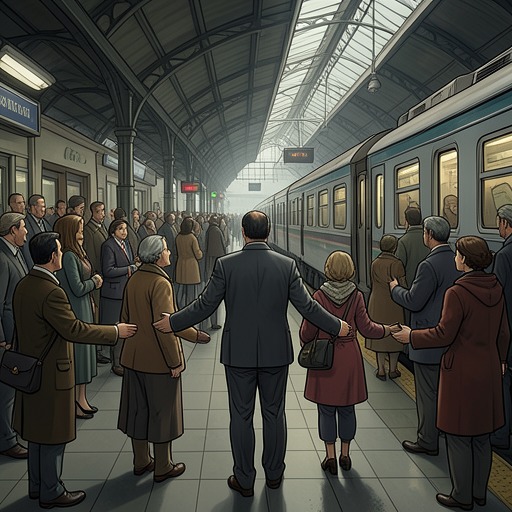
At the funeral, Fidelis and the boys each throw earth onto Eva’s coffin after it has been lowered into the grave. For Fidelis, that act becomes inseparable from the sense that a beautiful immensity has passed away beyond his reach. He stands so still that the mourners see him as rooted to the earth. Embarrassed by their view of him, he eventually makes himself step away, yet internally he remains at the graveside: he feels the earth drying in the cracks of his palms and understands himself as alive in a way Eva is no longer.
That memory also clarifies what Fidelis believes he has lost. His relationship with Eva had held a private intimacy and tenderness unlike the casual accounts of marriage he hears from other men. The funeral does not cancel that shared life; instead, the remembered closeness sharpens the contrast between their continuing bond in memory and the irreversible difference between the living and the dead. His stillness at the grave is a physical expression of grief, but it cannot keep him there forever.
Markus and the Silence Afterward
Markus remembers his turn at the grave through the handful of earth he cannot bring himself to release. He freezes with his fist closed as he looks toward the flowers. Franz returns, opens Markus’s fingers, shakes the dirt onto the coffin, and leads him away without speaking. The small act completes the burial for Markus, but the silence accompanying it becomes part of the memory too.
After the funeral, Markus feels that the family’s silence about Eva deepens. Fidelis does not talk about her or refer to things she did, while her dresses, shoes, and coat seem to disappear from the house. To Markus, this is not simply the loss of a person’s belongings: it makes Eva seem almost as though she had never existed. Delphine is the exception because she continues to say Eva’s name. Markus, meanwhile, privately preserves words and images of his mother, choosing to keep her present in thought even when the household does not speak of her.
A Continuing Presence
A year after Eva’s death, Markus finds comfort in digging into the earth at an abandoned construction site. As he makes a sheltered hollow, the work brings back the funeral: he remembers the clod of dirt in his hand and Franz having to open his fist. The memory connects his new refuge to the grave, but digging also gives him a place where he can cry without witnesses and where an anticipated feeling of happiness begins to return. The earth holds both the memory of burial and the possibility of shelter.
Eva’s influence reaches beyond the immediate family. Delphine recognizes Franz’s deep attachment to his mother when he carries her after the plane ride, and understands that his first love is profound. Later, Delphine visits Eva’s grave in Argus, where she has planted a small pine behind the headstone. She imagines its roots cradling Eva and sits beneath it to listen to the wind, picturing the sound traveling down to her friend. Delphine also reflects that she has continued the life and responsibilities Eva left behind. The recurring gestures of naming, remembering, and tending the grave offer a counterpoint to the household’s silence: Eva is dead, but remains part of the choices, care, and memories of the people who loved her.
Narrative Significance
The funeral is presented not as a neat resolution to grief but as a scene whose meaning keeps unfolding. Fidelis’s grave-side stillness, Markus’s clenched hand, and Delphine’s later visits reveal different responses to the same loss: embodied mourning, private resistance to forgetting, and ongoing care. The novel’s return to the grave and to the objects and places associated with Eva makes absence active in the family’s life. Her death changes what they can share and say, while the survivors’ repeated acts of remembrance keep her from disappearing altogether.