Eva Waldvogel’s terminal illness and death
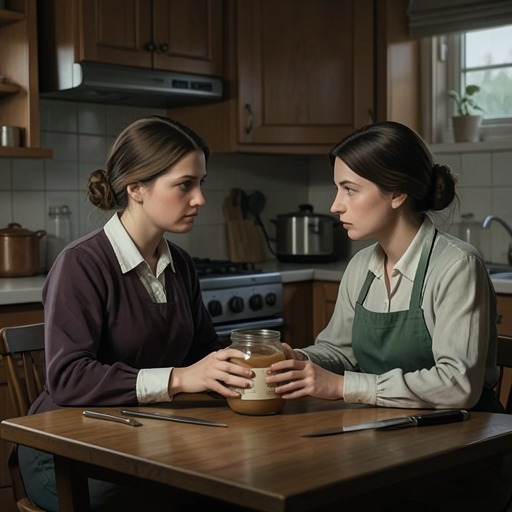
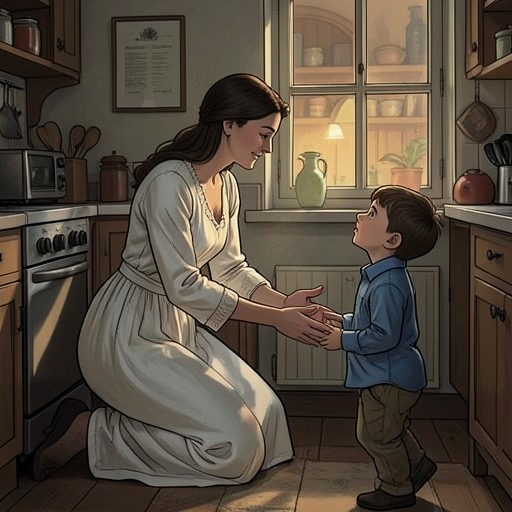
The Master Butchers Singing ClubEva Waldvogel’s terminal illness and death make Delphine’s care for her friend a defining act of intimacy and witness. As cancer defeats surgery and repeated radium treatments, Delphine stays at Eva’s side through the long decline and final night. Eva’s death is also the moment when she asks Delphine to handle her body and carry a message of love to her mother, while disclosing that Johannes Grunberg—not Fidelis—is Franz’s biological father.
Diagnosis and the Limits of Treatment
When Delphine returns from Doctor Heech’s house, Fidelis is away inspecting livestock, and Eva has already been given morphine in the delivery car. Delphine carries medical orders identifying whom to seek and what might be attempted. Doctor Heech is urgently arranging for Eva to be seen by a surgeon: a tumor is pressing on her vital organs, and he believes it will kill her within days unless it is removed. With Fidelis absent and Franz and the younger boys at a ball game, Markus is the only family member at home to receive Delphine’s message that she is taking his mother to the doctor.
The treatment that follows cannot save Eva. After surgery, doctors place hollow metal tubes containing radium in her uterus, removing, refilling, and reinserting them several times during her hospital stay. The treatment fails, and the cancer spreads. Doctor Heech then gives her monthly radium treatments using long gold needles tipped with iridium, inserted into the new tumor. Eva is anesthetized for the procedure and given morphine afterward; the needles remain in place for six hours. Delphine stays with her throughout those hours, even as the treatment becomes another ordeal rather than a path to recovery.
Eva can still make small requests within the routine of care. She says she smells burned and asks Delphine to get lilac water; Delphine buys it, but it does not help. The detail makes the limits of comfort plain: Delphine can wash and sit with her friend, but neither those gestures nor the increasingly severe medical procedures can halt the disease.
Delphine’s Vigil
As Eva’s condition worsens, care becomes the structure of Delphine’s days. She reads, dozes, or knits beside her, and absorbs the distress of watching someone suffer when there is no longer a remedy that can stop it. The narrative connects this vigil to Delphine’s earlier experiences of witnessing suffering she could not prevent. Her own physical distress accompanies Eva’s treatment and decline, but she continues to stay and does not make her pain the center of the scene.
The final decline is marked by a sense of time losing its divisions. For a week, Eva takes only sips of water. Delphine tries to comb her hair, while the cancer and morphine leave Eva profoundly weakened and distant. Yet the two women’s eye contact remains a form of contact when ordinary conversation is failing. Their gaze pulls Delphine into an intense, shared experience that is at once comforting and frightening; the closeness is described as bodily and immediate, not as a cure or an escape from Eva’s condition.
On the night Eva dies, Delphine wakes to movement at the bed and understands that the end has come. Exhausted by days of interrupted sleep, she tries to hold Eva’s arms as Eva appears to run in place, reenacting a race against Franz. Eva’s breathing stops, and she does not draw another breath. Delphine asks whether Eva can hear her, but the scene offers no answer that can undo the loss.
What Eva Entrusts to Delphine
Before her death, Eva repeatedly tries to tell Delphine that Franz’s father was Johannes Grunberg, a Jewish man who died in the war, rather than Fidelis. Fidelis already knows the truth but has never spoken of it. Eva has previously followed the revelation with instructions about Delphine marrying Fidelis and caring for the boys; this time, she makes a different request, concentrating on what Delphine is to do for her personally and for her mother.
Eva asks Delphine alone to handle her body and to write to her mother, or Mutti, saying that Delphine cared for her and conveying Eva’s love. The request recognizes Delphine as the person entrusted with the intimate work of death and with the words Eva wants carried beyond it. It also gives their friendship a final, explicit expression: care that has largely been enacted through presence and attention is named in Eva’s message.
Death and Its Immediate Meaning
When Eva’s breathing stops, Delphine remains beside her, holding her hand and looking into her eyes. Only later does Delphine think she might have called Fidelis or the boys. In the moment, she stays with Eva because she understands that her friend is afraid and wants her hand held. Delphine does not shift her attention to summon the family; her response is to honor the request Eva has made and remain present through the last moments.
The narrative renders this death through the cessation of breath and the change Delphine sees in Eva’s eyes, rather than through a medical explanation of the final instant. The image closes the unusual exchange of looks that has sustained them during the illness: connection persists until it cannot. Afterward, Delphine calls Strub’s Funerary. The funeral home’s representative answers sleepily, while Delphine knows that the staff have followed Eva’s illness and have been waiting for the call.
Significance in the Story
Eva’s death brings together the practical and emotional dimensions of Delphine’s relationship with her. Delphine manages the search for treatment, remains beside Eva through procedures and decline, and accepts responsibility for the body and message Eva leaves in her care. The cancer cannot be reversed, but Eva’s last request gives Delphine a clear role in the passage from illness to death and in the communication that follows it.
The death also places two kinds of truth in the same vigil. Eva entrusts Delphine with the concealed paternity of Franz, a fact Fidelis already knows, and with her own final message to her mother. One disclosure concerns the family history that has gone unspoken; the other speaks directly to the love between the two women. Their juxtaposition makes Eva’s last hours not only an account of physical decline, but a scene in which trust is handed on even as life ends.