Fidelis and Cyprian’s comradeship
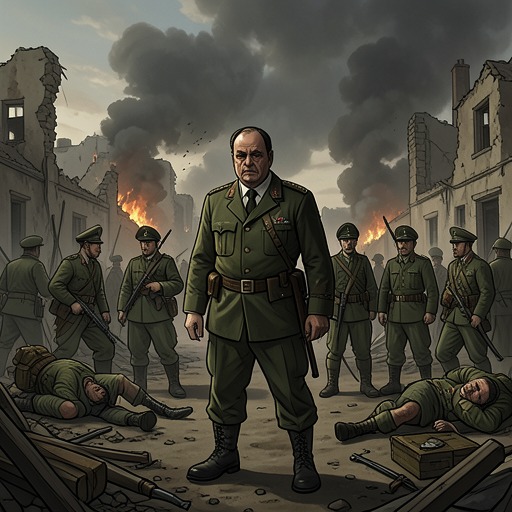
The Master Butchers Singing ClubFidelis and Cyprian’s comradeship is defined as much by what the two men cannot say as by what they share. Both survived the same war, but neither turns its worst experiences into a story for other veterans or for one another. Their friendship in Argus rests instead on everyday contact, a common musical life, and brief moments of recognition that make visible the damage their silence carries.
Origins and Daily Contact
Fidelis and Cyprian’s shared history precedes their life in Argus, where the war remains present without becoming a subject of ordinary conversation. Cyprian occasionally visits the Waldvogel household, and he once ran its store while Fidelis and Delphine were away consulting doctors at the Mayo Clinic. Fidelis would have hired him, but Cyprian declines the meat business: he has had enough of its blood and labor from the war. He instead makes money moving liquor, a risk-taking livelihood that Delphine dislikes but cannot simply control. His choice marks the different path he has taken since the war, while his visits and his place in the singing club keep him connected to Fidelis and the household.
Cyprian’s public manner is practical and guarded. He presents himself as a traveling salesman, carrying brushes of many kinds in his car as a cover for border inspections and neighborhood questions. He sometimes sells the brushes, but his principal customers are dangerous criminals from Minneapolis. He is wary of drinking heavily because it could undermine his balancing practice. These details do not erase his closeness to Fidelis; rather, they show a life built around movement and concealment, in contrast with Fidelis’s settled work as a butcher and family provider.
The War Between Them
The men never discuss their shared war in a sustained way, although neither passes long without remembering it. A sound, image, or word can bring the past back. When one pauses under its force, the other senses the disturbance and may answer with a joke or a long drink. Their tacit understanding depends on recognizing such interruptions without demanding an explanation. The war is figured as ground that has been covered over: its trenches and tunnels are no longer visible, but the buried past remains beneath the life they have built.
One evening, while Cyprian waits at the kitchen table for Delphine to finish her work, the silence briefly opens. Fidelis notices the scars at Cyprian’s throat and says that he took fire. Cyprian answers by indicating the wound in Fidelis’s chin. They stop there, already tired of the exchange. Fidelis could have shown the bullet he wears on his watch chain or the other wounds concealed by his clothes; neither man continues into a fuller account. Their bodies disclose what conversation does not, but the disclosure remains partial and chosen.
The passage distinguishes their experience from the war stories commonly told at drinking tables. Those stories tend to center on life behind the lines, romantic encounters, and episodes of brief, glorious action. Fidelis and Cyprian have no such account to offer: they knew horror rather than glory, and the horror does not become easier to speak about merely because the war has ended. Their restraint is not evidence that the past has faded. It is the form their continuing memory takes.
Shared Life and Historical Memory
The friendship also takes shape in shared social spaces. Cyprian joins the Argus singing club despite having only an average voice, and music gives the former comrades a communal activity that does not require them to narrate their service. The songs can hold a group together even when individual men carry memories they cannot express directly. The novel later enlarges this connection between song and difficult memory: in a prison camp, Erich sings with fellow German prisoners, and the songs enter the men’s dreams and emotional lives. That episode concerns a different generation and circumstance, but it echoes the role of singing in the wider story as a form of connection amid separation and fear.
Fidelis’s friendship with Cyprian belongs to a narrative in which histories are often conveyed indirectly. Fidelis eventually tells Delphine about Johannes, beginning with the earlier occasions on which Johannes saved his life and continuing to the friend’s death during the war’s final days. The story makes explicit how one wartime bond can remain active in the present, particularly when later events seem to repeat an older pattern of loss and rescue. Cyprian and Fidelis do not give their own shared experience this kind of full telling. Their silence therefore stands beside, rather than outside, the novel’s acts of remembrance.
Significance
Fidelis and Cyprian’s comradeship is neither a simple exchange of war stories nor a friendship healed by time. It is sustained through ordinary visits, work, drinking, and song, with brief recognition taking the place of a complete account. The men can register one another’s history and stop before speech becomes unbearable. That limit gives their bond its particular intimacy while preserving the scale of what remains unspoken.
The relationship also complicates the image of the returned veteran. Fidelis’s precision as a hunter later prompts Cyprian to wonder privately whether Fidelis had once been a sniper and whether their wartime paths might have crossed in violence. That thought is not confirmed as fact, but it shows how little either man can know about the other’s experience despite their closeness. Their comradeship holds both solidarity and uncertainty: the past is shared, yet never wholly available to either friend.