Fidelis collapses at New York Customs
The Master Butchers Singing ClubFidelis collapses at New York Customs as he returns from Europe with Delphine, turning a routine arrival into the moment when the physical weakness he has denied becomes irreversible. The episode links his failing heart to the losses he has endured, and sets his collapse against the work of slaughter he has performed throughout his life: the man accustomed to carrying out death’s chores is now unable to command his own body.
Return and Declining Health
After stepping from the USS Bremen into the crowded New York arrival hall, Fidelis is overcome by exhaustion that has shadowed him across the Atlantic. He has been sleeping for twelve or fourteen hours at a time and napping in the afternoons, yet the change has come on gradually enough that he struggles to understand it. The narrator establishes that his heart had begun to fail ten years earlier, though Fidelis himself does not know this.
His illness is bound to a succession of family losses. When Markus marched past him in the woods of Minnesota and chose a gated prison house rather than his father, Fidelis first sensed that something in his strength was weakening. Later, a telegram announcing Franz’s injury and a letter reporting Emil’s death seemed to tear at his heart; Fidelis destroyed the papers and roared. When Franz returned home and then died in bewildered anger, Fidelis felt that part of himself had gone with him. The scene presents his physical decline alongside grief that has accumulated without being spoken of as illness.
Denial and the Customs Hall
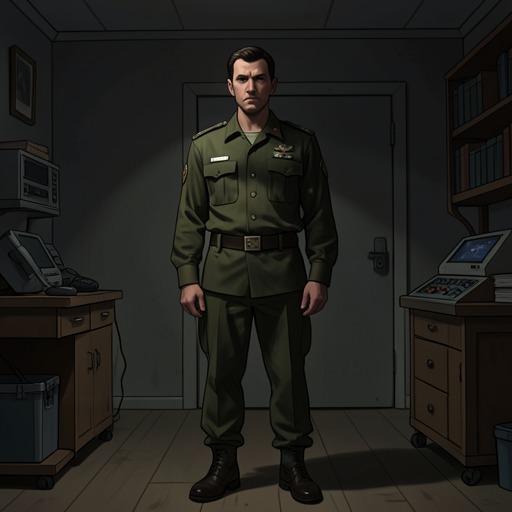
Fidelis has built his sense of self around strength, making weakness feel alien and untrue. He rejects the possibility that he is ill, ignores his body’s needs, and continues his old habits as though they might restore his former power. At the customs gate, even as his lungs feel tight and painful, he lights a Turkish cigarette bought in Germany. He waits behind Delphine for their clearance, moving slowly toward the officer’s booth and trying to remain upright.
The coat he bought in Ludwigsruhe is too heavy for the weather. He mops his brow with a cotton handkerchief and braces his feet, becoming unsteady and slightly dizzy. His attention shifts from the present queue to an earlier arrival at the same customs line, and from there to a remembered image of his father at the sausage kettle. The customs hall thus becomes a place where his return to America and his earlier life press together rather than remain separate moments.
Memory, Vision, and Collapse
In the recollection, Fidelis sees his father boiling sausages in a great copper kettle, lifting the links through the steam with heavy red forearms. He remembers his father’s large, calm face, marked by discipline and sweat. The memory draws the butcher’s craft into the present at the very moment Fidelis is struggling to stand: his father’s practiced strength survives in recollection, set against the son’s failing body.
The narrative then makes the collision of past and present explicit through the image of time collapsing. The days between Fidelis’s first arrival and this return had seemed like a vast, orderly arrangement of cards; suddenly, they are swept together into a suffocating deck. As his cigarette slips from numb fingers and drops from his shoe, his perception shifts to the stained tan linoleum stretching across the hall. He experiences the light as a strange kind of singing, with the floor’s distant, polished tiles seeming to carry the voices he recognizes.
Fidelis finds himself on his hands and knees, but cannot make sense of how he reached the floor. His thoughts reach for the familiar process of slaughter: animals, too, suddenly collapse. He tries to distinguish this place from a killing chute, thinking that he is at an arrival gate instead. He imagines himself rising, dusting off his coat, and walking forward, only to realize that he has not moved at all and is still looking at the floor. The gap between what he believes his body is doing and what it can actually do makes the collapse a loss of agency as well as strength.
Delphine and the Meaning of the Event
The scene turns Fidelis’s lifetime of butchery into a measure of his vulnerability. Every week, the day for slaughter arrived, and Fidelis was there to perform the work of death. Now, recognizing that his own time has come, he wonders who will do the same for him. The reversal is not simply that the butcher has become helpless; it is that someone whose daily work made death familiar must face his own mortality without the practical control that once defined him.
When Fidelis falls flat, someone turns him onto his side and takes his hand. Delphine bends over him, her face wavering in his vision as she speaks. He knows what she is saying and wants to answer, but he cannot open his mouth or move his hands. His heart seizes; Delphine’s face blurs, the light dims, and the singing that had accompanied his perception stops. Her presence gives the collapse a human witness, but the scene provides no recovery: it ends with Fidelis unable to respond and the music gone.
Narrative Structure and Significance
The episode is shaped around the convergence of an arrival and an ending. The New York customs gate, associated with entry and passage, becomes the place where Fidelis’s body gives way. The remembered customs line from his earlier journey returns alongside the image of his father, while the present is rendered through the floor, cigarette, coat, and failing ability to stand. These concrete details keep the scene anchored in the hall even as memory unsettles its chronology.
Fidelis’s collapse also gathers the episode’s central contrasts: habitual strength against bodily need, the butcher’s command of death against his inability to command himself, and imagined movement against actual immobility. His recognition that his life’s familiar work has turned toward him arrives too late to restore control. Delphine remains beside him as the scene closes, while the narrative withholds any answer from Fidelis and ends on the cessation of the light and singing that had briefly linked the present to his remembered past.