Fidelis emigrates to America and settles in Argus
The Master Butchers Singing ClubFidelis Waldvogel’s emigration to America begins not with a grand plan but with a piece of bread. In 1922, carrying smoked sausage made from his father’s recipe, he crosses the ocean and makes his way west by selling what he brought. He reaches Argus, North Dakota, with thirty-five cents and an intention to work there only temporarily; instead, the town becomes the place where he establishes his trade and brings his family to join him.
The bread that became a destination
Shortly after marrying Eva, Fidelis encounters an American loaf in the public square of Ludwigsruhe. A neighbor, known to his parents, has received it from distant relatives in a far coastal city. At first Fidelis mistakes the white, square object for a picture. When he realizes it is bread, he joins the group gathered around it to inspect it for himself.
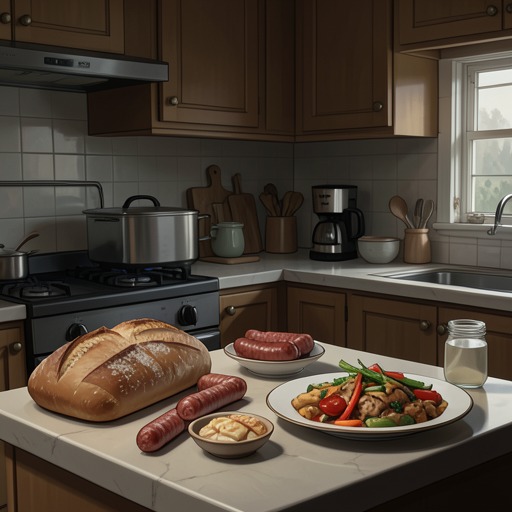
The loaf has been kneaded and baked by machine, then sliced with a sharpness and regularity that seem almost impossible to him. He studies its fine texture, wonders about the yeast, and notes the even golden-brown crust. The object suggests a place governed by an unfamiliar order, and the people around it debate whether it represents industrial production or the work of ordinary American bakers. For Fidelis, its significance lies in the craft embodied in something commonplace: bread made with a precision he wants to understand.
Later, he visits the neighbor and learns the name of the place from which the loaf came. He writes it on a scrap of paper and keeps it for months. What begins as the source of a small marvel gradually becomes an actual destination, giving his emigration a specific point of arrival before he has any assurance of how he will get there.
Crossing the Atlantic with a family’s capital
Fidelis reaches New York City aboard the RMS Mauretania in 1922. His suitcase contains his father’s smoked sausage, but it carries more than food: it represents the remaining wealth of the family that has financed his passage. Their trinkets, cuff links, and finest woolens have been sold to buy the ticket, while the knives Fidelis needs for his trade have been kept. The sausage itself was made from wild boar he had poached with carefully saved bullets and a concealed rifle.
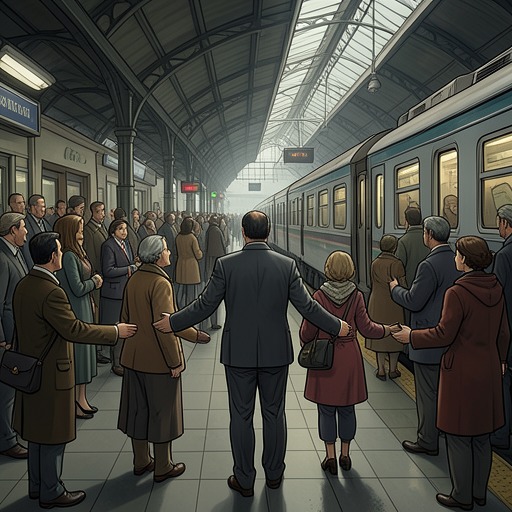
The circumstances of his arrival are shaped by deprivation as well as determination. The aftermath of the war has already forced him into the black market, and he has learned to get by with little. In New York, he knows only a small amount of English, learned aboard the ship, and the words he can use are tied to his immediate purpose, including asking for a train. Quiet and patience help him navigate the crowded arrival and make decisions with the limited resources he has.
At first, he means to earn enough money to continue to the place he had selected for its bread. As dusk falls, however, he recognizes that selling his sausages on the train could let him begin the journey before he has raised the full fare. He buys a ticket into the beginning of the Middle West, returns to his selling place, and sells one more sausage before boarding. His plan turns the provisions he carried across the ocean into both income and a means of travel.
From the train to Argus
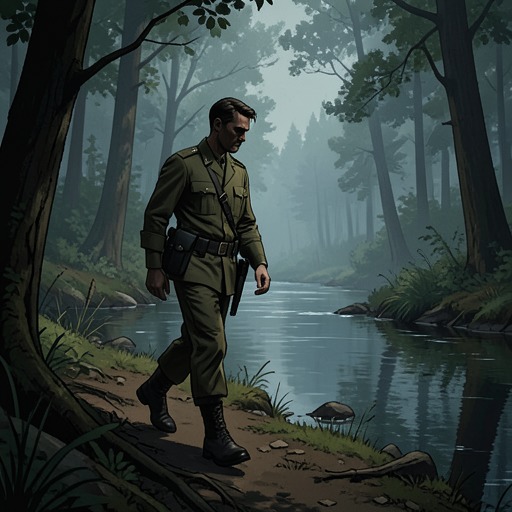
The sausages take Fidelis through Minneapolis and across rolling prairie into North Dakota. He sells the final link before leaving the train at a small-town platform. Argus appears to him as a compact cluster of buildings, some with false half-story fronts above awnings and display windows, alongside limestone and brick structures. Set against the flatness of the plains, it seems exposed and temporary, with the river behind it and little apparent refuge from a storm or war.
He reads the town’s name aloud and memorizes it, then takes stock of his situation: he has arrived with thirty-five cents. He does not know that Argus will become his permanent home. For the moment, he believes he will need to stay only long enough to earn his way onward. He begins looking for the practical foundations of daily life and work—where bread and beer are made, where milk and butter are kept, and where meat is prepared. Finding no obvious answer, he adjusts his father’s hat, gathers his suitcase, and sets out to learn the town.
Establishing a trade and bringing his family
Fidelis finds work at once with the local butcher, Pete Kozka, and also hires himself out in nearby towns. When people fetch him, he butchers at their farms. He initially has no car, but his work later supports a succession of delivery trucks. The knowledge behind his success comes from his father, who gave him the family’s sausage-making secrets on the eve of Fidelis’s departure. Their rule is to use the finest of everything, down to the salt, fresh garlic, meat, and sheep casings.
Fidelis applies that standard from his first batch of Swedish sausages for the Scandinavian trade, seeking the best local potato rather than accepting an ordinary ingredient. Customers begin gathering on Thursdays to buy his links hot from the kettle, before they are smoked. The growing trade benefits Pete Kozka, while Fidelis lives sparingly on sausage ends, bruised fruit, stale cookies, and questionable trimmings. He makes his own beer, washes his own shirts and aprons, and saves toward a larger place.
When his savings are joined by a windfall from his parents, Fidelis has enough to bring Eva across the ocean. She arrives on a wild spring day with Franz, who is three years old and proudly carries his mother’s purse from the train. Their reunion gives his work a family purpose: the labor and careful economy that sustained him alone have made it possible for his wife and child to join him.
Settlement and the meaning of arrival
Fidelis’s journey does not end exactly where his original curiosity pointed. The bread from the distant coastal city first inspired him to travel, but the evidence establishes Argus as the place where he remains, works, and brings his family. He has not reached a final understanding of American breadmaking; instead, the encounter has set him in motion toward a new life in which he practices his own craft.
The episode links migration to skilled labor and to the close attention Fidelis gives ordinary materials. The loaf’s exactness makes America imaginable, while the smoked sausage turns that imagined destination into a route he can finance one sale at a time. In Argus, he carries the standards learned from his father into a new market, making the preservation of family knowledge part of his settlement. His arrival is therefore both practical and personal: a passage from postwar scarcity toward a household rebuilt through work, thrift, and reunion.