Franz’s accidental death in a ground accident
The Master Butchers Singing ClubFranz’s accidental death in a ground accident is the cruel reversal of the heroic death he once imagined for himself: instead of falling in aerial combat, he is struck by a forgotten cable while walking into a supply locker. The accident makes death arrive through an ordinary mistake and a matter of seconds, not through the grand battle that had sustained his boyhood vision.
The Death Franz Imagined
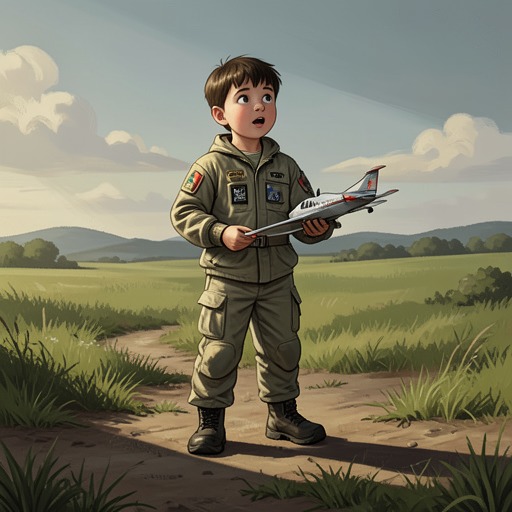
As a boy, Franz pictured himself dying in a Spitfire after a thrilling fight with a German Focke-Wulf 190, his favorite enemy aircraft. In his imagined ending, he would shoot down the Focke-Wulf, while accepting that he, too, would be shot down and consumed by fire. The two pilots would salute one another as they spiraled toward the ground together: even death held a shape of mutual recognition and triumph.
That fantasy persisted through the boredom, terror, and daily tedium of real war. It gave his survival a dramatic counterpart, but the actual circumstances of his death would have surprised him. There was no aerial duel, no chosen sacrifice, and no enemy to face—only poor timing, a hungover mechanic, and a snapped cable.
The Ground Accident
Franz was walking into a large metal supply locker when a plane took off behind him. A member of the ground crew had failed to unhook a heavy steel cable, which streamed out after the rising aircraft. Other men ducked and scattered. Franz’s position made the accident hinge on an almost imperceptible difference: had he walked slightly faster or slower, he would have been beyond the cable’s reach.
Instead, the cable flicked out like a bullwhip and caught him across the side of the head. Its final contact before being dragged into the air was described as a neat tap against his temple, almost like a finger brushing him. Franz’s hand continued opening the locker door, but the rest of his body could not step through. He had no thought or moment of surprise; he remained looking at the door’s scarred steel frame.
The Reversal of His Wartime Ideal
The gap between Franz’s imagined end and the actual accident is the event’s defining contrast. The boy had pictured a spectacular death bound to courage, enemy recognition, and the reciprocal descent of two aircraft. The man instead dies on the ground, outside the battle, because a crew member failed to disconnect a cable and because his pace placed him in its path.
The scene strips heroism from the mechanics of death. Its violence is sudden, yet the narrative gives it no heroic contest: Franz does not understand what has happened, and the scene ends in the unfinished motion of opening a door. His death is therefore not the fulfillment of his fantasy but its stark negation, a life-ending accident made from routine, error, and chance.