Franz's combat trauma
The Master Butchers Singing ClubFranz's combat trauma follows him home as estrangement, involuntary physical distress, and fragmented speech. When he meets Mazarine after the war, he describes feeling like a ghost among the living; as she listens, his memories return through shaking, fear, and an urgent need to flee. Her care allows him to recount some of what happened, but his account also exposes a limit: he cannot initially explain what helped him survive one of his falls. The scene makes the cost of war legible without suggesting that telling the story makes the wound disappear.
Identity and Background
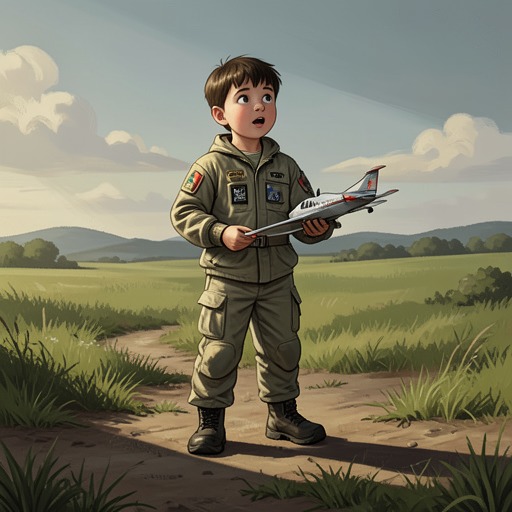
Franz is the son of Fidelis Waldvogel and Eva Waldvogel. He served as a wartime pilot and returned to the United States carrying memories of aircraft losses, the deaths of fellow airmen, and his own repeated emergencies in the air. The evidence presents his distress through a postwar encounter with Mazarine rather than through a full account of his military service: the past emerges as he tries, haltingly, to answer her request to hear what has happened to him.
That effort begins with a sense of dislocation. Franz says that returning from the war has left him strange and out of place, almost like a ghost come to spy on the living. His comparison captures the distance he feels between his wartime experience and the ordinary world he has re-entered. He had thought about Mazarine throughout the war, but emotional attachment does not spare him from the difficulty of attending to himself or speaking about what he has endured.
Combat Memories and Their Return
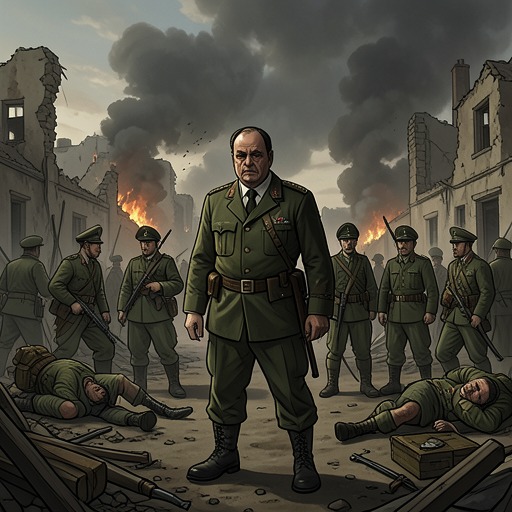
Franz recounts being shot down once and, on another occasion, losing his engine. He also describes witnessing the deaths of fellow airmen: Schumacher was dragged onto a black reef after parachuting out, while Tom Simms’s parachute was torn apart by flak and failed when he tried to use it. Franz remembers Simms making two small kicks before giving up. The memories are not presented as distant military facts; they return in a conversation that Franz has struggled to begin and that Mazarine has to help sustain.
As he speaks, his body registers what his words have not yet organized. He trembles, feels intensely cold, and presses his hands between his knees in shame at their shaking. He tries to suppress an impulse to tear off his clothes and plunge into the river. The scene connects remembered danger with a present bodily crisis: Franz is physically with Mazarine, yet the force of the memories makes escape feel urgent.
He describes a second emergency in which he saw flashes of light below but heard no gunfire, and understood that he had lost his hearing. His legs gave way, and he believes he might not have been able to free himself from his harness without an experience he cannot at first name. Asked what happened, he stops and struggles for words. His inability to continue is part of the account: the memory is disclosed in stages, with a meaningful silence where explanation might be expected.
Mazarine as Listener and Companion
Mazarine meets Franz’s disordered recollections with composure rather than pressing him for an immediate, complete narrative. She watches him closely, opens her arms, and shakes him lightly with what the narration describes as angry tenderness. When she recognizes his need to flee, she kisses him in an effort to alter the character of his fear. Her gesture does not undo the memories, but it helps create the moment in which Franz begins speaking more freely.
After he describes the deaths he witnessed, Mazarine takes his hand into her coat sleeve to warm it. When he speaks of the danger he survived, she stays beside him and lets him tell only what he can. At the end of the encounter, she folds him down beside her, wraps him in her coat, and holds him as he relaxes into a half-sleep. Her presence offers a temporary experience of safety and care; the narrative does not make her affection a cure for combat trauma.
Eva’s Voice and the Unspoken Account
Franz eventually explains the memory that he had not dared tell even Mazarine at first. As he fell from the aircraft, he heard Eva’s voice and felt certain she was before him. He embraced the figure he imagined as his mother, and heard her counting in German as she had when he was a child, first on his fingers and then on hers. He remained blind as he fell; the parachute opened, and the earth rose toward him.
The account links a wartime survival memory to the intimate pattern of Eva’s childhood care. Franz calls the experience part of the design, but the narrative does not establish whether he means a providential order, a personal interpretation, or something else. What it makes clear is that the memory is emotionally powerful and difficult to disclose: even in the conversation that brings him closer to Mazarine, he hesitates before telling it.
Change and Narrative Significance
The encounter marks a change in what Franz can share, not a resolution of what happened to him. He names his crashes and the deaths he witnessed, then reveals the presence of his mother in a moment of mortal danger. Afterward, he remains exhausted and overwhelmed, but Mazarine’s warmth and continued attention allow him to rest. The episode gives his return from war a human measure: survival has brought him back, but it has not restored the person who left.
Franz’s halting disclosure also belongs to a wider pattern of silence around wartime experience. Fidelis Waldvogel and Cyprian Lazarre rarely speak of the war they shared, though memories continue to intrude into their lives; their pauses and unspoken recognition show that silence does not mean forgetting. Franz’s scene gives one such memory a voice, while preserving the parts that remain difficult to tell. Its emotional movement—from ghostlike estrangement, through bodily fear and interrupted speech, toward a fragile moment of trust—makes narration an act of connection rather than proof that trauma has been mastered.