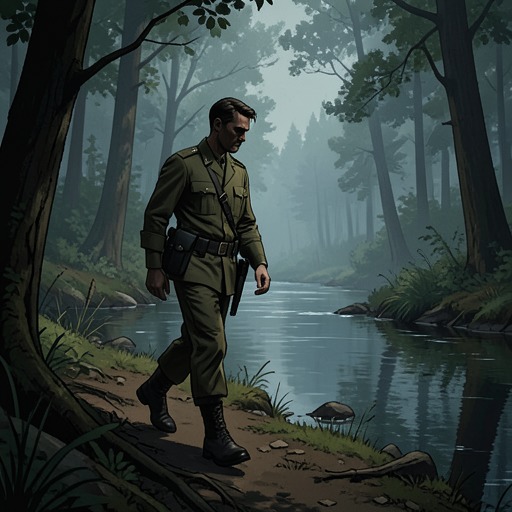
Johannes
The Master Butchers Singing ClubJohannes is the friend whose wartime loyalty saves Fidelis Waldvogel’s life twice, and whose death binds the survivors to a future he cannot share. Betrothed to Eva Kalb, he dies in the war’s final days; Fidelis carries the news to her, honors a promise to his friend by marrying her, and continues to remember Johannes through silence and song.
Identity and Relationships
Johannes is Fidelis’s closest friend and fellow soldier, a bond forged amid the danger and disorder of the war. He is also Eva Kalb’s betrothed and intended husband. When Fidelis arrives at her home after the war, he still carries a locket containing her picture, which Johannes had kept. Johannes’s place in the story is therefore not confined to the battlefield: his friendship and engagement connect the two people left to mourn him.
Wartime Comradeship
Johannes saves Fidelis twice. First, after a bullet knocks Fidelis senseless, Johannes drags him from a pile of dead soldiers. Later, when Fidelis’s rifle jams and a French soldier rushes toward him, Johannes shoots the attacker. These rescues make their later separation more than the loss of a fellow soldier: Fidelis survives in part because Johannes repeatedly intervenes on his behalf.
The friendship also persists in shared habits that outlast the immediate danger. Fidelis and Johannes sing together, including a song they once sang while drunk. After the war, that song can no longer be recalled without bringing Johannes back to mind. Music thus preserves their intimacy, but it also makes remembrance inescapable: what had belonged to shared companionship becomes part of Fidelis’s continuing grief.
Death and Its Consequences
Johannes dies during the final days of the war, while the retreating soldiers are gathered in the ruined house where he and Fidelis remain for two days and nights. The wounded and dying crowd the cellars, so Fidelis stays upstairs with his friend. Johannes’s condition is grave, and the precise cause of death remains uncertain amid exhaustion, illness, and the filthy wound. Near the end, he asks Fidelis to sing. Fidelis does so, accompanied by the ringing of shattered glass in the shelling, and afterward wraps Johannes’s face in a silk scarf his mother had given him for luck. He cannot bring himself to stay and bury him; he walks on.
Fidelis carries the news to Eva, telling her that her lover and betrothed is dead. She collapses, and as he catches her he realizes that she is pregnant. He later decides to marry her, in keeping with what he had promised Johannes. The marriage begins as an act of responsibility to the dead man and his unborn child, but it does not remain only that: Fidelis eventually understands that he has fallen in love with Eva. Johannes’s death therefore shapes a new family without erasing the distinct bond between the two men.
Memory, Silence, and Song
Johannes remains present in the life that follows through what Fidelis cannot readily say. The two former soldiers never discuss the war directly, although it stays between them like ground once churned by battle and now covered with grass. A sound, image, or word can return the past; one of them pauses through an inward struggle, while the other registers the disturbance and lets a joke or a long drink stand in place of questioning. Their silence is not forgetfulness but a tacit recognition of what each has survived and what Johannes’s death has made impossible to share again.
In a later account to Delphine, Fidelis finally tells the story of Johannes’s last days. He remembers the two rescues, the ruined house, and Johannes’s request that he sing. He also admits that he could not stay to bury his friend. The telling makes the loss legible to another person, but does not resolve it: as Fidelis recalls Eva and the promise that followed Johannes’s death, grief still closes around him, and he must breathe deliberately before continuing.
Song is the most durable form of their companionship. Fidelis sings to Johannes at the end of his life, and years later hums a simpler tune while traveling across the American plains, remembering a song they had sung together while drunk. He also sings old German songs to his sons, including a favorite requested repeatedly by Markus. The music passes from battlefield friendship into family care, carrying an intimacy whose original companion is absent. Johannes’s memory consequently travels with Fidelis, not as a story fully put away, but as a voice that returns in the silences between other lives.
Memory, Silence, and Song
Johannes remains present in the life that follows through what Fidelis cannot readily say. The two former soldiers never discuss their shared war directly, although it stays between them like ground once churned by battle and now covered with grass. An image, sound, or word can return the past; one pauses through an inward struggle while the other registers the disturbance and lets a joke or a long drink stand in place of questioning. Their silence is not forgetfulness but a tacit recognition of what each has survived and what Johannes’s death has made impossible to share again.
Years later, Fidelis tells Delphine the story of Johannes’s last days. He recalls their two rescues, the ruined house where they spent two days and nights, and Johannes’s request that he sing. He also recounts wrapping his friend’s face in his mother’s silk scarf and walking on without burying him. The telling makes the loss legible to another person without resolving it: as Fidelis remembers Eva and the promise that followed Johannes’s death, grief closes around him, and he must breathe deliberately before continuing.
Song is the most durable form of their companionship. Fidelis sings to Johannes at the end of his life; years later, crossing the American plains, he hums a simpler song and remembers one they had sung together while drunk. He also sings old German songs to his sons, including a favorite Markus asks him to repeat. The music moves from battlefield friendship into family care, carrying an intimacy whose original companion is absent. Johannes’s memory travels with Fidelis not as a story fully put away, but as a voice returning in the silences between other lives.
A Memory Beyond the Household
Johannes’s significance extends beyond Fidelis’s private grief into the family and the stories through which later generations understand war. Fidelis’s sons inherit a music shaped by the friend who died before their lives began: their father sings them old German songs when they are small, ill, or unable to sleep, and repeats Markus’s favorite at his request. The narrative does not make the boys direct heirs to Johannes’s memories, but it shows how the voice and habits formed in that friendship continue within a household Johannes never knew.
That inheritance stands beside the history of political identity and wartime memory. Erich, formed by Nazi training and loyalty to an idealized German identity, shuts out thoughts of his American family while held as a prisoner of war; elsewhere, Fidelis and Delphine confront how accounts of violence can be minimized or left unspoken. In Germany in 1954, Fidelis joins surviving master butchers in singing at the unveiling of a monument to those killed in the bombing of Ludwigsruhe. The public ceremony gathers song, remembrance, and the visible memorial, while Johannes’s death remains a more intimate loss preserved in Fidelis’s account and music.
The book’s closing acknowledgments distinguish its invented story from its historical and family materials, noting that the author’s grandfather fought in the trenches on the German side in World War I and that his sons served on the American side in World War II. Johannes belongs to the novel’s fiction, but his story participates in its larger concern with how war passes through friendship, silence, family, and song. His death is not made meaningful by a simple resolution: Fidelis continues to live, marry, raise children, and sing, while the friend whose loyalty helped him survive remains the absent presence accompanying those acts.