Markus flees Tante and seeks refuge with Delphine
The Master Butchers Singing ClubMarkus flees Tante and seeks refuge with Delphine in an episode that turns flight into an act of trust. Bruised by Tante’s discipline and unsure where else to go, he slips away and crosses the countryside toward Delphine’s home. She understands the urgency before he explains it: she makes more food than usual, as if anticipating his hunger, then denies to Tante that she has seen him. When Markus emerges from hiding, Delphine gives him breakfast and a place to stay until his father returns. His reason for choosing her is simple and decisive: she cared for his mother, Eva, and he believes that care can extend to him.
The Flight and Delphine’s Premonition
Markus leaves Tante’s home after being bruised and aching, setting out for Delphine’s by the back roads and across cornfields, sand pickers, ditches, and pastures. His route makes the flight physically demanding: by the time he reaches her, Delphine imagines, he will be exhausted and hungry. The night before he appears, she has already begun preparing for him without knowing that he is coming. She adds flour and another egg to the spaetzle, cuts two extra onions into the goulash, and uses all the meat. The surplus becomes a quiet premonition translated into domestic work: her cooking anticipates the boy’s arrival before either of them can name what he needs.
That practical foresight follows a moment of unexpected ease in Delphine’s household. Roy is acting like a father, while Cyprian keeps him occupied with checkers or cards and helps him stay sober. Delphine misses Eva, but she has also come through the exhausting vigilance and heartbreak of Eva’s death. Her sense that good things may follow is interrupted by fear and sorrow, and by the remembered image of the dead in the cellar. The narrative sets Markus’s impending arrival against this fragile calm: even in a scene that seems to promise relief, Delphine senses that grief and crisis have not ended.
Concealing Markus from Tante
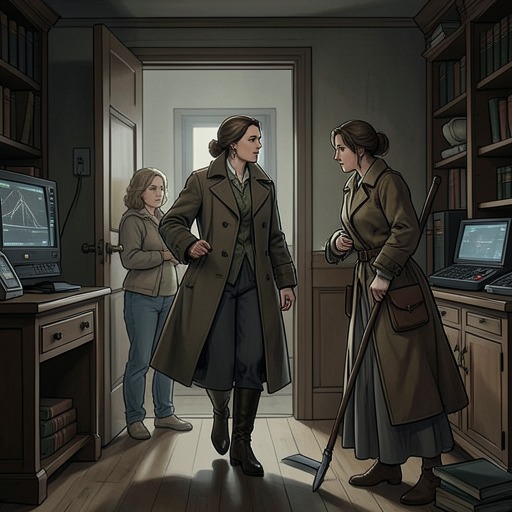
The next morning, Tante comes to complain about Markus. Delphine studies her face to keep from reacting to the accusations themselves, and answers that she has not seen him. Tante calls this a lie but remains outside the doorway. Delphine holds her ground, folding her arms rather than inviting Tante in; the smell of cinnamon cake only sharpens Tante’s disappointment when no hospitality is offered.
Delphine has heard enough to infer what happened. Tante’s account, as Delphine understands it, is a self-serving effort to make Markus seem guilty by contrasting his frail appearance with his wiry, supposedly devilish behavior. Tante has switched him and beaten him, and he has run away. Delphine repeats that she has not seen him and protects his location, even when Tante invokes what Fidelis might say if he were there. Fidelis is away in the delivery truck, carrying sausage to grocery stores, leaving Delphine to decide how to handle the confrontation herself.
Tante’s departure gives the concealment its immediate payoff. After her rusty black car has gone around the bend, Delphine calls to the bedroom door, and Markus slips out and runs to the window to see whether Tante is coming back. He has been hiding in the house while Delphine turns Tante away. The scene’s small movements—Tante held at the threshold, Markus kept behind a bedroom door—make the refuge concrete: Delphine does not merely sympathize with him but actively keeps him out of Tante’s reach.
A Place to Stay and a Reason for Trust
Markus has arrived in his best clothes, the clothes he wore to the funeral: a store-bought shirt with front pockets and a notched collar, itchy brown shorts, good wool socks, and Franz’s polished but oversized formal shoes. They are all he has to wear. Delphine recognizes the immediate need and says they should get him overalls, sending Cyprian into town to buy a pair. Before questioning the boy about his flight, she feeds him.
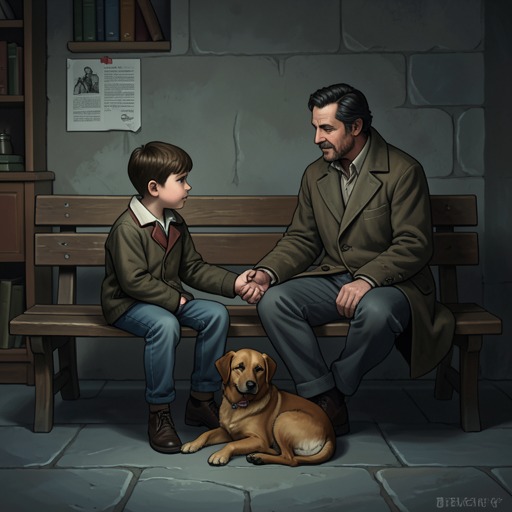
At breakfast, Markus eats pancakes topped with the last of the sweet wild blue saskatoons, butter, and maple syrup Cyprian had traded for with a Chippewa. Delphine puts the tin syrup jug carefully back in the icebox and talks while Markus eats, without expecting him to answer. The night before, he had simply appeared, eaten, grown drowsy, and let the household tuck him into bed; Delphine had not had the heart to ask questions. Her first response is therefore care rather than interrogation. She explicitly tells him he can stay until his father returns and makes clear that he need not explain why he left unless he wants to.
Instead, Delphine asks why he came to her. Markus stops eating, holds his fork and knife poised, and answers softly, “You took care of her.” The reference is to Eva, whose care Delphine had shared. His words make his choice legible: he approaches Delphine not simply because he needs shelter, but because her devotion to his mother has established her as someone he can trust. Delphine wonders whether his reasoning means that she can care for him too, or whether he is asking her to love and defend him because she loved Eva. She does not demand that he settle the question. She watches him eat, sees how desperately hungry he is, and makes him more pancakes.
Recovery and the Bonds He Carries
Once he stays, Markus helps Roy mow the yard, grub young trees, and pull wild morning glories from a patch intended for pasture. Roy is now ambitious about having a cow, and Markus joins his games of checkers and quickly learns Roy’s cribbage strategies. These ordinary tasks and games extend the protection Delphine offered at the door: the boy is given a place in the household and a way to take part in its routines while his father is away.
His worries, however, remain tied to the family he has left behind. He frets about whether Franz is changing the chinchillas’ water as Eva instructed, whether the twins will poke sticks into the cages and damage the animals’ coats, and whether Tante knows how to mix their food. The anxieties surface little by little as he settles in. Though he has escaped Tante’s immediate control, he is still mentally caring for the household and animals he left behind, carrying forward Eva’s instructions and fearing what may happen without her oversight. His refuge with Delphine is thus both a release from harm and a continuation of his attachment to his mother’s world.