Mr. Chavers
The Master Butchers Singing ClubMr. Chavers is a member of the Argus singing club whose rivalry with Roy Watzka culminates in a cellar tragedy. Years later, Roy tells Delphine that he sent Mr. Chavers into the cellar for ginger beer and liquor, then may have shut the hatch while resenting the way Mr. Chavers sang over him at practice. Mr. Chavers’s death, alongside those of his wife and daughter Ruthie, becomes the buried history that Roy’s drinking and Delphine’s memory cannot keep apart.
Identity and Rivalry
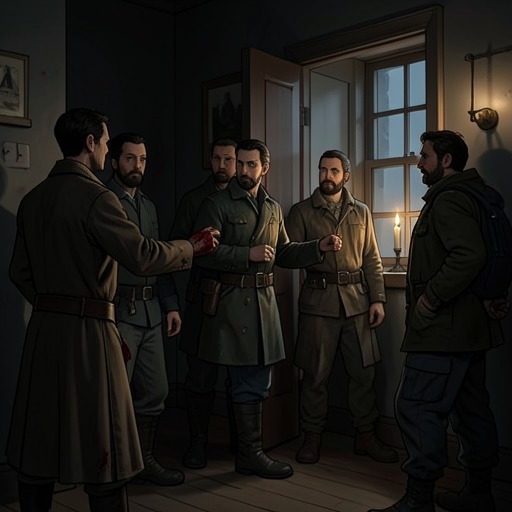
Mr. Chavers is remembered through Roy’s account as a fellow singer whose voice and presence provoked a lasting grievance. Roy recalls that Mr. Chavers would puff out his chest, inch forward, and sing over him during practice. That contest for space in the song gives their conflict a concrete, humiliating intimacy: the cellar incident is connected not to an abstract feud but to the repeated experience of being overridden in a shared performance.
The Cellar
Roy says he told Mr. Chavers to fetch ginger beer from the cellar and look for the good liquor, taking candles so that he could read the French labels. Roy speculates that Mr. Chavers may have been searching for the king’s wine. He then remembers calling down that Mr. Chavers could come back up after he stopped singing over him in practice. Roy’s account leaves the crucial action uncertain: he says he does not remember what happened, but that he may have shut the hatch.
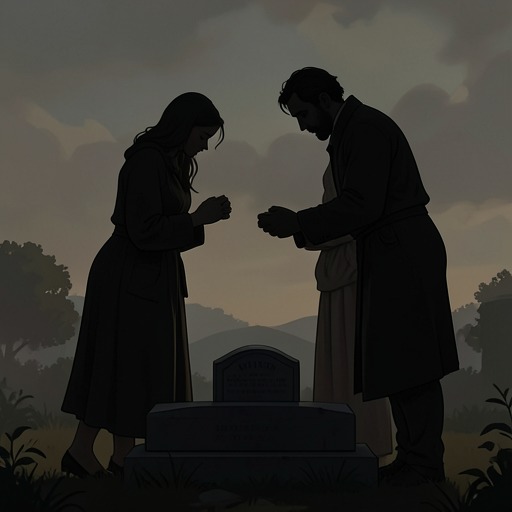
Mr. Chavers’s wife and child were also in the cellar, a fact Roy says he did not know at the time. His recollection names the child as Ruthie. The deaths therefore emerge in Roy’s telling not as a single victim’s disappearance but as the loss of an entire family trapped below ground. The cellar hatch is the uncertain hinge between Roy’s remembered grievance and the catastrophe he may have caused.
Roy’s Confession and Its Aftermath
Roy’s disclosure comes during a conversation with Delphine in which he first speaks of Mr. Chavers as someone still waiting for him on the other side, with his whole family. Delphine recognizes that Roy has returned to a familiar lament of self-pity, but his admission that he might have justified what happened to the child changes the conversation. Grabbing Delphine’s hand, he recounts sending Mr. Chavers down and wonders aloud whether he shut the hatch.
Roy says he was away on a prolonged drinking bout after the incident. When he returned to search the cellar for liquor, he found the family there; he then remained drunk until Delphine and Cyprian arrived. His account is not a clear reconstruction: he cannot remember whether he closed the hatch, and his uncertainty persists even as he acknowledges the consequence. The confession links the deaths to his alcoholism without resolving his precise responsibility.
Delphine’s Response and Narrative Significance
Delphine has heard Roy’s grief before, but the new details leave her physically shaken. After he pulls a blanket over his head, she sits outside rather than returning indoors. She imagines selling the house, leaving the butcher shop and Fidelis, and moving to Chicago, where she might work in a theater, study, or write. In the same unsettled sequence of thought, she tells herself not to think about Markus and Ruthie. Her imagined escape makes visible how the revelation reopens a history she has tried to contain.
Mr. Chavers has no direct voice in this recollection; he is present through the song Roy resented, the command that sent him below, and the family Roy says he found too late. The delayed, incomplete confession turns a past cellar death into an active burden in the present. Mr. Chavers’s remembered singing continues to sound through Roy’s guilt, while Delphine must confront both the tragedy and her father’s uncertain part in it.