Pouty Mannheim
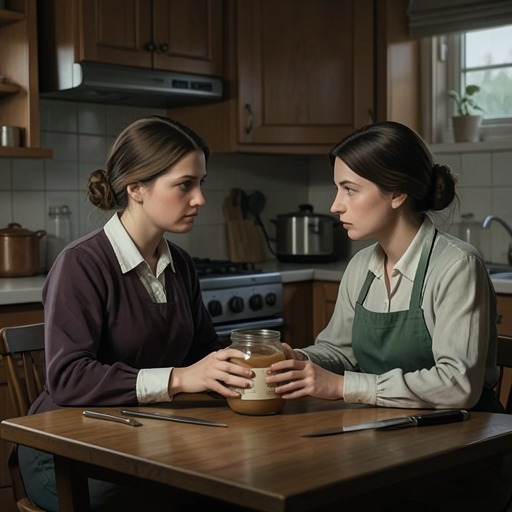
The Master Butchers Singing ClubPouty Mannheim is a war-surplus-airplane owner and amateur pilot whose machine first captivates Franz Waldvogel on the field behind the butcher shop. What begins as a boy’s wordless fascination becomes instruction, flight, and a possible way of life: Pouty teaches Franz to fly and takes Eva Waldvogel on a ride during her terminal illness. He is often self-absorbed, but his dealings with Franz reveal a capacity to respond to another person’s earnestness.
The Jenny and Franz’s First Flights
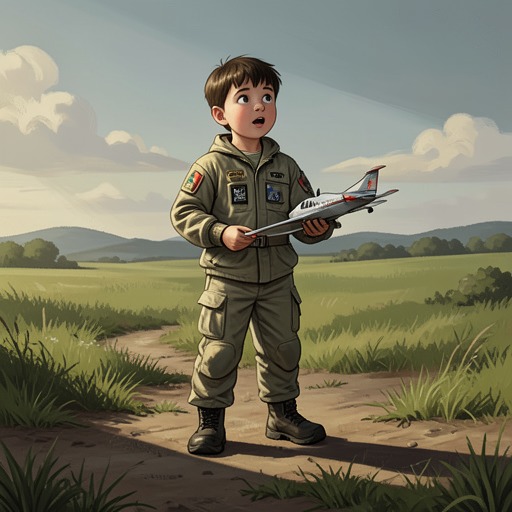
Pouty develops a fascination with flying, buys a war-surplus Jenny, and spends his spare time working on its engine and practicing rolls, dives, and curlicue maneuvers. He buzzes low over the shop to wave at the boys, and Fidelis Waldvogel allows him to land in the flat field behind the house. Each landing turns into an occasion for Franz: he throws off his apron and runs outside as soon as he sees the plane.
While Pouty visits with Fidelis, Franz climbs into the cockpit, studies the controls, and examines the official-looking flight log, which records Pouty’s flights, fuel, and hours aloft. When Pouty is ready to leave, Franz appoints himself ground crew, turning the propeller and calling the stand-clear. As the plane gathers speed, Franz chases it across the field, shouting and throwing his cap after it. The sight of the wheels lifting away from the earth releases an intense excitement he cannot put into words. After the plane vanishes, he stands still, gathering himself before facing other people.
Eva is the person Franz feels comes closest to understanding this response. As she grows ill, she becomes a grateful listener; after Pouty’s visits, Franz talks with her about aircraft, comparing their advantages and quirks from what he has learned in newspapers and magazines. His room holds a stack of papers and carefully cut-out pictures of aircraft and aviators, including a Fokker Eindekker marked with black crosses. Flight is already more than a passing interest: it gives Franz a subject he can share with his mother and an experience for which ordinary language seems inadequate.
Taking Eva Aloft
Pouty agrees to take Eva flying after Franz asks him to help make the ride happen without Fidelis’s permission. Pouty is not generally thoughtful and has little experience of affection for his own mother, but Franz’s manner impresses him. He considers the request while checking the plane’s controls, tightening his equipment, and touching up its paint, then says yes.
On the morning Fidelis makes deliveries, Pouty lands behind the shop. Franz goes to his mother’s room and finds her awake and dressed for the ride in a gauzy white housedress patterned with roses. Her hair has been damaged by treatment, and she has put on lipstick and gargled with lilac water. She is conscious of the changes brought by her illness and of the smell of her breath, which she dislikes; Franz sees her eyes as beautiful in her thin, pale face. He tells her, shyly and proudly, that her plane has arrived.
When the aircraft lifts off, Franz holds Eva around the waist. Pouty initially imagines the flight as a heroic service to a dying woman, something he can later explain to Fidelis as a duty. He even hopes that the ride might cure her, trusting in flight’s power. His optimism does not match the physical reality of Eva’s illness: she hopes the thrill will make her pain disappear, but it does not, and in some ways the pain becomes more intense.
The flight nevertheless gives Eva and Franz a shared experience. Pouty takes them west with the sun behind them, hoping to follow the river and show her herons and fish hawks. From above, the river gleams like a narrow gray curve, the trees stand out against the drought-stricken fields, and roads appear as black threads. They follow the river, circle an oxbow, and swoop low over a farm whose people Pouty knows before he turns back because he is running low on fuel. The ride cannot reverse Eva’s illness, but it carries her beyond the sickroom for a time and gives Franz the first experience of flight he has longed to share with her.
From Flight to Mentorship
Later, when Franz is distressed by his separation from Mazarine Shimek, the airfield becomes the one place that diverts him. He wonders whether the other men working around airplanes have ever been in love with anything as deeply as he is; at first he regards their apparent attachment to machines as a limitation, then finds relief in the practical concentration required to repair a temperamental engine. When Fidelis lets him leave the shop, Franz works on airplanes, and Pouty begins teaching him to fly as payment.
The instruction transforms Franz’s early, helpless excitement into practiced control. He feels the same physical release from the earth on each flight, but now he can read the wind and the signs in the clouds. On their eighth flight, Pouty lets him take the controls. They practice takeoffs and landings, then add stalls, spins, wingovers, and gentle loops to a beginner’s repertoire of barnstorming maneuvers.
When Pouty finally allows Franz to fly solo, Franz directs the plane toward the town’s grain elevator, a thin mark on the horizon. He performs a slow point roll, then a more complicated hesitation roll, a loop, and a difficult spin. The earth tips over him; the demands of concentration leave no room for the turmoil he has been carrying. By the time he lands, he feels at peace. He begins to imagine that he might survive losing Mazarine if he can spend his life in the air. Pouty’s tutelage thus gives Franz not just technical competence but a focused alternative to despair.
A Place Among the Older Men
Pouty remains part of the older circle of men who gather around Fidelis. When Pete Kozka comes into the yard, Pouty greets him warmly, hands him a beer, and shakes his hand. The group has lost Chavers, Sheriff Hock, and, more recently, Roy Watzka; the arrival of an old companion matters because their number is dwindling. The men clear their throats, find their pitch, and let their singing carry them. Pouty’s place in this scene extends beyond the airfield: he belongs to a community whose shared songs and reunions persist amid loss.
Character and Significance
Pouty is not presented as a consistently considerate man. His usual self-absorption makes his response to Franz more striking: he notices the boy’s seriousness, agrees to take Eva flying, and later shares the knowledge and control that make solo flight possible. These actions do not turn him into a cure-giver. Eva’s pain remains, and Pouty’s belief that flight might heal her exceeds what the ride can accomplish. What it can offer is an interval of movement and a view beyond the sickroom.
For Franz, Pouty’s airplane first makes flight visible as a physical event: wheels leave the ground, the gap between earth and machine widens, and the boy is left nearly speechless. Under Pouty’s instruction, the same wonder acquires discipline. Franz learns to read conditions, manage danger, and land; the sky becomes both a craft he can master and a place where grief temporarily recedes. Pouty’s importance lies in this passage from spectacle to skill, and in the unconventional generosity through which he helps Franz make it.