Red-beaded dress
The Master Butchers Singing ClubThe Red-beaded dress is both a garment Clarisse Strub associated with the courage to grieve and a displaced object that carries her history beyond her possession. Its movement—from Clarisse’s wake, to Delphine Watzka’s concealment, and eventually into Step-and-a-Half’s hands—links private mourning with friendship, secrecy, and the uncertain afterlife of discarded things.
Wearing the Dress in Grief
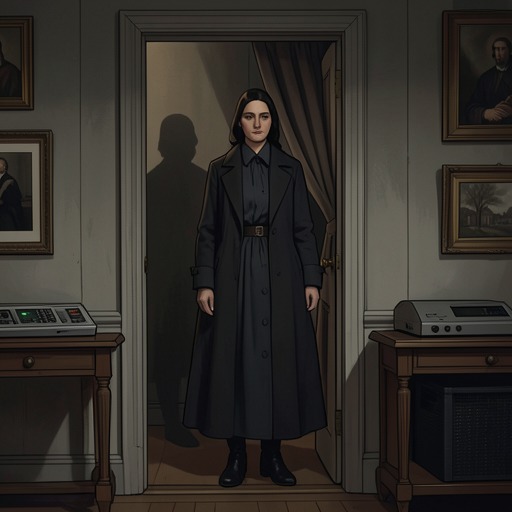
Clarisse wore the red dress beneath a somber black coat to her father’s wake. The occasion gave the garment a meaning beyond its glittering beads: wearing it made Clarisse feel invincible and helped her accept that her father was gone. The beads’ rustle accompanied her farewell, so the dress became part of how she endured and expressed grief.
That memory also explains why its loss mattered. When Sheriff Hock later searched Clarisse’s home, she wished she still had the dress. She remembered it as a source of courage at the wake, in contrast to Hock’s intrusion into that same period of mourning. To Clarisse, the garment belonged to a moment of self-possession that his conduct had threatened to spoil.
Hidden by Delphine
Delphine later told Clarisse that she had buried the dress in an iris patch. Clarisse thanked her and affirmed that Delphine had always been on her side; Delphine answered that she was, though she wished she knew what to do. The exchange makes the dress a material sign of their loyalty: Delphine has protected something that Clarisse could not keep openly, and Clarisse recognizes the care behind that act.
The hiding also separates the dress from the wake and leaves its later fate uncertain. By the time Clarisse recalls it, she no longer has it at hand. Its absence sharpens her recollection of the confidence it once gave her, while its survival depends on other people’s actions.
From Castoff to Keepsake of the Past
Step-and-a-Half regularly collected usable goods Clarisse left on her back porch. Among these castoffs was the red-beaded dress, wrapped in newspaper and tied with string. It was dirty, as if it had been buried and dug up, but Step-and-a-Half cleaned and aired it until it was fit to sell. She received three dollars for it from a traveling woman whose husband dealt in scrap metal.
Step-and-a-Half sometimes wondered whether Clarisse’s discarded possessions had belonged to the dead people she prepared in the basement of Strub’s Funerary. The dress’s history is not confirmed as part of that uncertainty; the text establishes only that it had been buried, recovered, and placed among Clarisse’s castoffs. Its route nonetheless gives the object a layered significance: what had served Clarisse in a personal act of mourning becomes merchandise, while retaining the traces of concealment and recovery.
Significance
The dress connects two distinct forms of care. For Clarisse, it helped make grief bearable; for Delphine, hiding it was an act of friendship. Step-and-a-Half’s later recovery and sale reveal another life for the garment, one governed by reuse rather than by Clarisse’s memories. The object’s changing custody preserves the fact of its importance even as its meaning shifts—from a source of courage, to a secret entrusted to a friend, to a valuable castoff circulating beyond its original owner.