Roy Watzka's house
The Master Butchers Singing ClubRoy Watzka's house is the domestic center of Delphine’s relationship with her father: a place where she repeatedly cares for him, where he finally confesses his role in the Chavers family’s deaths, and where he dies with Minnie’s photographs before him. Its cellar and rooms hold different kinds of buried history. The cellar conceals a family tragedy; the house above it becomes the setting for Delphine’s work of tending, questioning, grieving, and living with what she learns.
The House and Its Hidden Cellar
The house’s most consequential feature is its cellar, whose locked or sealed entrance conceals the Chavers family’s fate. When Delphine and Cyprian eventually open the hatch, the force of the smell drives them out into the yard, leaving them uncertain in the moment whether they have actually managed to lift it. The cellar is not merely an unused part of the house: it is the physical enclosure around a history that has remained unknown to Delphine and unspoken by Roy.
The discovery’s consequences extend beyond the cellar itself. Delphine later understands that the Chavers are still present in the house as a vestige of their desperation, though not as bones. Half asleep, she speaks to them, apologizing and asking them to go away. The house thus bears the difference between what can be uncovered materially and what continues as memory and guilt: opening the hatch reveals the hidden space, but it does not settle what happened there.
A Place of Care and Confinement
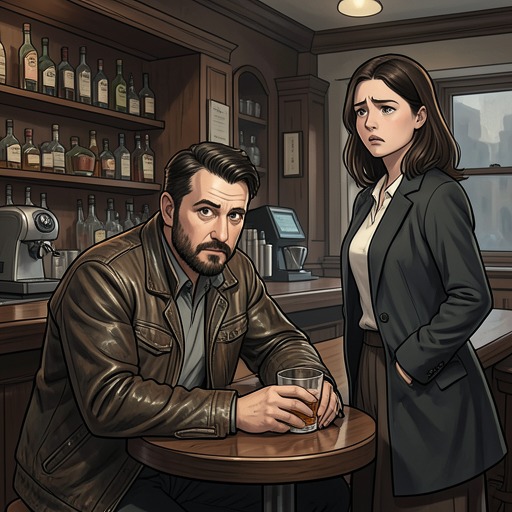
Roy’s house is also where Delphine carries out the practical work of keeping her father safe. After his drunken flight through town, she brings him home, gives him water mixed with sugar and salt, and puts him to bed. Because he resists being confined, she pins the sheet around him to keep him from getting up. She calls Doctor Heech, then returns to find that the lumberyard job she had hoped to take has already been filled; the employer also warns her that Roy must not sleep among the lumber piles, where he might start a fire. Her care for Roy therefore shapes not only what happens inside the house but also her ability to work outside it.
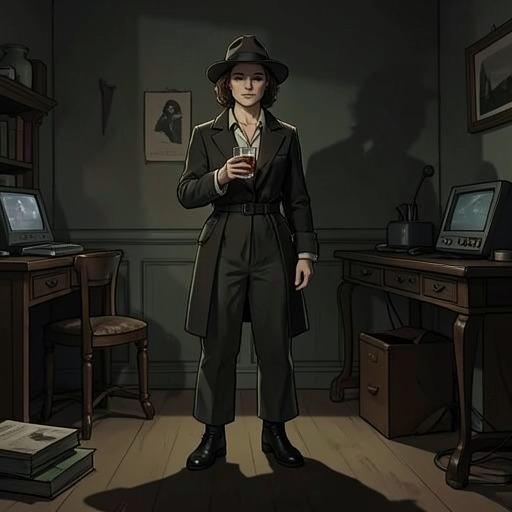
As Roy’s health declines, the house becomes the setting for a different, quieter vigilance. Doctor Heech prescribes rest, and at first Roy and Delphine treat his long hours asleep as a sign of recovery. Delphine comes to fear that the sleep is instead a preparation for death. She watches him weaken, notices that he eats little, and sees him arrange Minnie’s photographs on a shelf by the bed so he can look at them. The house’s ordinary routines—resting near the stove, eating a little soup, tending the fire—acquire the weight of a final vigil.
The Family History Roy Reveals
Delphine has long asked Roy about Minnie, but he has offered little explanation for his destructive grief. He will not tell Delphine why Minnie has no gravestone she can visit or where she is buried. His only answer is that Minnie was the only one left to tell the tale. At the house, as his tongue loosens under codeine and Delphine decides she will not let him die with the secrets she has a right to know, that withheld history begins to emerge.
Roy tells Delphine about Minnie’s childhood and the massacre at Wounded Knee. In his account, Minnie was among the Lakota people fleeing with women and children; she survived the attack and walked through snow until she reached a mission. The story gives Delphine a history of her mother that Roy had kept from her, and it makes the house a place where family memory is finally spoken rather than merely carried in silence.
The confession then turns to the Chavers family. Roy says he had told Mr. Chavers to go into the cellar for ginger beer and liquor, with candles so he could read the French labels. He admits that he may have shut the hatch while Mr. Chavers was below, and recalls calling down that Chavers could come back up after he stopped singing over Roy during practice. Roy had left on a long drinking bout. When he returned to the house to get liquor from the cellar, he found the family dead; he says he stayed drunk until Delphine and Cyprian arrived. His account connects Roy’s habitual drinking, the cellar’s concealed history, and Delphine’s discovery of the truth without making the confession a complete explanation of every detail of the deaths.
Death, Memory, and What Remains
After Roy’s confession, Delphine leaves the house and sits on the porch, unable to return indoors at once. She imagines selling the house, leaving the butcher shop and Fidelis, and moving to Chicago, where she might work in a theater, study, or write. The imagined departure registers how completely the revelation has unsettled her sense of home and responsibility. Yet it remains an imagined escape, not the outcome established by the evidence here.
Roy dies in the house, sitting upright before the indistinct photographs of Minnie placed on the flour-cupboard counter. The visiting nurse records the time, notes the condition of the body, closes Roy’s eyes, and contacts Delphine. His funeral draws a large attendance, and the photographs are placed face down in the coffin over his heart, as he had instructed. The house and its objects frame his death through the image he chose to face at the end: Minnie’s pictures, present in his room and carried with him into burial.
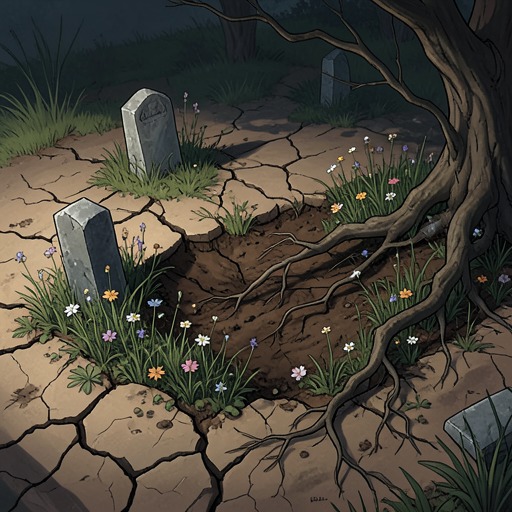
The house’s meaning is also shaped by Delphine’s continuing attachment to the dead. She thinks of the Chavers as still down below and of Minnie through the story Roy finally told. Later, at Eva’s grave, she considers the cemetery plot Fidelis bought: he will lie beside Eva, while Delphine had claimed the other side and now wishes Eva could lie between them. Roy’s place is beyond Eva’s, and Delphine imagines him at her shoulder in death. The house is therefore one part of a wider geography of grief: its cellar keeps the Chavers’ hidden past, its rooms hold Roy and Minnie’s history, and its eventual significance rests in the memories Delphine must carry beyond it.