Roy’s confession about the Chavers family’s deaths
The Master Butchers Singing ClubRoy’s confession about the Chavers family’s deaths is the belated revelation that turns a haunting, previously unexplained cellar tragedy into a specific account of Roy’s own actions and culpability. In a conversation with Delphine, he admits that he sent Mr. Chavers into the cellar, may have shut the hatch while the family was inside, and discovered the bodies only after returning from a prolonged drunk. The confession does not establish every detail with certainty, but it changes what Delphine—and the reader—can understand about the deaths and about Roy’s long history of drinking and guilt.
The Cellar and the Unresolved Deaths
The cellar had already appeared as a sealed, oppressive place before Roy explained what happened there. When Delphine and Cyprian pried open the floor hatch, they had first to break through a seal made of shattered jars of canned peaches, dog droppings, and red beads mortared into peach juice. After working with a crowbar and can opener, they encountered a smell so overpowering that both fled through the back door and rolled in the yard. The scene makes the cellar’s hidden contents physically present before the story supplies their history: the hatch conceals both a family’s deaths and the knowledge Roy has avoided facing.
Roy’s confession gives the earlier horror a human cause without making the account fully precise. He remembers directing Mr. Chavers to fetch ginger beer and search for the good liquor, telling him to take candles so he could read the French labels. Roy then wonders aloud whether Mr. Chavers was looking for the king’s wine. He says he did not know that Mr. Chavers’s wife and child had gone down with him. His account places a casual request for alcohol at the start of the chain of events that left a whole family trapped below ground.
The Confession to Delphine
When Roy speaks, he is already caught in memories of the dead. He tells Delphine to stop looking at him—or, more precisely, to stop looking as though she is looking at him—and complains that Mr. Chavers has never stopped knocking on the floor. Roy imagines him waiting on the other side with his family, and admits that he never knew they were down there. The pounding he describes joins the cellar’s physical barrier to the past that continues to press on him.
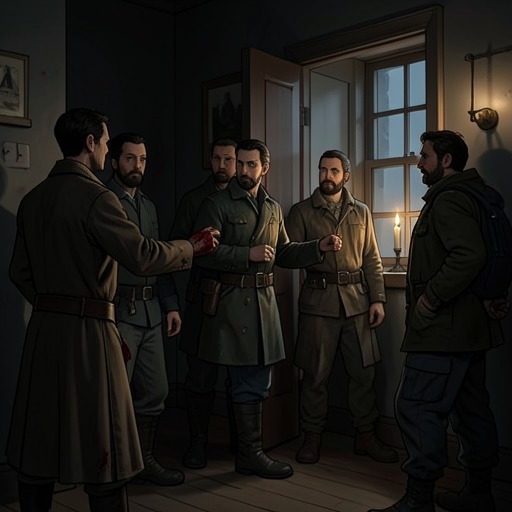
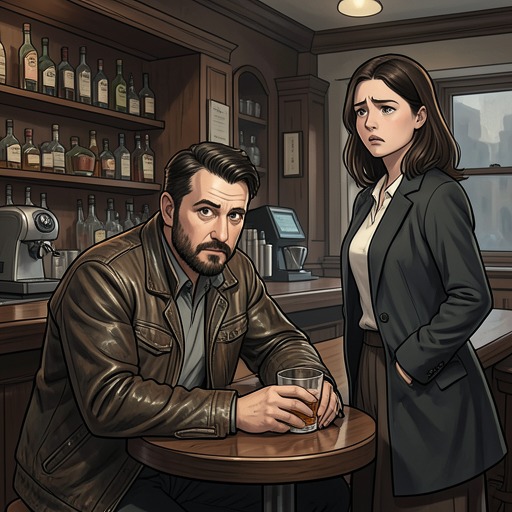
Delphine answers that Roy was too drunk to know what he was doing. She has heard his lament before and does not want him to settle into self-pity or comfortable blame. But Roy then offers a more specific and disturbing admission: he says that he could have justified what happened to Porky, the child later identified as Ruthie. He recalls yelling down to Mr. Chavers that he could come back up after he stopped singing over Roy at practice. Roy’s recollection connects the cellar incident to a petty rivalry in the singing club: he resented Mr. Chavers for puffing out his chest and edging forward to sing over him. The remembered taunt makes the confession more than an account of an accident; it exposes the spite and resentment that surrounded Roy’s decision to send him below.
Uncertainty, Absence, and Responsibility
Roy does not claim to remember the decisive moment clearly. He says he cannot remember what happened to the child, and suggests that he may have shut the hatch. That uncertainty matters: the confession does not provide a complete, verified reconstruction of the family’s deaths. It reveals a possible act with fatal consequences, and Roy’s suspicion that he may have caused the family to remain trapped, but his words stop short of certainty about whether he closed the hatch or precisely how the deaths unfolded.
The timing of Roy’s absence further complicates his account. Delphine recalls that he went away for three weeks on a long drunk; Roy corrects her, saying it was longer. He says he came back to get the liquor in the cellar and found the family there. Afterward, he stayed drunk until Delphine and Cyprian arrived. His drinking thus surrounds the tragedy both before and after it: alcohol is the errand that sends Mr. Chavers below, the reason Roy is absent and unable to account for what happened, and the refuge he takes after discovering the bodies.
Delphine’s Reaction and the Weight of the Past
Delphine reacts first with disbelief. She bends over Roy and shakes him lightly, but his body flops, and she lets go. When he finishes, she leaves the house rather than continue the conversation indoors. On the porch she folds her arms around herself, brushes away mosquitoes and the papery seeds falling from the trees, and tries to imagine a life elsewhere: selling the house, leaving the butcher shop and Fidelis, and moving to Chicago to work in a theater or become a teacher. She tells herself not to think about Markus or Ruthie. The confession immediately turns her thoughts toward escape, but the names she tries to exclude show how thoroughly the revelation has bound the past to her present.
The episode also reframes the cellar as a repository of concealed responsibility rather than merely a gruesome setting. Roy’s account emerges through fragments—an old rivalry, an errand for liquor, an uncertain memory of the hatch, a later return to the cellar—while his earlier drinking has prevented him from giving Delphine a stable explanation. The physical hatch that Delphine and Cyprian labor to open echoes the belated disclosure: what was sealed away comes out violently, but revelation does not undo the deaths or deliver complete certainty. Roy’s confession changes the family tragedy from an unexplained haunting into a burden that Delphine must now carry alongside her own memories of the dead.