The Chavers family haunting
The Master Butchers Singing ClubThe Chavers family haunting is the lingering presence of the family who died in Roy Watzka’s cellar, a secret Roy kept from Delphine for years. Their deaths recur in the novel as an unresolved moral and emotional burden: Roy fears their return, eventually confesses his role in the cellar tragedy, and dies with Minnie’s photographs before him, while Delphine comes to feel the family’s desperation in her own home. The haunting connects private guilt to histories of violence and loss, without settling whether its manifestations are supernatural or arise from memory and remorse.
Origins and the Cellar Secret
The haunting begins with the Chavers family’s deaths in Roy’s cellar. While Roy was away on a prolonged drinking binge, he had sent Mr. Chavers downstairs to fetch ginger beer and look for liquor, suggesting he take candles so he could read the French labels. Roy later admitted that he might have shut the cellar hatch, trapping Mr. Chavers, his wife, and their child, Ruthie. He remembered calling down that Mr. Chavers could come back up after he stopped singing over Roy at practice. The precise sequence of the deaths remains uncertain in Roy’s account, but his words establish that his own action may have prevented the family from escaping.
Roy says he returned to the cellar looking for liquor and found the family there. He then stayed drunk until Delphine and Cyprian came back. The delay between the deaths and his admission matters: Roy conceals what happened, and Delphine does not learn the truth until he is dying. His guilt becomes entangled with alcohol, whose temporary numbing effect postpones rather than resolves his reckoning.
Roy’s Relapse and the Returning Dead
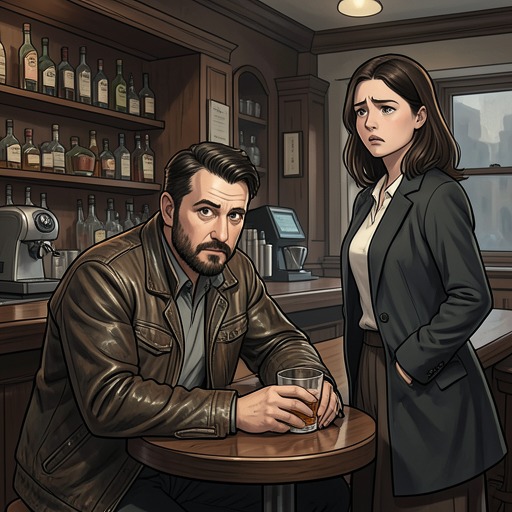
After a period of sobriety, Roy resumes drinking, first in small amounts and then heavily. He lies to Delphine about working with Step-and-a-Half, while drinking wherever he can, including at the pool hall’s back steps. To avoid both his daughter’s notice and another visit from the dead, he stays away from his house. The spirits, the narrative says, leave him alone when he avoids the place where the family’s deaths occurred. On the days he manages to stay sober, he visits Delphine, cooks substantial breakfasts, washes his clothes, and scrubs the floors. This uncharacteristic domestic care helps conceal the relapse for a long time.
The haunting is linked to place as well as to Roy’s state. The cellar is the site of the concealed deaths; avoiding the house seems to keep the apparitions at a distance, while returning there brings the past close again. Roy’s fear is not simply that the dead will accuse him: he says he never knew the family was there and is startled that Mr. Chavers has been knocking on the floor, as though waiting for Roy on the other side. His ignorance at the time does not cancel his responsibility in his own telling.
Delphine’s Knowledge and Inheritance
The Chavers’ presence reaches Delphine even before Roy explains what happened. In her room, among ordinary furnishings and the quilts Eva made for her, she senses that the family remains below—not as bones, but as a remnant of desperation. Half asleep, she tries to explain that she did not know and would not have allowed it, and asks them to go away. Her response registers both her lack of knowledge and the burden of living in a house shaped by a tragedy she has not yet been told about.
When Roy finally confesses, Delphine challenges his account of the time he was gone and learns that the binge lasted longer than she thought. Roy describes the order to fetch liquor, his possible closing of the hatch, his taunt about Mr. Chavers singing over him, and the discovery of the family on his return. Delphine leaves the house and sits outside, shaken by the revelation. She imagines abandoning the butcher shop and her marriage for a new life in Chicago, but recognizes that this plan is fantasy rather than a decision. Her thoughts turn instead to the responsibilities and attachments that have shaped her: caring for children who are not hers, and being a wife and business partner.
The revelation also gives new force to Delphine’s sense of isolation. In a vision, a mocking snake-bearing child tells her that she is alone: her husband is foreign-born, she has no child, her father is dying, and she does not know her mother’s face. Delphine answers by laughing, even as Roy calls for whiskey. The haunting does not merely disclose Roy’s past; it converges with Delphine’s own childhood loss and her fears about belonging, motherhood, and responsibility.
Minnie’s Story and Historical Violence
Roy’s account of Minnie’s childhood places her family’s suffering within a wider history of violence. He tells Delphine about a group of Minneconjou Lakotas fleeing in winter, including women and children and the dying leader Big Foot. After they surrender their weapons and camp where they are directed, an accidental shot is followed by an attack on the camp. Minnie’s father is killed, and Minnie escapes through the violence, follows tracks through the snow, and eventually reaches a mission. Roy’s story presents the loss of Minnie’s family as an earlier wound in the chain of histories that surround the Chavers and their dead.
This account does not explain the cellar deaths or prove the reality of the haunting. Instead, it shows Roy trying to tell Delphine a story of grief and survival while he himself is approaching a confession he has kept buried. The dead return in different registers: as figures Roy fears, as Delphine’s felt presence in the house, and as histories narrated after the fact. The novel allows these forms to resonate without collapsing them into a single explanation.
Death, Memory, and the Unresolved Haunting
After Roy’s confession, Delphine briefly imagines selling the house and leaving town once he dies. But her later reflections show that escape cannot erase the losses bound up with her life. At Eva’s grave, she thinks about how meeting Eva changed her ambitions and left her carrying on Eva’s life and work. Roy’s place in the cemetery will be beside her; she imagines his rough jokes at her shoulder, even as she acknowledges the loneliness rooted in losing her mother. The Chavers’ haunting is one strand in a broader landscape of grief, not an isolated supernatural puzzle.
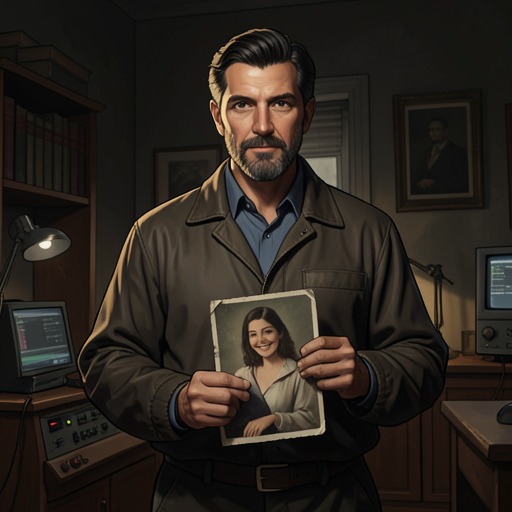
Roy is found dead sitting upright, his gaze fixed on the obscure photographs of Minnie placed on the flour-cupboard counter. The county visiting nurse records his composed posture and the time of death, then contacts Delphine; word of his final stare spreads through town. The photographs make Minnie’s story present at the moment of Roy’s death, joining his remorse over the Chavers to the earlier family loss he had recounted. Whether the dead literally visit Roy remains unresolved, but the consequences of the haunting are concrete: his relapse, concealment, confession, and the enduring effect of the cellar deaths on Delphine.
Narrative Significance
The haunting works through delayed disclosure. For years, Roy’s evasions and cycles of drinking keep Delphine from knowing what happened, while his fear of the dead signals that the past has not become safely past. When he finally tells her, the confession does not restore the family or free either of them from grief. It changes what Delphine understands about her father and about the house, and it makes the past newly present in the choices she imagines and the life she continues to lead.
The novel preserves uncertainty between a supernatural visitation and a haunting produced by guilt, memory, and grief. Roy experiences the dead as visitors and hears Mr. Chavers knocking; Delphine senses the family’s desperation and addresses them in half-sleep; Minnie’s photographs remain beside Roy at his death. These details support more than one reading, while their shared emotional truth is clear: the dead continue to shape the living, and secrecy does not silence the consequences of what happened.