The chinchilla massacre and the burning of the wild dogs
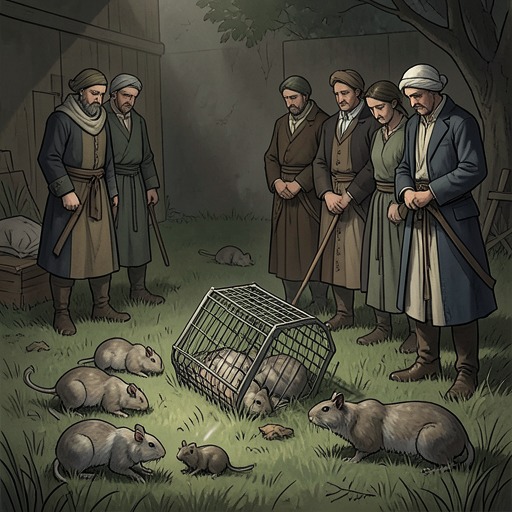
The Master Butchers Singing ClubThe chinchilla massacre and the burning of the wild dogs is a turning point in which an attack on the boys’ animals becomes a shared family loss and prompts Fidelis to act against the pack. The animals had represented both a hoped-for source of money and an unusual legacy from Eva. Their destruction leaves Markus grieving, draws Delphine and Fidelis into the loss, and ends with Fidelis killing the dogs and burning what remains so that nothing is left behind.
The boys’ project and its loss
Markus and his younger brothers had treated the chinchillas as a prospective business, repeatedly calculating what they might earn and how to divide the profits. They debated whether to pool the money for a larger purchase or split it among themselves, including the possibility of buying a bicycle for each boy. The animals, meanwhile, grew in baskets and makeshift nesting boxes. The contrast between the children’s plans and the chinchillas’ ordinary, unknowing lives makes the project more than an exercise in arithmetic: it is a future the boys have begun to imagine together.
One Friday night, after the family had eaten sheep’s offal, wild dogs entered through the back fence. Schatzie barked at the front of the store, drawing Fidelis’s attention toward a possible intruder while the pack overturned the cages and killed the chinchillas. The dogs disappeared as quietly as they had come, leaving the cages scattered and the animals gone. The family discovered the scale of the loss the next morning.
Markus went first to Delphine, carrying a scrap of fur and struggling to contain his grief. Delphine and the other boys searched the yard and found the cages torn open, but no surviving chinchillas; the scrap Markus held was the sole remnant they could identify. The loss was financial, since the boys had hoped to make money, but Delphine also understood the animals as part of Eva’s legacy. Eva had begun the project, and the chinchillas had become a continuation of something she had made for the boys.
Fidelis’s response
Fidelis surveyed the wreckage and grew angry. His response begins not with an immediate attack but with a quiet gesture toward his sons: he told them to be quiet and placed a hand on each of their shoulders, an unusual display of tenderness. He then went to the slaughterhouse, gathered discarded and spoiled meat, and carried it to the edge of the field. The bait turned the dogs’ earlier raid into a waiting game: rather than pursue them, Fidelis prepared for their return.
He collected two rifles and extra ammunition from the room where he kept his guns. He also brought a chair outside and set it beneath a tree, then returned to fetch three beers, bread, baloney, cheese, and apples. From the shade, with the meat scraps in sight, he settled in to watch. The boys and Delphine observed from the yard as the hours passed. The episode’s deliberate pause contrasts with the suddenness of the nighttime attack: Fidelis makes a patient vigil of his response, and his family must wait with him.
Delphine watched from the kitchen window and found herself excited by the possibility that the dogs would return, then felt guilty about that feeling as she noticed Schatzie nearby. She repeatedly checked for the pack. The boys waited outside, crouched on the stock-pen timbers, and later carried food to their father while eating their own lunch. As the afternoon wore on, the dogs did not appear; the wait itself became a test of attention and resolve.
The killing and the fire
Late in the afternoon, after the boys had begun to doze in the shade of the grapevines, Delphine heard the first shot. Fidelis had waited until the dogs gathered and then shot at the pack. Delphine ran outside and climbed the stock-pen with the boys to watch. The dogs were killed, including the last one as it tried to escape across the field. After the final shot, Fidelis gestured to his sons and told them to gather the animals. They carried the dogs back and laid them together.
Delphine recognized one of the dead dogs as the large brown chow that had run wild on the Kozkas. She considered it best to dispose of the evidence and did not say anything. Fidelis brought out two tins of kerosene, poured fuel over the dogs, and added wood, fallen branches, and refuse. When the pile stood as high as his shoulders, he soaked its top as well, made a torch from rolled paper, and set the fire alight.
The family watched as the fire consumed the pile. The boys kept adding junk while the blaze continued into dusk, and the wood eventually collapsed into coals hot enough to burn green wood. By the time the fire had finished, even the dogs’ bones would be ash. Delphine and the boys watched with an intensity they did not understand; the destruction held their attention until it was late enough for Delphine to send them to bed. The episode closes not with a surviving trace of the pack, but with the remains reduced to nothing.
Significance
The event joins two kinds of work associated with Fidelis. He is a butcher whose craft depends on care, precision, and the transformation of animal matter, and here he first gathers discarded meat as bait, then uses fire to destroy what he has killed. The response is not an extension of the family’s ordinary trade so much as a stark departure from its productive purpose: the meat scraps have no value as food, and the final burning leaves no usable remains.
The chinchillas’ death also exposes the emotional weight beneath the boys’ calculations. Their anticipated profits matter, but Delphine sees that the animals belonged to a project Eva had begun, so the attack threatens a connection to her as well as a possible future for the children. Fidelis’s quiet touch on each boy’s shoulder precedes his armed vigil; in that sequence, protection and grief are inseparable. The family’s final, sustained attention to the fire gives the loss a collective aftermath, even as the burning removes the physical evidence of what happened.