the Chavers family
The Master Butchers Singing ClubThe Chavers family are the three people who die after being locked in Roy Watzka’s cellar. Though the family appear chiefly through the aftermath of their deaths and other characters’ memories, their fate becomes a lasting presence in the novel: it helps break Roy’s long-standing denial, shadows Delphine’s relationship with him, and makes the cellar a place where concealed suffering continues to exert force.
The family and the cellar tragedy
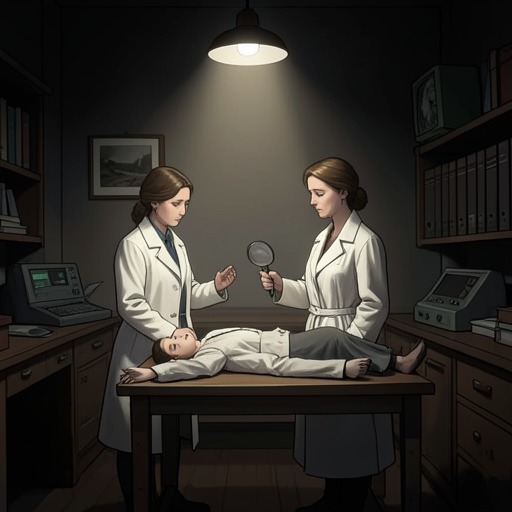
The Chavers family’s identities are initially entangled with uncertainty. When Sheriff Hock questions Delphine about Roy’s cellar, she first says she does not know about the bottles kept there. Hock suspects that the tragedy is connected to the empty bottles littering the cellar. Delphine offers an explanation for their presence: Roy may have saved them for Step-and-a-Half, who could resell them for home brew. Her answer does not resolve what happened, but it places the family’s deaths within the neglected, alcohol-haunted setting of Roy’s house.
Delphine confirms that Roy had been a friend of the Chavers. Once he learned the victims’ identities, she recalls, he reacted with overwhelming distress, pulling at the remaining tufts of his hair and rolling on the floor. He repeatedly insisted that he had believed the family had gone to Arizona for the winter. Delphine herself had accepted that account, imagining they had gone away for the season. The sheriff points out that winter was nearly over when they were locked in. That detail makes the absence more terrible: the family had not simply vanished on a seasonal journey but had been trapped while time passed outside.
Delphine’s account and the delayed recognition
The Chavers family’s fate is conveyed through the painful mismatch between what Roy believed and what had occurred. His insistence that they had gone south suggests that he did not understand, or could not face, their presence and death in the cellar. Delphine is caught between protecting her father and answering the sheriff’s questions. She tries to account for the bottles, then recalls Roy’s collapse when the family’s identities became known. As she speaks, her concern turns from the investigation to fear that Roy might somehow have set the deaths in motion. Yet she also remembers him as bewildered by the dead and unable to provide useful information.
The scene leaves uncertainty around Roy’s precise responsibility, but not around the central horror: the family were locked in the cellar and died there, and the bottles became a clue to the conditions surrounding the tragedy. Delphine’s recollection keeps both facts in view—the possibility of Roy’s connection to what happened and his apparent shock when he recognized who the dead were—without converting suspicion into a definitive account of intent.
The dead as a continuing presence
The deaths do not end with discovery. Later, the Chavers return in Roy’s recurring delirium as figures associated with the grave, reaching for him and drawing him toward the earth. Their haunting is linked to the moment when Eva dies: the starkness of that loss, together with the remembered cellar tragedy, finally unsettles Roy enough to sustain an unprecedented period of sobriety. In this way, the Chavers’ deaths become part of the pressure that changes his conduct. He begins to care for his house and to help Delphine, rather than relying on others to manage his neglected life.
Roy’s response does not undo the family’s fate, but it alters the meaning of their place in his story. The cellar is not merely a setting for a past disaster; it holds a memory that returns and disrupts the life of the man associated with it. The family’s suffering remains largely outside direct view, yet its consequences are measurable in Roy’s fear, Delphine’s anxious questions, and the lasting effort to understand what happened.
Narrative significance
The Chavers family function as absent characters whose deaths reorganize the relationships of the living. Delphine’s loyalty to Roy is tested by her awareness that he had been their friend and by the unsettling question of whether his actions contributed to their fate. Roy, in turn, is no longer defined only by his drinking: the dead become a source of terror that he cannot keep at a distance, and his later sobriety and household care follow that reckoning.
Their story also gives the cellar a double significance. It is a literal place of confinement and death, but it becomes a repository of unresolved memory: empty bottles, Roy’s confused account, Delphine’s uneasy speculation, and the returning dead all gather around it. The family remain largely unnamed individually and are known collectively through the tragedy, but that narrative absence intensifies their role. Their deaths are not a mystery the surviving characters can neatly settle; they are a continuing moral and emotional fact that changes how Roy and Delphine live.