Matthew Levi
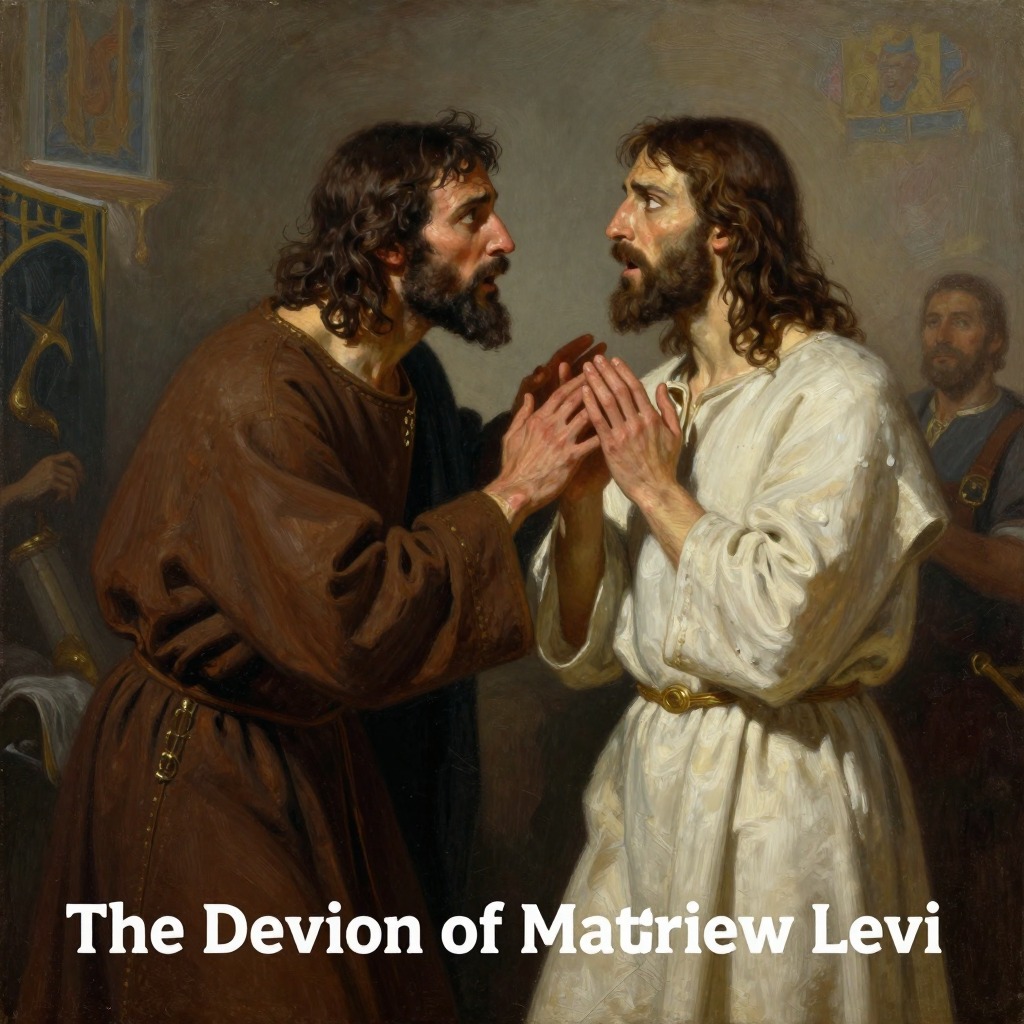
The Master and MargaritaMatthew Levi, a former tax collector, is the only named disciple of Yeshua Ha-Nozri in the novel. He first appears in the narrative during Yeshua's interrogation by Pontius Pilate, where Yeshua describes him as a man who once insulted him by calling him a dog but later threw his money down in the road and became his companion. Levi's transformation from a tax collector to a follower is marked by his renunciation of wealth, a gesture that Pilate finds astonishing. He is characterized by his fierce loyalty, his impulsive and desperate actions, and his profound anguish at the failure to save his teacher.
Life and Plot Trajectory
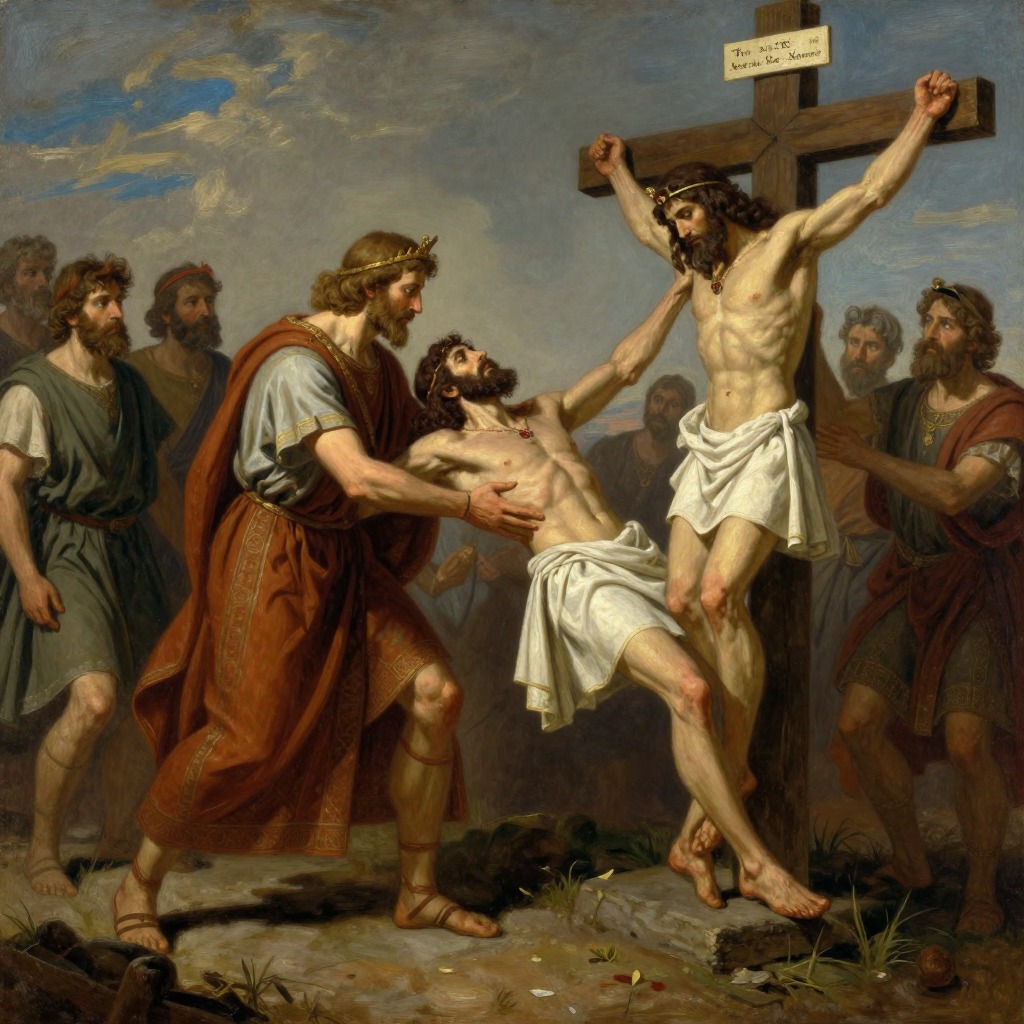
Levi's story is primarily told through the events surrounding the crucifixion. After Yeshua is arrested, Levi falls ill and is unable to follow him into Yershalaim, a failure he later bitterly regrets. Upon learning of the sentence, he runs alongside the procession, devising a plan to stab Yeshua to end his suffering, but he lacks a knife. He runs back to the city, steals a razor-sharp bread knife from a shop, but returns too late to reach the condemned man before the execution begins. During the crucifixion, he sits on a stone on the north side of Bald Mountain, hidden from the soldiers, and curses God for not sending Yeshua a swift death. After the execution, as a storm breaks, he cuts down Yeshua's body and carries it away, disappearing from the hilltop.
Key Actions and Objectives
Levi's primary objective is to save Yeshua from prolonged suffering. His plan to stab him is motivated by mercy, not malice. When this fails, he demands a miracle from God, cursing him as a "black god" when no intervention comes. After the execution, he retrieves Yeshua's body, cutting the ropes and taking it away. Later, in a different narrative layer, Levi appears as a messenger from Yeshua, speaking to Woland on behalf of his teacher. He delivers the judgment that the master does not deserve the light but deserves peace, a verdict that shapes the novel's conclusion.
Relationships and Conflict
Levi's relationship with Yeshua is one of absolute devotion, but it is also marked by his own sense of inadequacy and failure. He is tormented by the belief that he should have been able to prevent the crucifixion. His conflict is not with other characters but with God, whom he curses for his perceived injustice. He also has a brief, tense interaction with Woland, where he acts as Yeshua's emissary, delivering a message that even the devil must respect.
Change and Ending
Levi's arc moves from a desperate, impulsive follower to a figure of quiet authority. His final appearance is not as a mourner but as a messenger who speaks with the authority of Yeshua. He does not seek revenge or further action; instead, he delivers a judgment that is both merciful and final, granting the master peace rather than the light. This transformation suggests that his suffering and failure have been redeemed, and he has become a conduit for Yeshua's will.
Narrative Role and Evaluation
Levi serves as the sole witness to Yeshua's teachings and death, and his actions provide a human counterpoint to the divine and demonic forces at play. His desperate attempt to save Yeshua and his subsequent curse of God highlight the novel's themes of faith, doubt, and the limits of human agency. His final role as the messenger who defines the master's fate underscores the novel's central moral: that cowardice is the most terrible of vices, and that peace, not glory, is the reward for those who have suffered but not fully overcome.