Patriarch's Ponds
The Master and MargaritaThe Patriarch's Ponds is a small park in central Moscow, named after the three ponds that once existed there. In the novel, it is the site of the opening scene, where the editor Mikhail Alexandrovich Berlioz and the poet Ivan Nikolaevich Ponyrev, who writes under the pseudonym Homeless, meet on a hot spring evening. The walk is described as deserted, with no one sitting on the benches, a first oddity of the dreadful May evening. Here, the two writers discuss Berlioz's commission of an anti-religious poem from Homeless, and Berlioz lectures the poet on the non-existence of Jesus Christ, citing ancient historians and pointing out that all stories about Jesus are mere mythology. It is at this point that the first man appears in the walk, a foreigner who will later be known as Woland, who joins their conversation and astounds them with his knowledge of their thoughts and his predictions.
The Threshold of the Supernatural
The Patriarch's Ponds is the place where the boundary between the ordinary and the extraordinary first breaks down. Before Woland's arrival, Berlioz experiences a groundless fear and a hallucination of a transparent citizen of the strangest appearance, a jockey-capped figure who wove himself out of the sweltering air. This phantasm dissolves, but it foreshadows the supernatural events to come. Woland himself, with his mismatched eyes (one black, one green), his grey beret, and his walking stick with a black knob shaped like a poodle's head, immediately strikes the writers as a foreigner. He sits down on the next bench and, overhearing their conversation, declares that Jesus did exist, and then begins to tell the story of Pontius Pilate, a narrative that will become the novel's second chapter. The Ponds thus become the stage for the first direct confrontation between Soviet atheism and the reality of the supernatural, a confrontation that ends with Berlioz's death.
The Site of Prophecy and Death
Woland uses the Patriarch's Ponds to deliver his most chilling prophecy. He tells Berlioz that his head will be cut off by a Russian woman, a Komsomol girl, and that the meeting at Massolit will not take place because Annushka has already bought and spilled sunflower oil. This prediction is fulfilled moments later when Berlioz, rushing to the turnstile, slips on the spilled oil and falls under a tram-car, his head severed. The severed head bounces along the cobblestones, and the poet Homeless, who witnesses the event, is left in a state of shock. The Ponds thus become the site of a sudden, violent death that confirms Woland's supernatural knowledge and sets the plot in motion. The connection between the place and the prophecy is reinforced when Homeless, later in the clinic, realizes that the word "Annushka" got strung together with the words "sunflower oil" and then for some reason with "Pontius Pilate."
A Place of Transformation and Recurrence
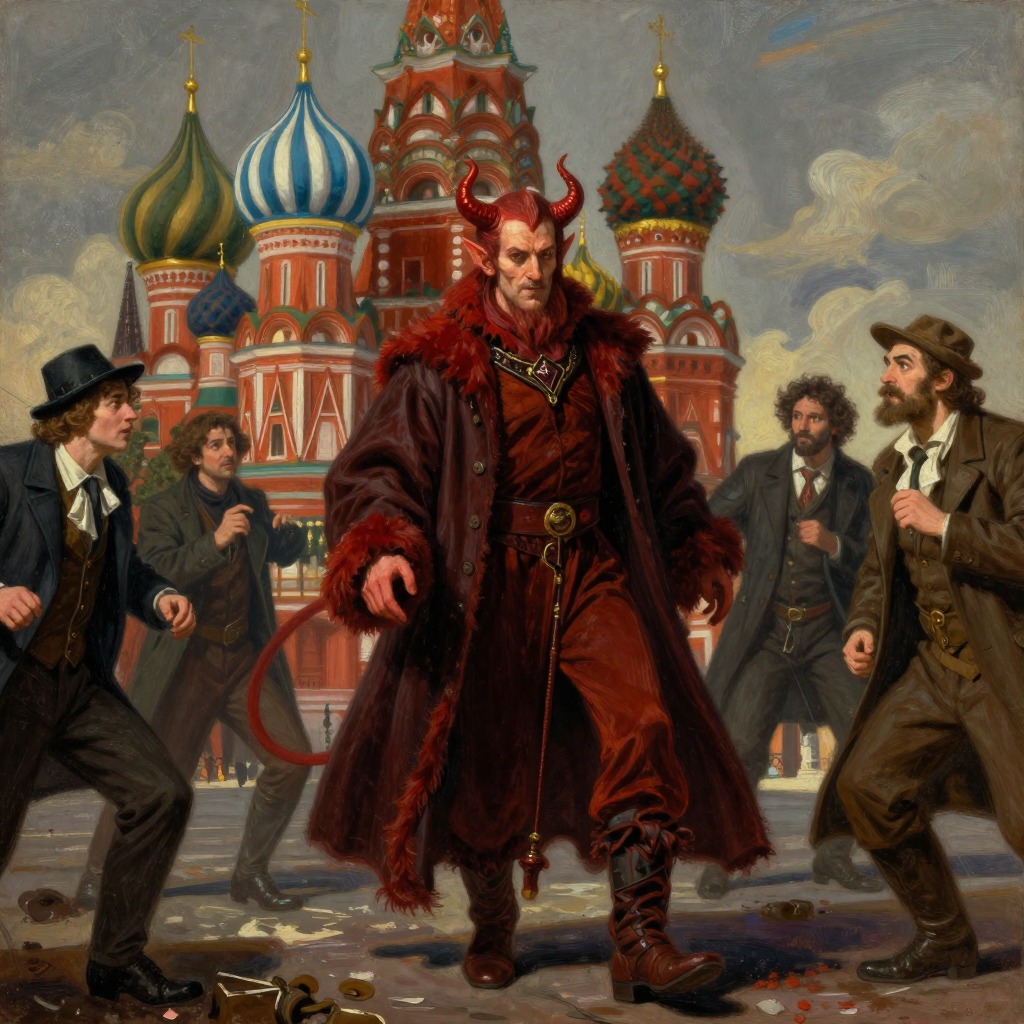
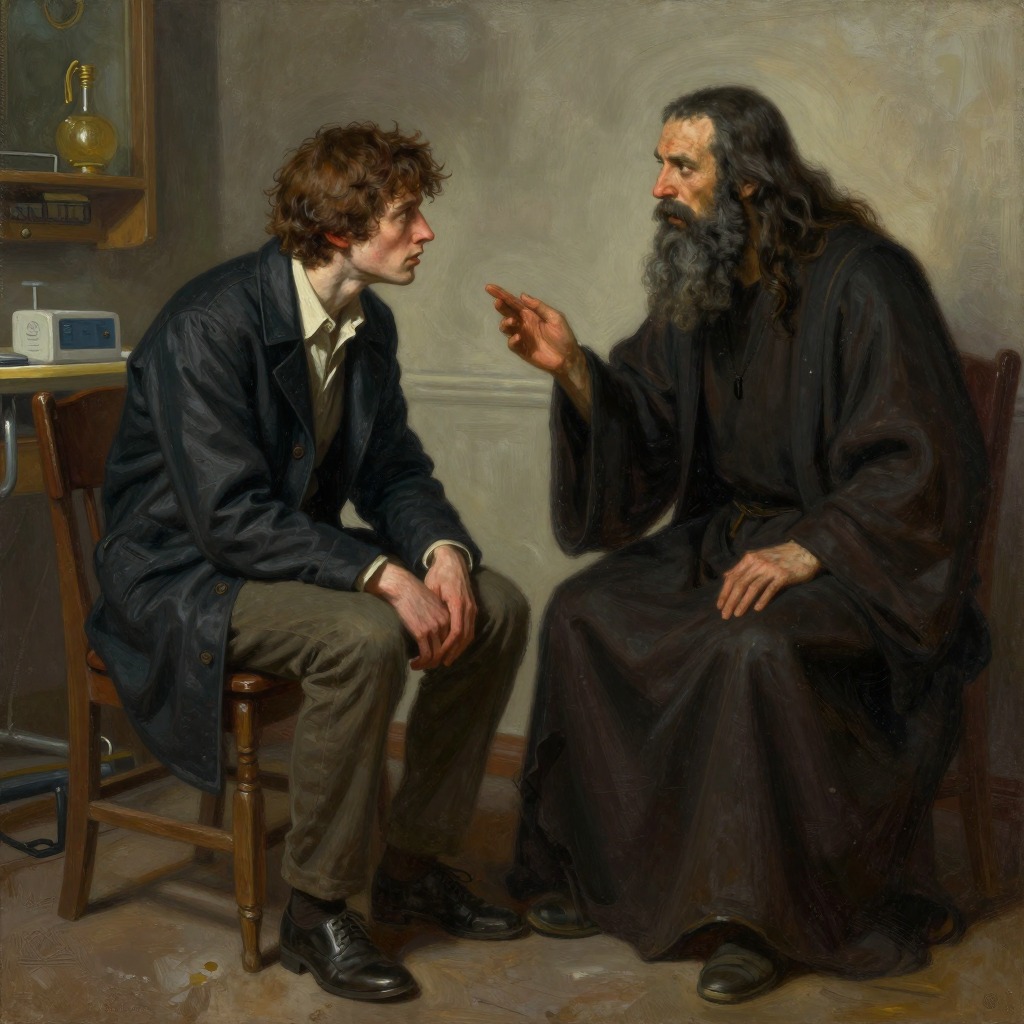
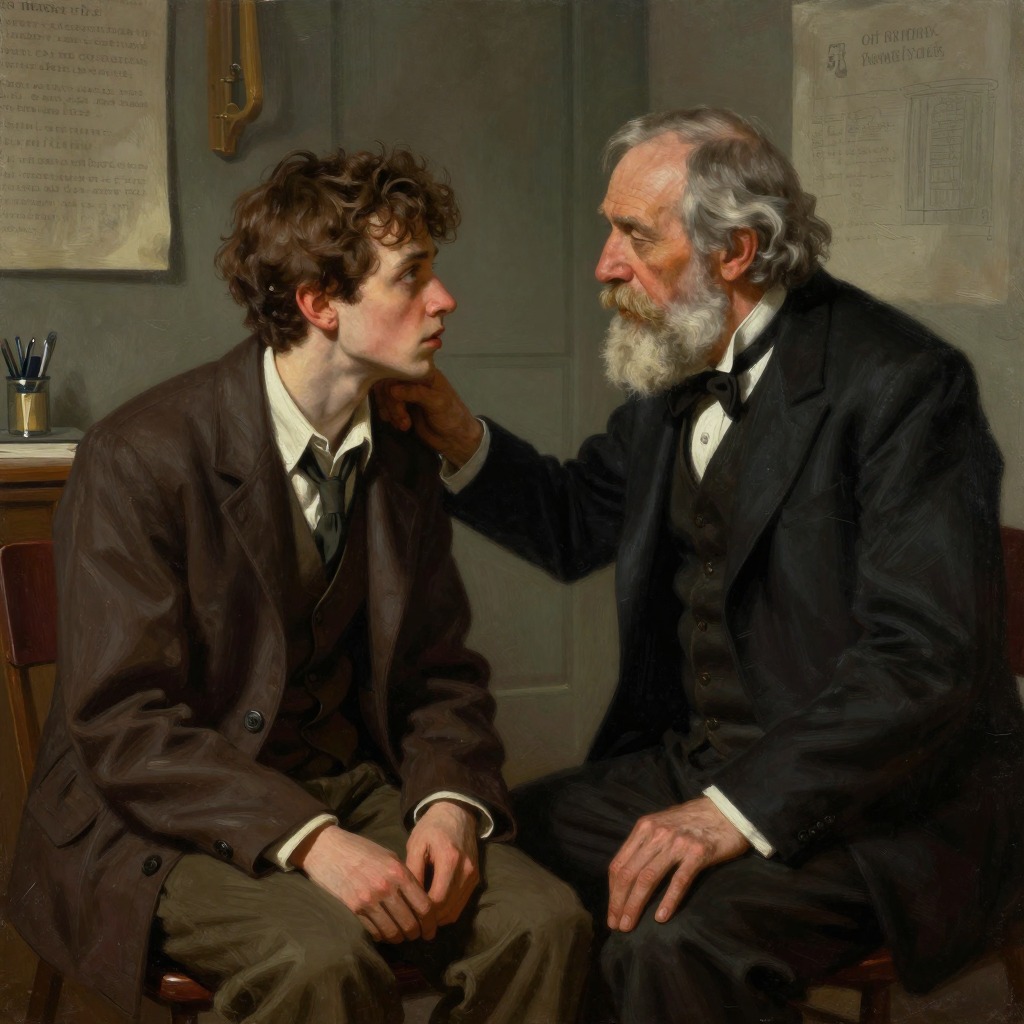
The Patriarch's Ponds is also a place of personal transformation. After Berlioz's death, Homeless, in a state of delirium, chases Woland and his retinue through the city, eventually ending up in a psychiatric clinic. There, he meets the master, who tells him that he met Satan at the Ponds. The Ponds thus mark the beginning of Homeless's journey from a confident, state-sponsored poet to a confused, then enlightened, disciple of the master. The location also has a recurring significance: in the epilogue, it is revealed that every year, with the coming of the spring full moon, Ivan Nikolaevich Ponyrev, now a professor of history, returns to the Patriarch's Ponds and relives the events of that evening, sitting on the same bench and talking to himself about Pontius Pilate. The Ponds thus become a site of eternal return, a place where the parable of the novel's central themes—cowardice, truth, and the nature of reality—is re-enacted annually.
Narrative and Thematic Significance
The Patriarch's Ponds functions as a narrative device that bridges the two worlds of the novel: the contemporary Moscow of satire and the ancient Yershalaim of tragedy. It is the point where Woland, the "historian" and "specialist in black magic," first appears and begins to tell the story of Pilate, which will later be continued by the master. The location is also thematically rich, representing the clash between the imposed normality of Soviet life and the hidden, supernatural reality that Woland embodies. The emptiness of the walk at the hour when it seemed no longer possible to breathe suggests a world that has been drained of mystery, a world that is about to be invaded by the inexplicable. The Ponds, with their water and trees, stand in contrast to the bureaucratic, concrete world of Moscow, offering a space where the unexpected can occur. The spring full moon, which rises over the Ponds during the opening scene, becomes a recurring motif, associated with the unsettling power of the supernatural and the cyclical nature of the novel's events.