Professor Stravinsky
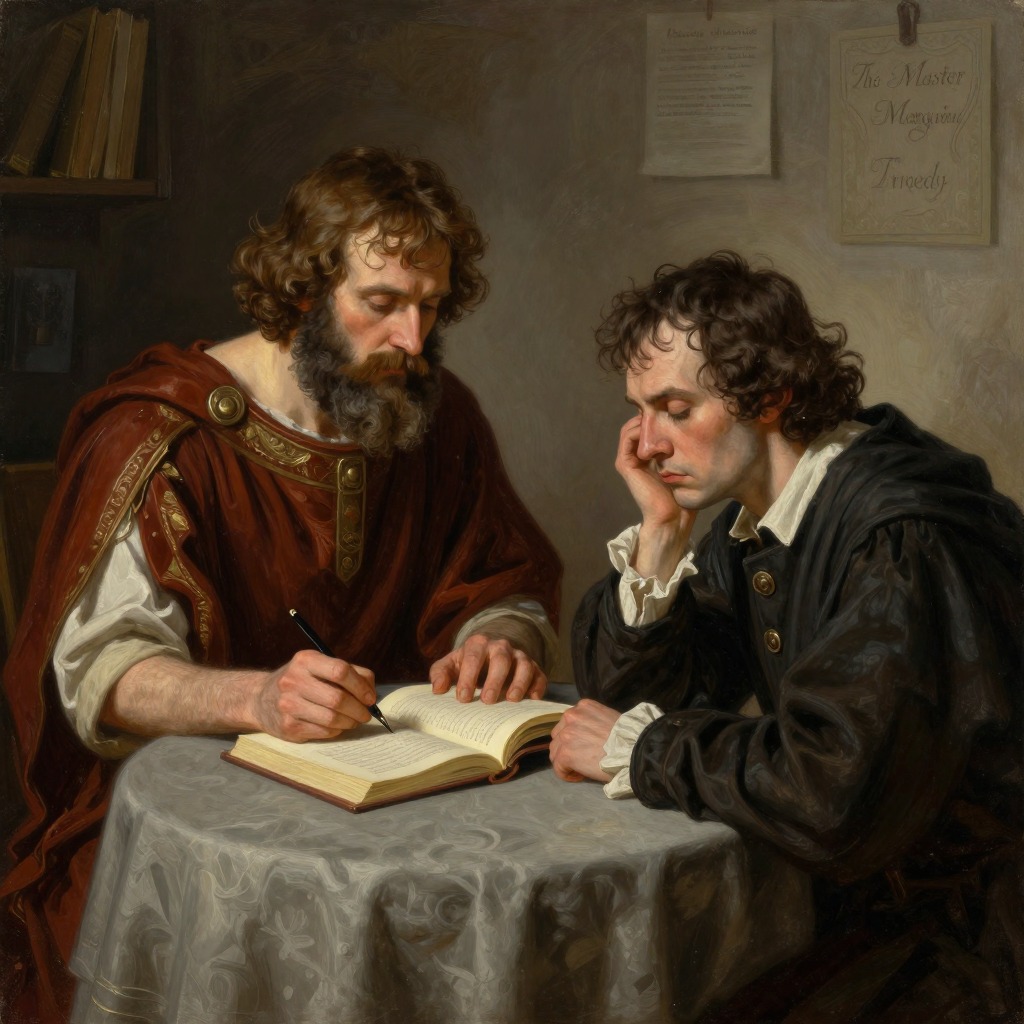
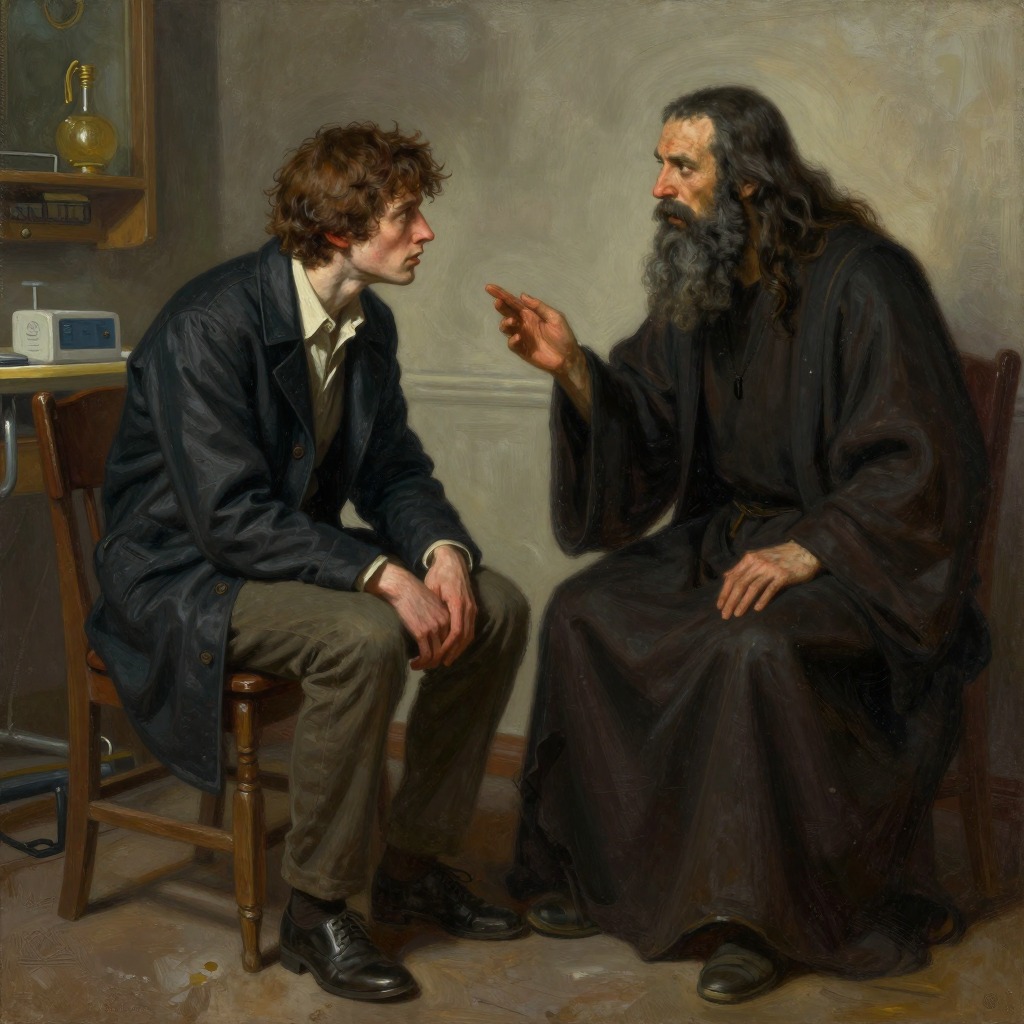
The Master and MargaritaProfessor Stravinsky, the chief psychiatrist of the renowned clinic on the outskirts of Moscow, is introduced as a man of about forty-five, as carefully shaven as an actor, with pleasant but quite piercing eyes and courteous manners. His entrance is solemn, his retinue showing him tokens of attention and respect, which leads Ivan Homeless to think, "Like Pontius Pilate!" Stravinsky's authority is immediate and unquestioned; he speaks a little-known language with his staff, reads Ivan's chart with a practised eye, and mutters "Mm-hm, mm-hm" before pronouncing the word "schizophrenia"—the same word the mysterious consultant had used at the Patriarch's Ponds. Stravinsky is not merely a doctor but a gatekeeper between the world of ordinary reality and the realm of the inexplicable, and his clinic becomes a crucible where the novel's most disturbed and most enlightened characters converge.
Method and Diagnosis
Stravinsky's diagnostic approach is swift, precise, and grounded in observable behaviour rather than metaphysical speculation. When Ivan Homeless, brought in after his chaotic chase through Moscow, insists that he met a man who knew Pontius Pilate personally, Stravinsky does not dismiss the claim outright. Instead, he calmly reconstructs Ivan's actions—the icon pinned to his chest, the fall from a fence, the appearance in a restaurant in his underwear, the fight, the call for machine-guns—and asks whether such behaviour could possibly catch anyone. He then offers Ivan a choice: declare himself normal and be released, but only if he understands that telling the police about Pilate will land him back in the same room. This logical trap, delivered with perfect courtesy, cracks Ivan's will and makes him accept treatment. Stravinsky's genius lies in making the patient see his own madness without ever calling him mad; he uses reason as a therapeutic instrument, not a weapon.
Role as Confessor and Intermediary
Beyond his clinical role, Stravinsky functions as a confessor figure for the novel's most haunted souls. The master, who has renounced his name and lives in room 118, tells Ivan that Stravinsky "is humane and simply wants to comfort me," but adds that he does not believe him when he says he will bring him back to life. The master's incurable condition—his fear, his lost novel, his severed love—lies beyond the reach of any injection or bath, yet Stravinsky's clinic provides the only peace he can find. The doctor's promise of summer ivy on the balcony and the moon at night is a modest, almost tender consolation for a man who once wanted to go around the globe. Stravinsky's authority is thus double-edged: he can calm the agitated and diagnose the schizophrenic, but he cannot restore what has been burned or heal what has been broken by the world of literature and terror.
The Limits of Science
Stravinsky's encounter with Nikanor Ivanovich Bosoy reveals the boundaries of his power. The chairman of the tenants' association, driven mad by Koroviev's bribe and the subsequent arrest, arrives at the clinic in a state of wild agitation, shouting about Koroviev and unclean powers. Stravinsky's injection and the dream that follows—a surreal theatre of currency dealers and Pushkin recitations—do not cure Nikanor Ivanovich but merely sedate him. The dream, with its grotesque parody of Soviet justice, is a product of the same madness that the clinic is meant to treat, and Stravinsky can only watch as the patient moans and cries out for Pushkin to turn over his currency. The doctor's methods are effective for managing symptoms, but they cannot address the systemic corruption and supernatural interference that caused the breakdown in the first place.
Thematic Significance
Stravinsky represents the rational, institutional order that the novel both respects and subverts. He is the only character who can speak to Ivan Homeless and the master without being drawn into their delusions, yet his own language—the calm repetition of "Very nice, very nice"—echoes the bureaucratic emptiness of the world Woland exposes. His clinic, with its gleaming equipment and foreign tourists, is a haven of modern science, but it cannot explain the severed head, the flying cat, or the manuscript that refuses to burn. Stravinsky's final gift to Ivan is not a cure but a pencil and paper, allowing him to write his statement—a gesture that acknowledges the power of narrative even when it cannot be believed. In a novel where madness is both a punishment and a refuge, Stravinsky is the keeper of the house of sorrow, a humane but ultimately limited guardian against the chaos that lies beyond reason.