
Lost Time and the Search for a Self
The Minds of Billy MilliganThis thread follows the book’s movement from unexplained gaps in memory toward shared awareness, recovered history, and renewed uncertainty about who can speak for William Stanley Milligan.
increasing Bearing strength in each event
 decreasing
Bearing strength in each eventdecreasingOrdinary Days Disappear
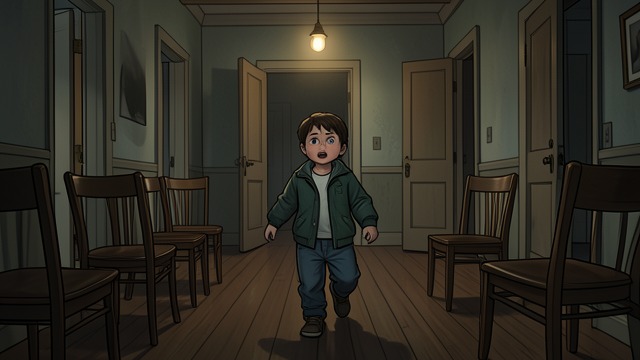
Ordinary Days Disappear
The unexplained gaps
From childhood, William finds himself in places without knowing how he got there, or learns that he has done things he cannot remember. Teachers and family members interpret his silences, wandering, and inconsistent conduct in different ways. For him, the missing time is frightening partly because other people insist that his forgotten actions are plainly his own.
Concealment as a habit
Because he cannot explain what he does not recall, he begins to improvise accounts and hide his confusion. The book presents these evasions not simply as deliberate deceit but as responses to repeated accusations and a lack of language for his experience. The secret preserves his standing for a while, yet makes the original problem harder for others to recognize.
Lost time becomes more than a symptom: it shapes how William understands responsibility, trust, and continuity. A person who cannot remember his actions must depend on other people’s accounts of him, even when those accounts make him feel like a stranger to himself.
A Self Built from Clues

A Self Built from Clues
Arthur investigates the gaps
Arthur begins to notice that the hours he can account for do not add up to the days described by people around him. He compares memories, asks questions, and keeps track of time, using reasoning to infer that more than one person is sharing the same life. His discovery emerges as an investigation conducted from inside the very uncertainty it seeks to explain.
Knowledge without unity
Arthur’s deductions give the inner group a map and a system, but they do not produce a single shared memory. He can know more than the others, yet William remains unaware of the structure Arthur has uncovered. The difference between knowing about an inner group and experiencing oneself as continuous remains unresolved.
The book uses Arthur’s method to show both the power and the limit of explanation. Rules and records can organize missing time, but they cannot make the experience whole. The search for identity begins with evidence gathered across gaps, not with a stable narrator who remembers everything.
The Host Awakens in Jail
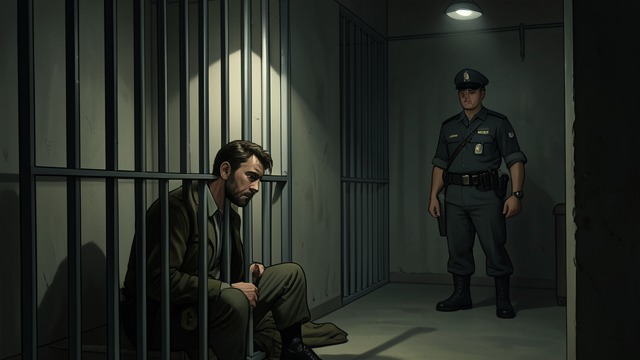
The Host Awakens in Jail
A world with missing years
After the arrest, the core Billy wakes in custody believing that he may have died or that only a short interval has passed. He cannot reconcile the jail, the accusations, or the changes in his family with the life he remembers. His confusion is not an abstract question of identity; it shapes every immediate encounter with police, lawyers, and confinement.
Other people hold the history
The inner group explains that Billy has been kept asleep because he was suicidal and unaware of the others. Their account gives the arrest a double meaning: it is both a criminal crisis and the moment when a person is confronted with years he cannot remember. Even the people trying to defend him initially have trouble deciding what his amnesia means.
The waking core makes the book’s central question concrete. If William cannot remember acts committed through the shared body, what does responsibility mean, and what can he know about himself? The answers cannot be reached through his memory alone; they depend on the difficult convergence of inner testimony, external records, and clinical observation.
The Tape Makes Division Visible

The Tape Makes Division Visible
Seeing what had been reported
When Billy watches recordings of the different people taking the spot, claims he had previously accepted only on faith become visible to him. He sees changes in expression, speech, and posture, and hears an account of inner divisions spoken from outside his own immediate awareness. The recording gives him a point of contact with evidence that memory alone had not supplied.
Recognition without instant repair
Understanding that the divisions are real does not immediately reunite them or fill every blank. Billy is frightened by what he sees, and the personalities still have distinct memories and habits. Yet the tape gives the inner group a shared reference point, making it possible for Billy to ask what has happened rather than merely endure unexplained switches.
The scene marks a change from secondhand belief to personal recognition. It also introduces a tension that persists throughout the book: observation can make an experience intelligible, but it cannot substitute for the slow work of remembering, trusting, and integrating what has been observed.
The Teacher Recovers the Whole
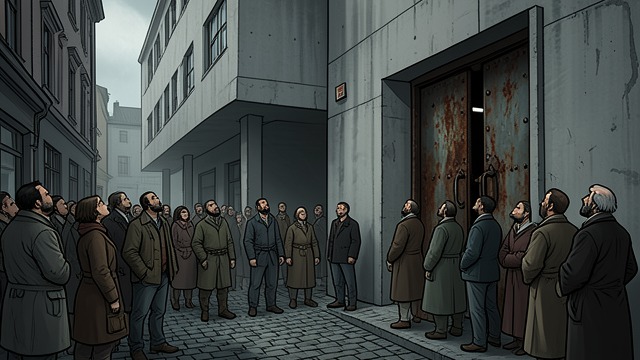
The Teacher Recovers the Whole
Previously hidden names
A list of twenty-four names reveals that Arthur has suppressed people he considered undesirable. Their appearance unsettles the structure Arthur had maintained, but it also exposes an important limit in the earlier account: the known inner group was not the complete group. William’s own history has remained fragmented because some of its keepers and memories were excluded from the accepted story.
A wider field of memory
After Billy learns that the Teacher is himself in one piece, the separate memories and skills become available to a new consciousness. He can recall incidents that once belonged only to particular people, including the absurdities, losses, and crimes he had not known as his own. The recovered perspective is expansive, but the account also recognizes that remembering everything can bring grief and responsibility.
The Teacher’s emergence seems to promise a definitive answer to the question of identity: one self can know what all the others knew. Yet later pressures and renewed fragmentation show that recovered memory is not a permanent guarantee of stability. The book treats wholeness as a hard-won and vulnerable condition rather than a final erasure of the past.
Childhood through adolescence
Early adolescence, before the 1970 rooftop crisis
October 1977, after the arrest
During therapy at Athens Mental Health Center in late 1978
After Kevin and Philip reveal the hidden personalities in late 1978
