
Responsibility, Stigma, and Public Judgment
The Minds of Billy MilliganThis thread follows how the book tests the boundaries between illness and accountability while showing how victims, public opinion, and media narratives resist being reduced to a courtroom verdict.
increasing Bearing strength in each event
 decreasing
Bearing strength in each eventdecreasingVictims Are Not Evidence Alone
Victims Are Not Evidence Alone
Distinct accounts of harm
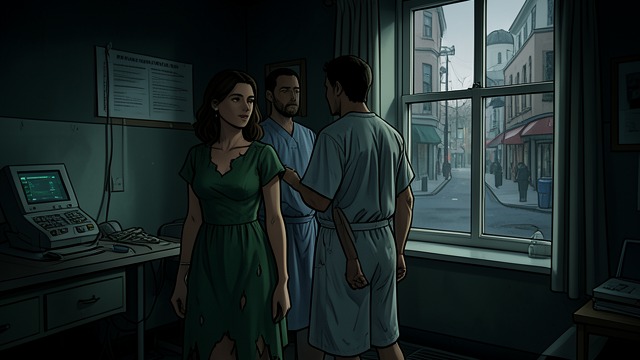
Carrie Dryer, Donna West, and Polly Newton encounter different forms of abduction, threats, humiliation, and sexual violence. Their accounts supply investigators with details that connect the crimes, but the book also gives each woman fear, judgment, and efforts to remain alive in the immediate situation. Their experiences do not become interchangeable merely because the police seek a pattern.
The limits of a diagnosis
The eventual account that Adalana took the spot during the rapes helps explain the inner group’s behavior, but it does not undo the victims’ experience or make the harm unreal. The courtroom can consider mental state when deciding responsibility, while the women remain people who were threatened and violated. The narrative’s insistence on their perspectives complicates any easy celebration of a novel defense.
The thematic tension is between explanation and excuse. The book tries to show how violence could emerge from a divided consciousness without pretending that the victims’ suffering is erased by that explanation. Legal judgment and human consequence occupy different but equally necessary frames.
A Diagnosis Under Suspicion

A Diagnosis Under Suspicion
Belief is tested repeatedly
At first, attorneys and clinicians wonder whether William is performing a role to escape prison. Observed changes in behavior, reported amnesia, and testing eventually persuade several professionals that the condition is genuine. Yet belief is never universal or permanent; later clinicians and public officials continue to challenge both the diagnosis and the treatment built upon it.
Evidence has unequal authority
Long observation and carefully gathered records compete with brief evaluations and assumptions about what a criminal defendant ought to be. The book shows how professional judgment can shift when the examiner accepts or rejects the possibility of dissociation. William’s credibility is therefore judged not only through what he says, but through the framework others bring to what they see.
The thread asks what counts as knowledge when a person cannot provide a continuous personal account. Neither skepticism nor unquestioning belief is presented as a complete answer. The central ethical task is to test claims carefully without using uncertainty as permission to ignore a patient’s history or to foreclose appropriate care.
The Press Makes a Person into a Threat

The Press Makes a Person into a Threat
A private diagnosis becomes public identity
When the diagnosis reaches the newspapers, William’s complex medical and legal history is compressed into headlines about a rapist with multiple personalities. Later reporting on hospital leave presents him as a danger roaming freely, often before readers know the treatment conditions or the clinicians’ reasoning. The repeated public framing makes the patient’s name inseparable from alarm.
Consequences return to the hospital
The coverage generates political demands, public complaints, and pressure on officials to restrict his movement. Even when expert consultation supports the Athens treatment plan, the controversy makes that plan harder to sustain. The press does not merely describe events after they happen; its descriptions become a force shaping the institutional choices that follow.
The book’s criticism is not that reporting itself should be suppressed. It is that a sensational frame can crowd out distinctions among allegation, diagnosis, risk, and current behavior. Public scrutiny may reveal institutional decisions, but it can also turn a person into a symbol and make humane treatment appear equivalent to public negligence.
The Courtroom Separates Act and Intent
The Courtroom Separates Act and Intent
Conduct is stipulated
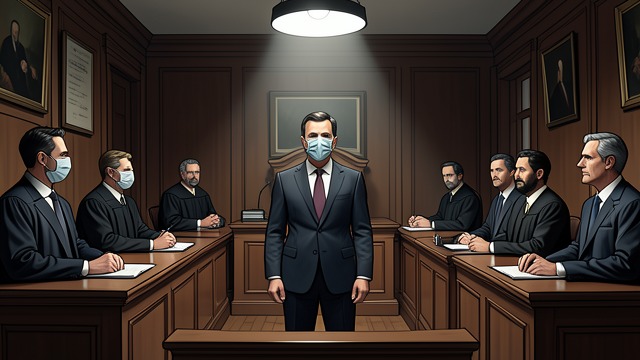
At the trial, the defense does not rely on denying the underlying crimes. Instead, both sides accept substantial psychiatric evidence about William’s mental condition at the time. This choice brings the question of responsibility to the foreground: the court must consider whether a person could understand or control actions performed while memory and identity were divided.
A precedent with unresolved consequences
Judge Jay Flowers finds William not guilty by reason of insanity, accepting that his illness prevented him from distinguishing right from wrong and from refraining from the acts. The ruling is a landmark, but it sends him into a system of continued hospitalization rather than restoring ordinary freedom. The verdict resolves a criminal question while opening a long dispute over where and how he should be treated.
The scene resists the idea that legal absolution is the same as recovery or vindication. A finding about culpability does not restore the victims’ lost security, heal William’s trauma, or settle how much risk an institution should accept. The verdict becomes a starting point for further ethical argument, not an ending that makes those arguments disappear.
A Human Life Beyond the Headline

A Human Life Beyond the Headline
The writer gathers competing accounts
Daniel Keyes builds the narrative from conversations with William and many people whose lives intersected his, while also consulting records and medical testimony. He acknowledges the difficulty of arranging a life marked by lost time and of representing events that the subject himself cannot consistently remember. The book’s form therefore makes its own uncertainty visible rather than offering a simple first-person confession.
Reputation competes with ordinary hopes
The public often sees a criminal case, a diagnosis, or a symbol in the debate over institutional policy. The book also follows the person who paints, worries about family, imagines a future devoted to preventing child abuse, and hopes for treatment that will let him live outside maximum security. These hopes do not cancel the harm caused to others; they restore dimensions of a life that the headline cannot contain.
By ending with an uncertain and incomplete recovery, the narrative refuses to convert William into either a monster or an inspirational cure story. It asks readers to hold together mental illness, wrongdoing, trauma, and humanity without allowing any single label to exhaust the person. That insistence is the book’s deepest challenge to public judgment.
During the 1977 investigations
From the 1978 trial through later commitment hearings
From September 1978 through the 1979 Athens controversy
December 4, 1978
From the 1978 book interviews to the 1982 return to Athens
