
From Campus Attacks to the Milligan Arrest
The Minds of Billy MilliganThis thread follows the October 1977 campus attacks from the police investigation to the arrest that exposed a frightened, disoriented suspect behind the physical evidence.
increasing Bearing strength in each event
 decreasing
Bearing strength in each eventdecreasingCampus Rape Pattern

A Pattern Takes Shape
Rising alarm
Two young women were abducted from the Ohio State University campus, driven into the countryside, raped and robbed. The similarities in their accounts led police to suspect one assailant, while differences in the descriptions of his facial hair raised doubts about whether the crimes had one perpetrator.
The attacks created intense fear among students and put pressure on campus police to identify the man before he struck again. Investigators had descriptions, but no name, and the possibility of further victims made the absence of a reliable lead urgent.
A Third Abduction
The Pattern Widens
A new victim
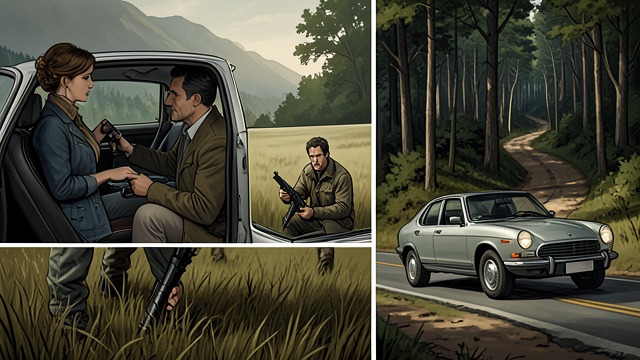
Polly Newton was abducted near the campus, forced to drive into the countryside, and made to cash checks. Her account added details that complicated the investigators’ picture: the assailant described himself as both a political militant and a businessman, and he spoke of another identity.
The connection among the cases was no longer merely a resemblance between victims’ stories. Fingerprints recovered from Polly’s car gave investigators evidence that could be compared with known records, turning a difficult investigation toward a specific suspect.
Photograph and Fingerprints

Evidence Converges
Identification
At the police bureau, Donna West recognized a mug shot of William Stanley Milligan as the man who had attacked her. Polly Newton examined the same photograph and said it resembled her assailant, though she could not identify him with certainty.
The photograph was several years old, so investigators hesitated to seek an arrest warrant on identification alone. Fingerprint comparisons from Polly’s car supplied the stronger link: the prints matched Milligan’s. The accumulated evidence transformed a series of unsolved attacks into a case against a named suspect.
Fogbound Arrest
The Arrest
A staged approach
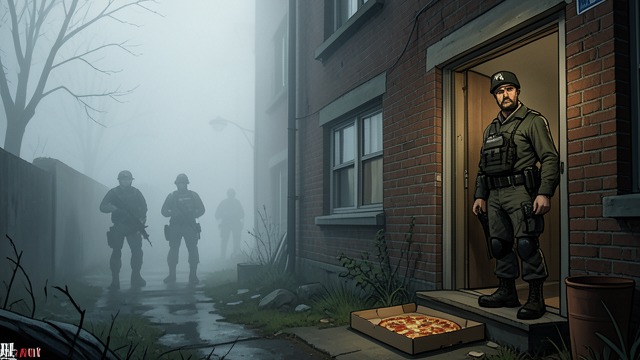
Police found that Milligan had moved from his last recorded address to Channingway Apartments. Concerned that he might be armed, officers assembled a tactical team and approached in dense fog. One officer used a dummy pizza box to get close enough to the apartment door.
The young man who answered claimed he was only a friend of the tenant and denied being Milligan. The ruse ended when the officer recognized the suspect and arrested him at gunpoint. The arrest followed the fingerprints and identifications, but the encounter began to reveal a person who seemed detached from the crimes rather than ready to explain them.
Evidence and Disorientation

A Confounding Suspect
Questions without answers
A search of the apartment uncovered weapons, victims’ cards and other identifying belongings. Officers also found paintings and paint supplies, which offered a mundane explanation for the oily stains a victim had noticed on her attacker’s hands. The physical evidence made the prosecution’s case appear strong.
Milligan, however, seemed bewildered and repeatedly asked whether he had hurt anyone. He appeared frightened, lost consciousness in custody, and later spoke as if he did not know why he was in jail. His lawyers initially faced an apparent contradiction: compelling evidence linked him to the attacks, while his reactions suggested profound memory gaps and psychological disorganization.
October 14–22, 1977
October 26, 1977
October 26–27, 1977
Late night, October 27, 1977
October 27–28, 1977
