
The Hidden Household of Minds
The Minds of Billy MilliganThis thread traces how Milligan’s claim of missing time becomes an observable diagnosis as clinicians encounter distinct inner identities and begin to understand the system governing them.
increasing Bearing strength in each event
 decreasing
Bearing strength in each eventdecreasingA Failed Evaluation
An Unsettled Diagnosis
Inability to assist
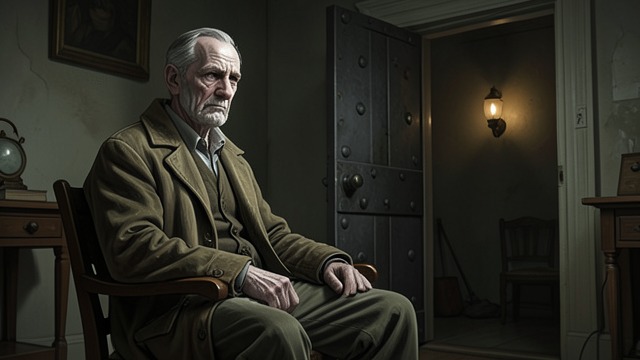
After repeated suicidal crises, the defense obtained a psychological evaluation. The examiner found Milligan severely depressed, unable to maintain reliable contact with reality, and unfit at that moment to help his attorneys prepare a defense. His complaints of voices and missing stretches of time complicated any simple account of the arrest.
The report did not yet explain the changes in behavior that family members and lawyers had observed. It did, however, make a further examination unavoidable: if Milligan could not understand the proceedings or communicate with counsel, the court had to decide what condition might account for that incapacity.
David Breaks the Secret
The First Disclosure
A frightened child speaks
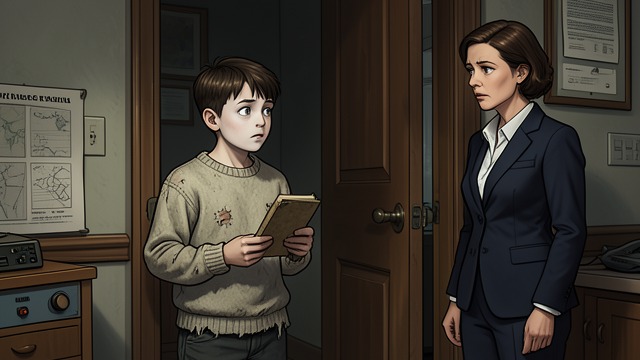
During a court-ordered interview, Dorothy Turner asked Milligan ordinary identifying questions. The person answering said he was David, not Billy, and explained that Billy was asleep inside him. He described an inner place where one person at a time held awareness, and said he carried the others’ pain.
David feared punishment for disclosing the secret and insisted that Turner promise not to tell anyone. His unexpected account changed the examination from a conventional assessment of one defendant into a difficult ethical and clinical problem: the lawyer needed to know what was happening, but disclosure itself could threaten the fragile trust that had allowed David to speak.
Contrasting Voices
Difference Becomes Visible
Repeated encounters
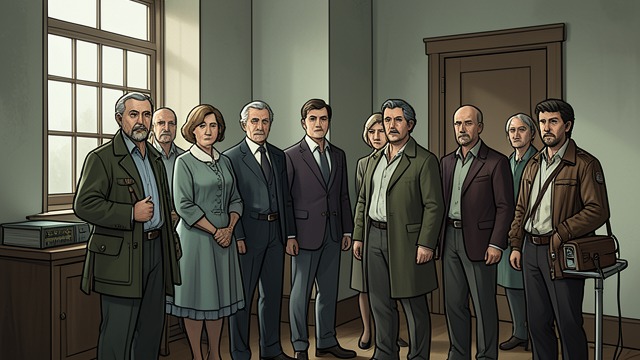
At later interviews, Turner met Christopher, Tommy, and Arthur, each with a distinct manner, voice, temperament, and account of the others. Some remembered the earlier meetings; others denied ever seeing Turner. The changes were not simply changes of mood: the speakers described different ages, abilities, fears, and access to memory.
Judy Stevenson initially doubted that such a condition could explain the case. Seeing the changes herself, she began to understand why Milligan’s behavior had appeared inconsistent and why he claimed not to remember the crimes. The attorneys now had to decide whether the diagnosis was real enough, and relevant enough, to form the basis of a defense.
Ragen Explains Control

An Inner Order
The protector’s account
When Ragen appeared before the attorneys, he described an inner system in which control of awareness shifted according to circumstance. He claimed authority over the group in dangerous settings, while Arthur governed situations requiring planning and logic. The explanation gave the lawyers a framework for the abrupt changes they had witnessed.
Ragen also distinguished his own admitted robberies from the rapes, denying that he had committed the sexual assaults. That denial did not resolve what had happened; it deepened the central question of responsibility. The defense now had to investigate not merely whether Milligan changed, but which inner identities had acted, what each remembered, and whether any could be treated as separate from the person on trial.
The Hidden Tenth Person

The Rape Account Emerges
Adalana’s disclosure
After the transfer to Harding Hospital, another identity, Adalana, disclosed that she had taken the awareness during the attacks. She described loneliness and a desperate wish for affection, while acknowledging that she had used the shared body and caused serious harm. Her account gave the lawyers and clinicians a new explanation for the apparent contradiction between Ragen’s denial and the victims’ accounts.
The revelation did not erase the victims’ experiences or settle the question of legal responsibility. Instead, it exposed the limits of a system in which identities could act without shared awareness. Arthur and Ragen confronted Adalana, and the group’s rules shifted as clinicians tried to understand how the different identities could communicate and assume responsibility together.
January 1978
January 31, 1978
February 1978
February 1978, during a meeting with the defense
March 1978
