
Trauma and the Architecture of Dissociation
The Minds of Billy MilliganThis thread traces how childhood terror gives rise to protective divisions of identity, and how those divisions preserve both survival and unresolved pain.
increasing Bearing strength in each event
 decreasing
Bearing strength in each eventdecreasingThe First Protective Retreat
The First Protective Retreat
Loneliness and an inner companion
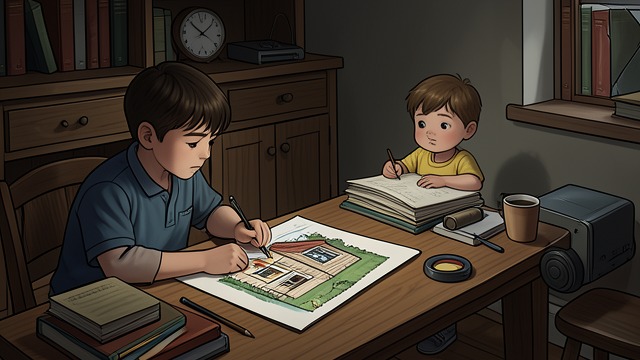
After his father, Johnny Morrison, died, young William Stanley Milligan was left lonely in a household strained by grief and practical pressures. The book describes Christene emerging as a companion who could care for the baby Kathy and draw pictures when ordinary childhood play felt unavailable. At first, this inner division appears less like a dramatic break than an improvised answer to isolation.
A defense becomes a pattern
When Dorothy mistakes a drawing for William’s misbehavior and punishes him, he experiences a gap between the action and the self who remembers it. The episode suggests how a child might begin to place unbearable responsibility or confusion outside his conscious awareness. A coping response that once offered relief becomes the first element in a much larger inner structure.
The narrative treats this origin cautiously through later recollection, but its thematic force is clear: the divided self begins in a child’s attempt to remain connected, safe, and loved. What later looks like fragmentation is first presented as adaptation to a world the child cannot control.
The Farm and the Fracture
The Farm and the Fracture
Threat without escape
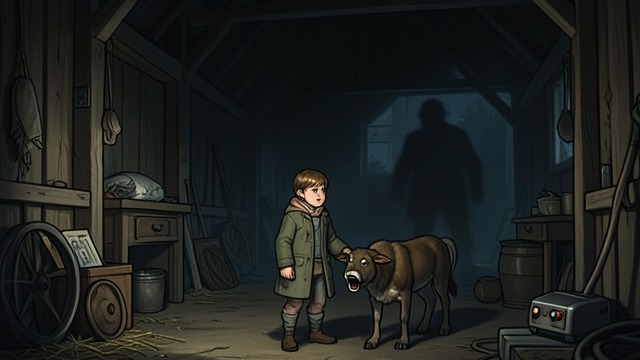
At the Bremen farm, Chalmer Milligan’s intimidation and abuse make the barn a place of dread. The child fears that speaking will bring further violence and that the threat of being buried will make him disappear from his family altogether. The book presents the situation as one in which ordinary choices—resisting, fleeing, or telling—seem closed to him.
Survival through separation
When the abuse becomes unbearable, the child’s attention and memory divide. Danny carries terror, while David is described as taking in pain that the others cannot bear. The later account connects these roles to the mind’s effort to endure experiences that are too overwhelming to integrate at the time.
The fracture does not erase what happened; it redistributes awareness and suffering. That distinction deepens the book’s central tragedy: the strategy that lets a child survive also leaves him with missing memories, inner conflict, and a long path toward recognizing his own history.
A Child Bears the Pain
A Child Bears the Pain
Pain assigned a keeper
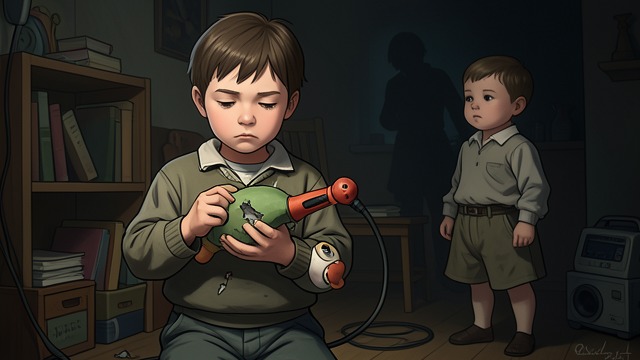
Within the inner group, David comes to be known as the keeper of pain. He absorbs suffering that the other selves cannot face directly, including fear associated with abuse and the bodily distress recalled in later therapy. The role gives the group a way to keep functioning, but it also leaves a childlike figure carrying an extraordinary emotional burden.
Protection with a cost
Ragen understands himself as protector, yet the arrangement places much of the hurt with David rather than eliminating it. The book repeatedly shows David reacting to injured objects, frightened people, and signs of loss as though their pain were his own. His sensitivity becomes both a compassionate capacity and evidence of what the system has had to contain.
The contrast between protection and suffering complicates the inner group’s own moral language. Safeguarding the whole does not mean every member is safe; survival can depend on unequal distributions of fear and pain. Therapy must eventually make those divisions visible rather than treating them as a complete solution.
The Buried Memory
The Buried Memory
A threat made physical
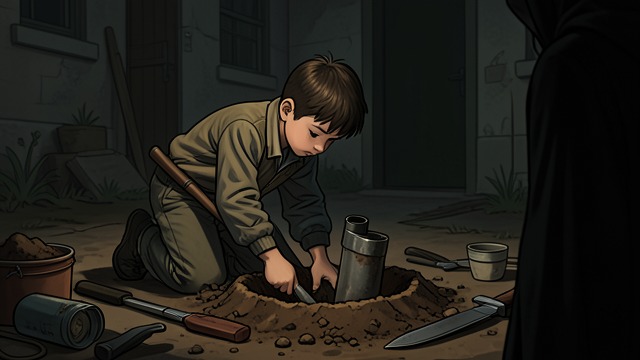
The book recounts an allegation that Chalmer Milligan forced the adolescent William to dig a grave and buried him, leaving a pipe for air. The memory links a literal fear of the earth with Danny’s later refusal to touch the ground or paint landscapes. A childhood threat that once seemed impossible becomes an image organizing the boy’s terror.
Memory outside ordinary recall
For years, William does not hold this experience as an accessible, continuous recollection. The account instead reaches him through the people inside and through later therapeutic work. The gap is not portrayed as proof that the event has disappeared; it shows how a memory can remain consequential even when the person cannot consciously narrate it.
This thread makes the cost of dissociation visible across time. The child’s immediate survival is followed by an adult who cannot readily explain his fears, behavior, or missing years. Recovering memory may make understanding possible, but it also requires returning to material that had been kept at a distance for protection.
Trauma Reenters the Present
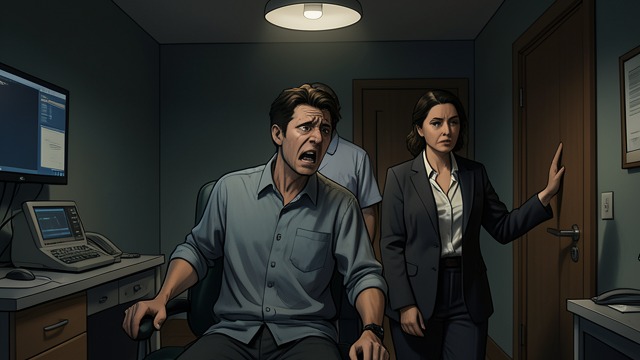
Trauma Reenters the Present
A memory breaks through
When therapy brings Billy into contact with memories of Chalmer, his fear rises sharply and he slips away from the conversation. He speaks of being hurt and threatened, then becomes overwhelmed; another inner figure explains that the original Billy has gone to sleep because remembering became too difficult. The scene dramatizes the difference between learning that a memory exists and being ready to experience it.
Recovery requires more than disclosure
The clinicians try to approach the past without forcing a single dramatic revelation. Billy’s fear of doctors, of being watched, and of renewed punishment remains part of the therapeutic work. The narrative suggests that testimony about trauma is not a simple recovery of facts; it involves establishing enough safety for the person to remain present while those facts are approached.
The past persists in the body and in the inner group’s protective habits. Treatment therefore has to address both the remembered abuse and the defenses built around it. The theme is not that suffering automatically produces insight, but that understanding becomes possible when protection no longer has to depend entirely on silence and separation.
Around age four in Florida
A week after April Fool’s Day, around age nine
During the years of abuse around ages eight and nine
Around age fourteen, in 1969
During treatment at Harding Hospital in 1978
