Dorothy Moore
The Minds of Billy MilliganDorothy Moore, Billy Milligan’s mother, occupies a difficult place between care and belated understanding. She watched her son grow up amid instability and violence, recognized that he sometimes seemed unlike himself, and tried to persuade others that he needed help. Yet she did not know the full severity of the abuse Billy later described. Her recollections, visits, and eventual peace with him make her both a witness to his childhood and a participant in the painful work of recovering it.
Identity and Family Background
Dorothy was known earlier as Dorothy Sands. In March 1955, when Billy was one month old, she was holding him after giving him medicine when she saw that his face had turned bright red and a white ring had formed around his mouth. She called for Johnny Morrison, and the two took the infant for medical care. A growth was blocking Billy’s esophagus; the doctor said his condition was stable and that it could be controlled. Billy survived, though during his first year he went in and out of hospitals in Miami. When Dorothy and Johnny traveled for out-of-town bookings, Billy and his older brother, Jim Milligan, were left with Mimi or at a children’s care center.
Dorothy and Johnny’s family life was shadowed by financial strain and Johnny’s deteriorating health. After Dorothy gave birth to Kathy Milligan on New Year’s Eve in 1956, medical expenses added to Johnny’s borrowing, gambling, and drinking. Dorothy learned he owed loan sharks six thousand dollars; when she argued with him, he beat her. Johnny was hospitalized for acute alcoholism and depression that fall. Dorothy later described a relationship that had once felt protective: Johnny had helped with her singing arrangements and seen her home safely, but by then his career was faltering and his drinking was disrupting his performances. His suicide left Dorothy to face the debt and raise the children without him.
Witness to Billy’s Childhood
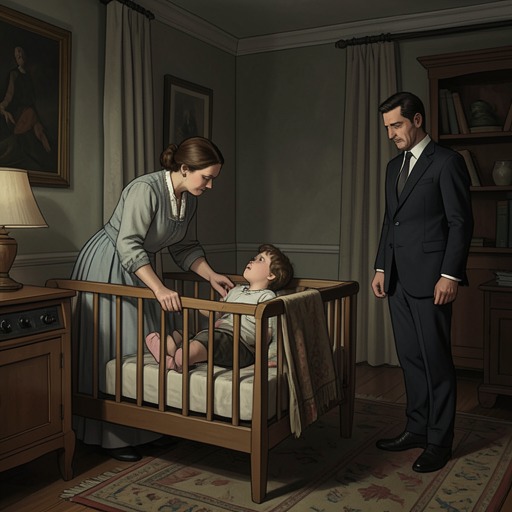
Dorothy’s account of Billy’s childhood was inseparable from the violence in her marriage to Chalmer Milligan. She later testified that Chalmer often beat her when he was drinking, usually after locking the children in their bedroom. She said he was jealous of Billy and beat him as punishment, at times tying him to a plow and later to a barn door. Dorothy also testified that she had not understood how severe the beatings and sexual abuse of Billy were until the offenses that led to his arrest brought them to light. Her testimony therefore carried a painful distinction: she could describe the violence in the household, but she had not known the extent of what Billy had endured.
Even before she understood the cause, Dorothy noticed that her younger son seemed to disappear from ordinary life. She recalled that he could become withdrawn and moody, stare into space without answering, and wander away from school or downtown as though sleepwalking. Sometimes the school called her to collect him; at other times she searched for him herself and brought him home. After he woke, he might not know whether he had gone to school that day or remember her coming to get him. Dorothy summarized the change as Billy not being Billy at times, an observation that would later acquire a different meaning when the family learned about his dissociation and the other personalities.
Dorothy also remembered trying to get help. When Billy later told her that he had always felt there were two of him, she said she had recognized a division between the kind, loving boy she called her Billy and another who seemed indifferent to hurting people’s feelings. She said she had told doctors and the lawyer involved in his earlier case that Billy needed help, but that nobody listened. Her recognition was significant, though incomplete: she had seen his altered behavior and appealed for assistance without knowing the traumatic history that Billy would eventually disclose.
The gap between a mother’s observation and a child’s concealed experience became explicit when Dorothy and Kathy Milligan visited Billy in the hospital’s intensive-treatment ward. Billy had no recollection of Dorothy’s earlier visits to him at Harding Hospital or Lebanon prison, and his remembered image of her was from childhood, when her face had been bloodied after Chalmer attacked her. As mother and daughter revisited confusing episodes from the past, Dorothy repeated that she had always sensed there were two Billys. Kathy challenged her for not telling others about Chalmer; Dorothy replied that she had not known what he had done to Billy, and insisted that, had she known, she would never have taken a knife away from him. The exchange brought affection and anger into the same room: Dorothy’s concern for her son was real, but it could not undo what she had failed to see.
Visits, Memory, and Reconciliation
After she was allowed to visit Billy in the hospital, Dorothy came almost every week, often accompanied by Kathy Milligan. His responses to these visits varied sharply: sometimes he was happy and outgoing afterward; at other times he became depressed. The psychiatric social worker, Joan Winslow, interviewed Dorothy after each visit and described her as warm and giving. Winslow also speculated that Dorothy’s shy, dependent nature had kept her from intervening in the abuse she later reported. The pattern made the visits emotionally uncertain: Dorothy continued to come, but the effect on Billy was not always comforting. After one visit on April 18, he seemed so upset that he shut himself in his room with a pillow over his head.
The strain between them persisted even as their contact continued. Near the end of Billy’s time at the hospital, Allen grew impatient while Dorothy talked with Dr. Steinberg. Billy urged her to leave, but she told him she was still speaking. The small exchange showed that a visit could put ordinary family friction alongside the larger work of reconnecting: Billy wanted to go, while Dorothy carried on with the conversation she had begun.
Years later, on February 19, Billy taped a conversation with Dorothy because he wanted to understand his childhood and why his father, Johnny Morrison, had died by suicide. Dorothy explained that she had tried to protect the children’s image of their father by answering questions as best she could without telling them the saddest parts. Billy asked her to revisit a time in Florida when she gave Johnny all the money she had so he could go on the road, leaving only a can of tuna and a box of macaroni at home. His questions turned their conversation into an effort to compare the father he had imagined with the troubled man Dorothy had known.
Johnny’s suicide had left Dorothy with debts as well as grief. The week after his death, loan sharks threatened her and the children over the six-thousand-dollar debt, and she fled first to her sister’s home in Key Largo and then back to Circleville, Ohio. Years afterward, Johnny’s suicide note again reopened the past: it included a message addressed to Dorothy under the name Dorothy Vincent, instructions for paying debts from his insurance, and a bitter final request concerning his burial. Dorothy denied the note’s allegations about her and agreed to its publication. She said Johnny had been mentally ill and may have confused her with a stripper with whom he had been involved.
By the time Billy was walking the hospital grounds and painting a mural on Kathy’s wall during weekend leave, he was beginning to feel that the worst period had passed. Dorothy’s account of Johnny, and her response to the suicide note, formed part of the difficult family history he was trying to recover. The narrative records the outcome plainly: Billy made his peace with his mother. That reconciliation did not erase the violence, the years of misunderstanding, or the memories they could not share; it marked a change in their relationship after he had begun asking her directly about the past.
Public Record and Limits of Her Account
Dorothy’s role in the account is also defined by what she could and could not attest to directly. When public defenders Judy Stevenson and Gary Schweickart interviewed her, Kathy Milligan, and Jim Milligan, none could provide firsthand knowledge of the abuse Billy said he had suffered. Dorothy could describe Chalmer’s violence toward her and the fear within the household, but the severe abuse of Billy became known to her only after the offenses that brought his case to light. Her testimony thus offered evidence of the family’s violent setting without making her a direct witness to every allegation against her former husband.
The book makes its evidentiary limits explicit. Chalmer Milligan, identified at trial and in the media as Billy’s stepfather, refused to discuss the allegations or tell his side of the story; in public statements and interviews, he denied Billy’s accusations. The account of his alleged conduct was assembled from trial transcripts, depositions by relatives and neighbors, and taped interviews with his daughter Challa, adopted daughter Kathy, adopted son Jim, former wife Dorothy, and Billy. Dorothy’s testimony and recollections therefore appear within a layered record: personal memory, courtroom evidence, and corroborating accounts, rather than an uncontested family narrative.