Dorothy Turner
The Minds of Billy MilliganDorothy Turner is a psychologist at the Southwest Community Mental Health Center whose encounters with William Stanley Milligan helped bring his reported inner personalities into clinical and legal view. She first encountered him in jail, returned repeatedly despite the difficulty of those interviews, and later described her observations in reports, videotapes, and sworn testimony. Her role is decisive not because she alone settled every dispute, but because she connected direct observation of Milligan with evidence that could be examined by clinicians and the courts.
Identity and Clinical Role
Turner is identified alongside Dr. Stella Karolin as one of the clinicians who discovered and first diagnosed Milligan’s multiple personalities. The account grounds their work in more than retrospective recollection: their written reports and sworn court testimony are presented alongside descriptions from psychiatrists and attorneys who knew them. Turner’s contribution therefore appears across several forms of evidence, from meetings with Milligan to formal clinical documentation and testimony.
Her work also took place within an institutional setting that was not simply an extension of the defense. In January 1978, the court directed the forensic psychiatry unit of the Southwest Community Mental Health Center to examine Milligan. His attorneys were concerned because they regarded the center as usually aligned with the prosecution. Turner’s assessment thus entered a contested legal process, where the question was not only what diagnosis fit Milligan but also whether his mental condition affected his ability to participate in his defense.
Jail Interviews and Recognition
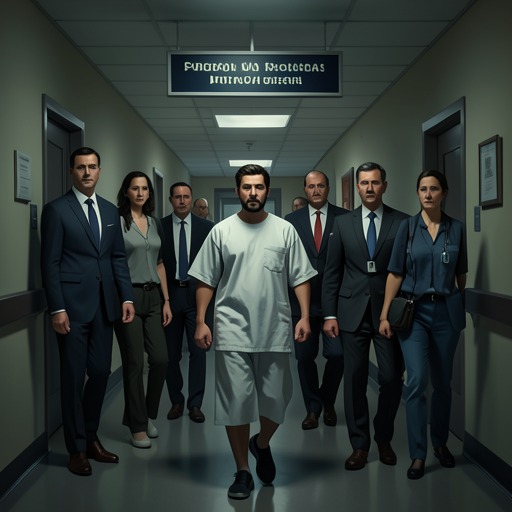
Turner’s first interview was scheduled for January 31, 1978. Sergeant Willis brought Milligan into the interview room, and Turner began the work of trying to draw him into conversation. In one encounter, the person before her identified himself as David. When she returned for a later interview, she met Tommy, who remained sullen through fifteen minutes of her effort to engage him.
The encounter with Tommy left Turner confronting a conflict between a confidence and a professional responsibility. After leaving the Franklin County Jail, she thought about Christopher and about the promise David had asked her to keep: not to reveal the secret. She was torn between honoring that promise and recognizing that Milligan’s attorneys needed to know what she had encountered. She eventually telephoned the public defender’s office and asked for Judy Stevenson. The episode shows the discovery unfolding as an ethical and evidentiary problem: what Turner had been told mattered to the defense, but it had also been entrusted to her by one of the identities she met.
On her fourth visit, Turner again encountered the frightened boy who had first called himself David. The return of that presentation gave her repeated opportunities to observe differences across meetings rather than relying on a single interview. The account does not reduce those encounters to a simple sequence of labels: Turner met people presenting themselves differently, attempted to speak with them, and had to decide how those interactions should be communicated to the lawyers handling the case.
Demonstrations and Clinical Evidence
Turner’s work was also made visible to hospital staff through videotapes showing her and Dr. George Harding working with different personalities. Some staff members were interested in Arthur and Ragen, whom they had not previously seen; the appearance of Adalana prompted a mixture of awe and skepticism. Turner had been the only person present who had met Adalana before the recording. When the core Billy appeared and expressed distress at being kept from staying awake, the room’s reaction shifted to rapt silence, and Rosalie Drake struggled to hold back tears. The demonstration made the differences Turner described available for others to observe, while also exposing how emotionally charged the material could be for its viewers.
Turner later testified that she had seen Milligan almost daily before trial and had administered intelligence tests to several personalities. She reported a marked range of results: two tested in the 68-to-70 range, one was average, and another had an IQ of 130. These figures supplied the court with a concrete example of differences Turner said she had examined, rather than relying solely on names or verbal descriptions. Her testimony also made clear that she did not regard the observed differences as something Milligan could simply fake. When challenged on that point, she answered emphatically and with anger.
Courtroom Role and Legal Consequences
Turner’s evidence entered more than one legal question. In January, a report from Dr. Willis C. Driscoll, based on psychological testing conducted on January 8 and 13, was presented by Milligan’s attorneys as evidence that he could not assist in his own defense. That claim concerned his capacity to participate in the proceedings, not by itself the question of his mental state when the charged acts occurred. The distinction mattered: the court’s examination concerned Milligan as a defendant then, while the later insanity issue concerned his condition at the time of the offenses.
By November, a report from Marion J. Koloski, director of the court assistance program at Southwest’s forensic center, stated that Turner and Karolin had found Milligan competent to stand trial and capable of assisting his attorney. It also cautioned that his mental condition remained very fragile and that the fused personality could disintegrate into previously observed dissociated personalities. The finding of present competence therefore did not erase the clinicians’ concern about instability, nor did it alone resolve the separate question of criminal responsibility.
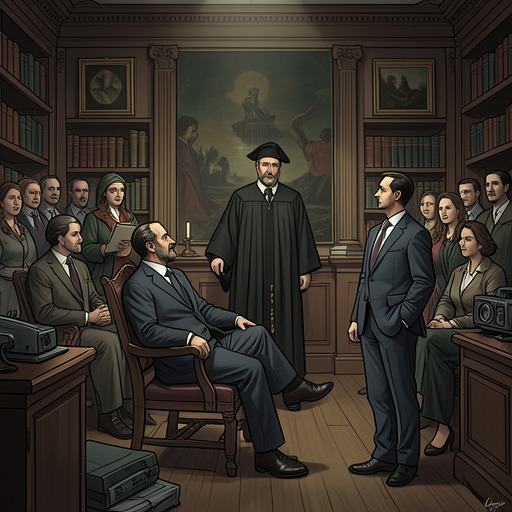
At the later proceeding, the prosecution agreed to the medical evidence presented by Turner, Karolin, Dr. George Harding, and Dr. Cornelia Wilbur concerning Milligan’s mental condition when the crimes were committed. The Southwest report by Turner and Karolin was read into the record. The judge separately dismissed the first rape count, citing the absence of corroborating evidence and a similar modus operandi; the medical evidence on insanity was not a substitute for that decision about the count itself. On the remaining insanity issue, the judge stated that the stipulated medical evidence showed Milligan was mentally ill at the time, unable to distinguish right from wrong, and unable to refrain from the acts.
Turner was present in the aftermath. Judy Stevenson pulled Milligan toward the holding cell to avoid the crowd, and Turner came in to congratulate him, alongside Karolin and others who were crying. Her clinical role had by then become part of a public legal outcome: observations made in repeated meetings had passed through reports and testimony into a record that supported the court’s finding.
Disputed Diagnosis and Narrative Significance
The book does not present Turner’s account as the only professional view. At a later hearing, psychologist Frederick Milkie said he rejected the multiple-personality diagnosis because he had not seen its symptoms and did not accept the diagnostic definition he was asked about. Turner’s forceful response to the suggestion that the differences could be faked stands in direct contrast to that position. The disagreement makes the basis of clinical authority visible: Turner relied on repeated personal observation and testing, while Milkie emphasized his own lack of observed symptoms and his rejection of the category.
Turner’s significance lies in the way her work crosses boundaries between interview, diagnosis, demonstration, and legal testimony. She first faced the problem of how to handle a confidence from David; later, she presented observations that could be reviewed by clinicians, attorneys, and a judge. Her testimony contributed to legal conclusions without making every legal question identical: present competence, mental illness at the time of the offenses, and the evidentiary status of an individual charge remained distinct matters. Through that progression, Turner becomes one of the book’s central witnesses to how Milligan’s reported identities were observed, interpreted, challenged, and given consequences beyond the interview room.