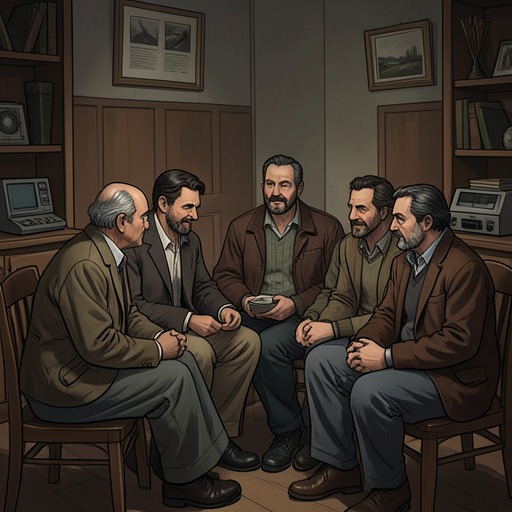
Dr. Marlene Kocan
The Minds of Billy MilliganDr. Marlene Kocan is a clinician in Billy Milligan’s treatment at Harding Hospital whose role is marked by a consequential disagreement over fusion. She established regular sessions in which the personalities recalled and worked through memories of abuse and torture, but questioned whether combining them was safe while Billy might still face prison. Later, when publicity about his diagnosis deepened his fear and despair, she made an unusual direct intervention: she encouraged him to remain alive and devote himself to fighting child abuse.
Clinical Role and Treatment
Dr. Kocan set up regular sessions after the treatment strategy at Harding Hospital shifted toward fusing the personalities. In her sessions, they began recalling memories of abuse and torture and working through them, reliving the anguish that the book connects with Billy’s major dissociation at eight. Her work therefore addressed not only the organization of the personalities but also the painful memories associated with their emergence. The sessions placed recollection and emotional processing alongside the hospital’s broader effort to bring the personalities together.
That approach took place within a treatment program whose goals were also shaped by the court. Dr. George Harding stated that the hospital’s charge was to fuse Billy, while the clinical plan described integration in stages: personalities with similar or compatible qualities would be paired, and those combinations would then be brought together with the core Billy. Kocan’s concern did not deny that fusion was the treatment objective. It questioned whether pursuing that objective without regard to Billy’s possible circumstances after discharge might leave him dangerously exposed.
Objection to Fusion and the Prison Risk
Kocan argued that the decision could not be separated from the possibility that Billy would be sent to prison. She warned that if Ragen were fused with the other personalities and Billy then entered a hostile environment, he would lose the protector who had previously helped him survive there. In her assessment, removing that defense could leave Billy vulnerable to sexual violence and could lead him to attempt suicide. Her objection thus turned on a concrete consequence of treatment: what might happen to the patient if a protective capacity were removed before the external danger had passed.
The disagreement set Kocan’s concern for Billy’s safety against the court-directed goal of fusion. Dr. Harding maintained that the hospital had been charged with integrating the personalities; Kocan emphasized the risks of doing so under the threat of a return to prison. The book does not present her as rejecting treatment or as offering a settled alternative plan. Instead, it records her insistence that the likely setting after treatment mattered, and that Ragen’s protective role could not be treated as incidental when considering the consequences of fusion.
Publicity and a Change in Approach
The risk became immediate for Billy after newspapers disclosed the diagnosis and reported that one of his personalities was lesbian. The stories upset him, and during his final session with Kocan he was depressed and afraid of what other prisoners might do if he were found guilty and returned to prison. He also described being unable to manage the hatred he felt. The episode brought the clinical question Kocan had raised into his present emotional crisis: the prospect of prison was not abstract, and the public disclosure had given him a new reason to fear it.
Kocan usually preferred a nondirective method, allowing the patient to lead rather than offering instructions. In this session, she judged that there was not time to rely on that approach alone. She suggested that Billy could direct his anger toward a constructive purpose by dedicating his life to fighting child abuse. Her reasoning linked survival to action: living could allow him to work for a cause, while dying would leave the man he said had abused him victorious. The intervention did not resolve the legal danger or the dispute over fusion; it gave Billy a possible purpose with which to answer his despair.
Later that day, Billy handed Donna Egar a razor blade that Tommy had hidden beneath his bed months earlier and told her he no longer needed it because he wanted to live. The sequence makes Kocan’s advice consequential without establishing that her words alone caused his decision. Her appeal preceded a concrete relinquishment of the means Billy had kept, and a declaration of his choice to continue living. The narrative presents the exchange as a turning point in his immediate crisis, not as proof that his longer struggle or institutional uncertainties were over.
Significance
Kocan’s part in the story rests on the tension between a treatment goal and a patient’s vulnerability beyond the treatment room. Her sessions brought traumatic memories into therapeutic work; her objection to fusion asked whether integration could remove a form of protection at precisely the wrong time. When Billy’s fear intensified, she shifted from listening without direction to offering a reason for survival. Those actions make her important less as the advocate of a single method than as a clinician attentive to the consequences that diagnosis, treatment, publicity, and possible imprisonment could have for the same person.