Eliot Boxerbaum
The Minds of Billy MilliganEliot Boxerbaum, a young investigations supervisor in the Ohio State University police department, was put in charge of the search for the man abducting and assaulting women near campus. He worked with Chief John Kleberg as the investigation moved from uncertain descriptions to a positive identification and fingerprint evidence. Boxerbaum’s caution—especially his reluctance to seek an arrest warrant before the evidence had been checked—distinguishes his role in the search.
Background and Position
Boxerbaum described himself as a liberal and became involved in police work while attending Ohio State University. The student disturbances that closed the campus in 1970 preceded his entry into the university police department. After graduating that year, he was offered a position on the condition that he cut his long hair and shave his mustache. He cut his hair but balked at shaving; the department hired him anyway. The episode gives his professional introduction a small but telling tension: he accepted the job without fully conforming to the appearance requested by its administrators.
By the time two women had been abducted from campus within eight days, Boxerbaum was supervising investigations. He and Kleberg examined the victims’ information and photographic composites. Their working description pointed toward one assailant: a white American man in his twenties, of a particular height and weight range, with brown or reddish-brown hair. The two victims also described similar clothing. These shared details gave the investigation a provisional pattern, but they did not yet establish the identity of the attacker.
Identification and Verification
Boxerbaum brought Donna West, the second victim, to review mug shots. The police had kept Carrie Dryer, the first victim, in reserve for a possible lineup, in case the photographic identification could not withstand scrutiny in court. West made a positive identification from the photographs. Polly Newton, reviewing a tray separately, hesitated over William Stanley Milligan’s picture: it looked like the man to her, but she could not say for certain. Her uncertainty mattered to the investigation because it left the identifications uneven rather than mutually conclusive.
Despite West’s identification, Boxerbaum hesitated to seek a warrant. The photograph was three years old, and he wanted the fingerprint check before acting. Prints lifted from the outside passenger-door glass of Polly Newton’s Corvette matched William Stanley Milligan’s right index finger, right ring finger, and right palm. The report described the prints as suitable for comparison and recorded a ten-point match. Even then, Boxerbaum and Kleberg asked for an expert to evaluate the result. His part in the investigation is thus defined not simply by gathering evidence, but by delaying a consequential step until the evidence had undergone further scrutiny.
Questioning William Stanley Milligan
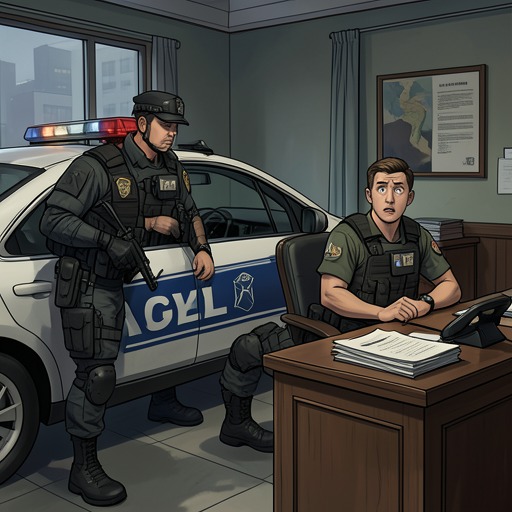
When Boxerbaum approached William Stanley Milligan, there was no immediate response, and the eye movement Carrie Dryer had noticed was not apparent. Boxerbaum asked whether anyone had read him his rights. No one answered, so he read them aloud himself, explaining that he wanted to be sure the procedure had been followed. He then told Milligan that he was accused of kidnapping the women from campus and asked whether he wanted to talk.
Milligan looked shocked and asked whether he had hurt anybody. Boxerbaum’s questions followed the evidence gathered in the investigation: he referred to Milligan’s threat that other people would come after the victims and asked who those people were. The encounter marked a shift from comparing descriptions and prints to addressing the suspect directly, while Milligan’s bewildered response introduced an uncertainty that the investigation’s physical evidence alone could not resolve.
Narrative Role
Boxerbaum functions as the investigation’s cautious procedural center. The victims’ accounts and the matching details of clothing create urgency; West’s identification supplies a strong lead, while Newton’s qualified recognition and the age of the photograph leave room for doubt. Boxerbaum’s insistence on fingerprints and expert review holds those competing pressures together. His conduct does not settle every question surrounding William Stanley Milligan, but it shows how the case’s initial identification was built through successive checks rather than a single recognition.